By Olivia Le Poidevin
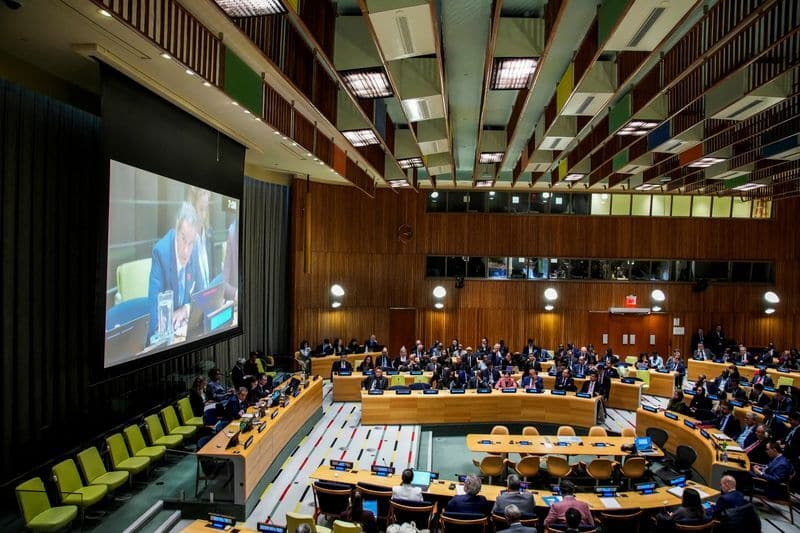
GENEVA, June 9 (Reuters) - Several candidates running to be the next head of the United Nations called for a strengthening of human rights and respect for international law and bolstering the organisation through reforms during a debate in Geneva on Tuesday.
Four of the five candidates to succeed Secretary-General Antonio Guterres, who completes his second five-year term at the end of this year, laid out their visions for the role at a time when the U.N. faces a severe financial crisis triggered by cuts from major humanitarian donors.
The organisation is also contending with $4 billion in unpaid U.S. arrears, multiplying conflicts, and widespread violations of international law.
Maria Fernanda Espinosa, a former foreign affairs minister and defence minister in Ecuador, said the crisis required an energetic leader.
“This moment calls for a renaissance Secretary-General, a Secretary-General capable of restoring the U.N.’s moral authority,” she said, proposing establishing an early action hub to address conflicts as they emerge.
ERODING TRUST IN INTERNATIONAL ORGANISATIONS
Rebeca Grynspan, a former vice president of Costa Rica who described herself as a daughter of peace as her parents fled Europe as refugees during World War Two, called for the U.N. to work more closely with other regional institutions to bolster peace and security.
“I am running because peace is in peril and trust in the U.N. and in international organizations is eroding,” Grynspan said.
Michelle Bachelet, the former Chilean president, placed human rights at the centre of her vision for the role. When asked by reporters after the debate if she risked being vetoed by the United States for supporting women’s sexual reproductive rights Bachelet said she would be honoured if it happened.
“Human rights are essential including sexual reproductive rights… The Secretary General has to continue the agreements the U.N. has,” she said, citing the Beijing +20, a landmark global agreement on women’s rights.
Macky Sall, former president of Senegal, told delegates via a pre-recorded video interview that he would address what he described as a fragmented international system by placing development at the centre of peace building.
“We must win the battle of development by promoting jobs for youth, women, investment, infrastructure, climate justice, and fair access to finance,” Sall said.
The fifth candidate, Rafael Grossi from Argentina, who is currently the director-general of the International Atomic Energy Agency, chose not to send a video message.
(Reporting by Olivia Le PoidevinEditing by Tomasz Janowski)