By Andrew Goudsward, Jonathan Landay, Erin Banco and Kristina Cooke
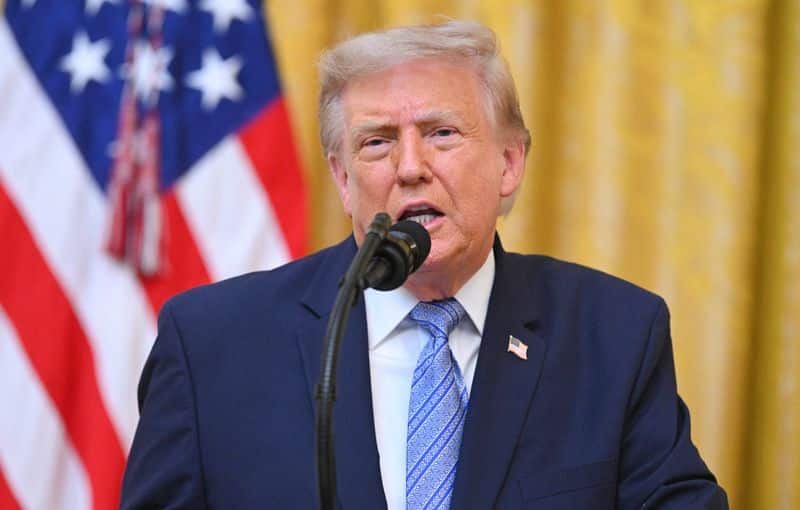
July 16 (Reuters) - President Donald Trump renewed his campaign to cast doubt on U.S. elections on Thursday, declassifying intelligence he said exposed fraud and foreign interference despite intelligence findings and independent studies that undercut several of his claims.
Trump has asserted that the 2020 elections were “rigged” more than 100 times over the first half of 2026, and has used those claims to push for Congress to pass a restrictive voter ID law called the SAVE America Act, which would impose strict ID requirements on voters, and seek greater federal intervention in elections.
The SAVE America Act has passed the Republican-controlled U.S. House of Representatives several times with a simple majority, but it does not have the 60 votes to overcome a filibuster in the Republican-led Senate.
Trump, a Republican, said the White House was releasing a trove of classified documents that he said exposed vulnerabilities in U.S. election systems, including claims that:
CHINA SOUGHT TO BOOST DEMOCRATS IN RECENT ELECTIONS
Trump accused the Chinese government of influencing elections to try to harm his fellow Republicans in the 2018 midterms and damage his reelection prospects in 2020. He also accused Beijing of compromising data on U.S. voters.
A prior U.S. intelligence report came to a different conclusion. A 2021 assessment concluded China considered conducting influence operations designed to change the 2020 election outcome but decided against doing so. It was conducted under John Ratcliffe, then Trump’s director of national intelligence and now his CIA director.
The intelligence assessment judged that China sought to collect information on U.S. voters, public opinion and political parties dating back at least to 2008. The voter data China obtained was not confidential and was not used to alter votes.
VENEZUELA MANIPULATED ITS ELECTRONIC VOTING MACHINES
Trump relied on CIA documents about purported election-rigging by former Venezuelan President Nicolas Maduro to argue that U.S. voting machines were vulnerable to hacking. He said Maduro’s government was able to digitally alter vote totals.
A CIA document summarizing intelligence reporting between 2004 and 2020 found the Venezuelan government had the capability to digitally manipulate votes.
There is no evidence that such vote-rigging has occurred in U.S. elections and Trump did not allege these techniques were used in any election in the U.S. A theory spread by Trump supporters that the Maduro government hacked U.S. voting machines in 2020 has been widely debunked.
LARGE NUMBERS OF NON-CITIZENS ARE REGISTERED TO VOTE
Trump said a review by the Department of Homeland Security identified about 278,000 non-U.S.-citizens who are registered to vote in federal elections in violation of U.S. law. Trump and his allies have repeatedly pushed such claims to seek tighter voting restrictions.
Several Republican-led states have voluntarily turned over private voter data to the Trump administration in an attempt to identify and remove purported non-citizens on their voter lists. The Trump administration has lost 15 lawsuits seeking to compel other states, largely Democratic-led, to submit voter data, according to Democracy Docket, an online election security publication.
Independent studies have found that non-citizen voting is rare. The Bipartisan Policy Center found that when states sought to verify the eligibility of their voters, just 0.04% of cases were identified as non-citizens. Elections experts have raised concerns that eligible voters could be disenfranchised in large-scale purges of state voter rolls.
FRAUD WAS DISCOVERED IN STRONG MICHIGAN DEMOCRATIC CITY
Trump revived a long-debunked claim that fraud was discovered in the strongly Democratic city of Muskegon, Michigan, involving a large-scale voter registration operation.
A police raid recovered a batch of voter registration applications collected by a Tennessee-based voter registration company. A subsequent review determined that some were legitimate, while others were fraudulent or highly suspicious because of forged signatures, incorrect addresses or other errors.
The fraudulent registrations were voided before Election Day, and authorities said that no votes related to them were cast.
The state turned the case over to the FBI in 2021, but no one was ever charged. Trump said that FBI Director Kash Patel would reopen the investigation.
Michigan Secretary of State Jocelyn Benson criticized Trump for reviving the allegations, saying in a statement the president “chose to rehash long debunked and baseless conspiracy theories.”
SUSPICIONS OVERSHADOW CALIFORNIA’S VOTE COUNT
Trump equated the slow pace of vote-counting in the closely watched races for California governor and Los Angeles mayor last month to fraud and questioned the handling of mail-in ballots. The results were officially certified last week, more than a month after primaries were held.
California’s vote count is famously slow in part because 80-90% of its 23 million voters vote by mail. While Trump and some of his allies have claimed the pace of votes showed the election was being manipulated, they have not publicly produced any evidence of fraud. Trump-endorsed Republican candidate Steve Hilton finished second in the voting in the governor’s race and advanced to the November general election.
Attorney General Rob Bonta disputed voter fraud claims, telling NPR “every count, recount, hand count, court case and audit has shown time and time again — not just in California, but throughout this country — that there is no widespread voter fraud.”
(Reporting by Andrew Goudsward, Jonathan Landay, Erin Banco and Kristina Cooke; Editing by Michael Learmonth and Howard Goller)