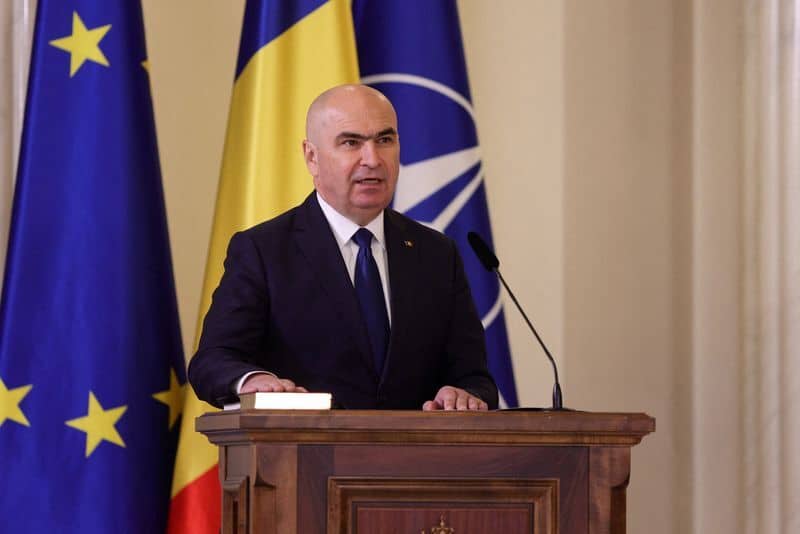
BUCHAREST, April 23 (Reuters) - Seven ministers from Romania’s largest party, the Social Democrats, resigned from the pro-European coalition government of Prime Minister Ilie Bolojan on Thursday, depriving him of a parliamentary majority and endangering access to EU funds.
The Social Democrats (PSD), who have seen supporters switch to the opposition far right, had called on Bolojan, a Liberal, to resign on Monday, upset by his efforts to cut state spending to reduce the largest budget deficit in the European Union, even though they had endorsed all cabinet measures to date.
The likely collapse of the 10-month-old coalition of four parties ushers in weeks or months of policy deadlock. This prospect threatens Romania’s credit rating on the last rung of investment grade, further deficit reductions and borrowing costs and some 27 billion euros of EU funds and loans.
Bolojan, who has refused to resign, has said he will appoint interim replacements from among remaining cabinet members, who can hold the seats for 45 days before another cabinet must be approved by parliament.
The Social Democrats plan to file a no-confidence motion against Bolojan in coming days, and could topple the cabinet with support from the opposition hard-right Alliance for Uniting Romanians, parliament’s second largest party, which is currently leading all opinion surveys.
Senior party members said the PSD deputy ministers in the cabinet would resign when the no-confidence vote has been filed.
“PSD is ready to form a new pro-European government and support a prime minister, either a politician or a technocrat, who is receptive to citizens’ problems and who is able to collaborate with the parties to ensure a parliamentary majority,” the party said in a statement.
Bolojan’s Liberal Party ruled out on Tuesday forming another coalition with the leftists, without whom a pro-European parliamentary majority cannot be achieved.
At talks with Romania’s centrist President Nicusor Dan on Wednesday all four parties in the coalition ruled out joining forces with the opposition far right but said they had not agreed on any way to further govern together.
The current coalition was formed 10 months ago in an attempt to contain the gains of far-right parties but they have repeatedly clashed over budget cuts.
(Reporting by Luiza IlieEditing by Gareth Jones)