By Andreas Rinke and Kirsti Knolle
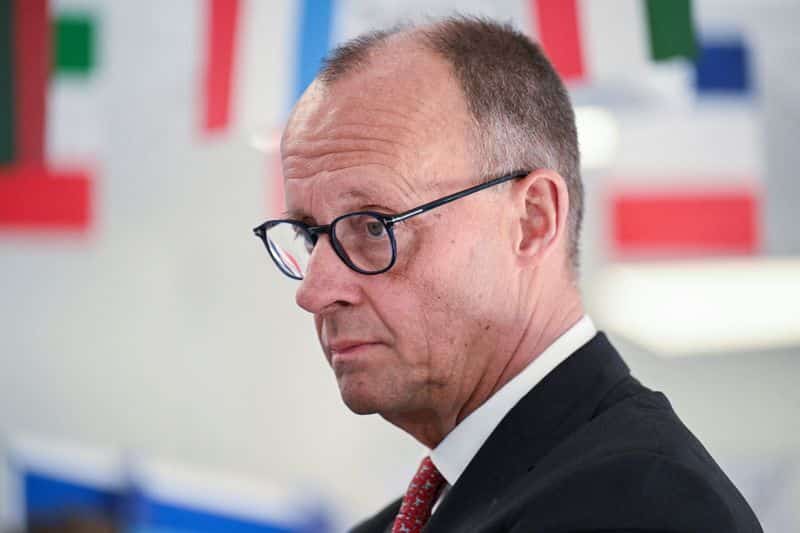
BERLIN, April 27 (Reuters) - German Chancellor Friedrich Merz said on Monday Iran’s leadership was humiliating the United States and getting U.S. officials to travel to Pakistan and then leave without results, in an unusually abrupt rebuke over the conflict.
Merz also said he not see what exit strategy the U.S. was pursuing in the Iran war - comments that underlined deep divisions between Washington and its European NATO allies, which had already been festering over Ukraine and other issues.
“The Iranians are obviously very skilled at negotiating, or rather, very skilful at not negotiating, letting the Americans travel to Islamabad and then leave again without any result,” he said during a talk to students in the town of Marsberg.
“An entire nation is being humiliated by the Iranian leadership, especially by these so-called Revolutionary Guards. And so I hope that this ends as quickly as possible,” he added at the venue in the state of North Rhine-Westphalia.
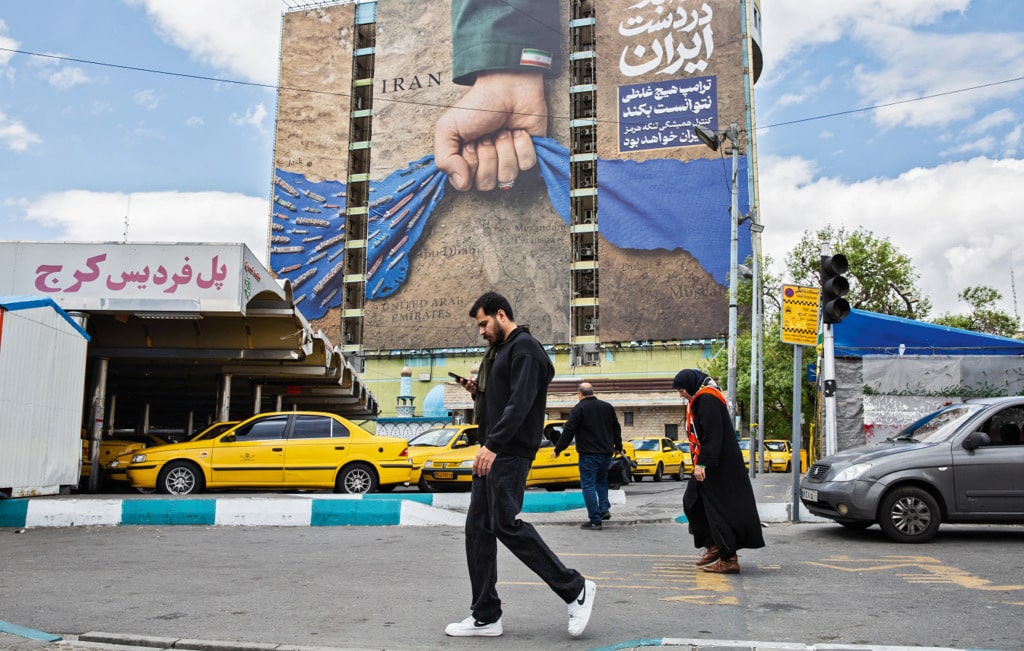
U.S. President Donald Trump has harshly criticized NATO allies for not sending their navies to help open the Strait of Hormuz during the conflict. The waterway has remained virtually shut, causing market turmoil and unprecedented disruption in energy supplies.
Merz reiterated that Germans and Europeans were not consulted before the U.S. and Israel started attacking Iran on February 28, and that he had conveyed his scepticism directly to Trump afterwards.
“If I had known that it would continue like this for five or six weeks and get progressively worse, I would have told him even more emphatically,” Merz said, comparing it to previous U.S. wars in Iraq and Afghanistan.
Hopes of reviving peace efforts have receded since Trump scrapped a visit on Saturday by his envoys Steve Witkoff and Jared Kushner to Islamabad, the Pakistani capital.
Iranian Foreign Minister Abbas Araqchi travelled to Russia on Monday after failed talks in Pakistan and Oman.
Merz said it was evident the Strait of Hormuz had been at least partially mined. “We have offered, also as Europeans, to send German minesweepers to clear the strait, which has obviously been mined in part,” he said.
He said the conflict was costing Germany “a lot of money, a lot of taxpayers’ money and a lot of economic strength.”
(Reporting by Andreas Rinke, writing by Kirsti Knolle; editing by Matthias Williams)