By Joan Faus
BARCELONA, June 8 (Reuters) - When Catalan architect Antoni Gaudí was fatally struck by a tram in Barcelona in 1926, he did not receive immediate medical attention as onlookers initially thought he was a vagabond.
At the time, he was sleeping in a modest room in the grounds of the Sagrada Familia basilica which was under construction. Throughout his career, some of his distinctive, undulating and colourful buildings were harshly mocked in the local press.
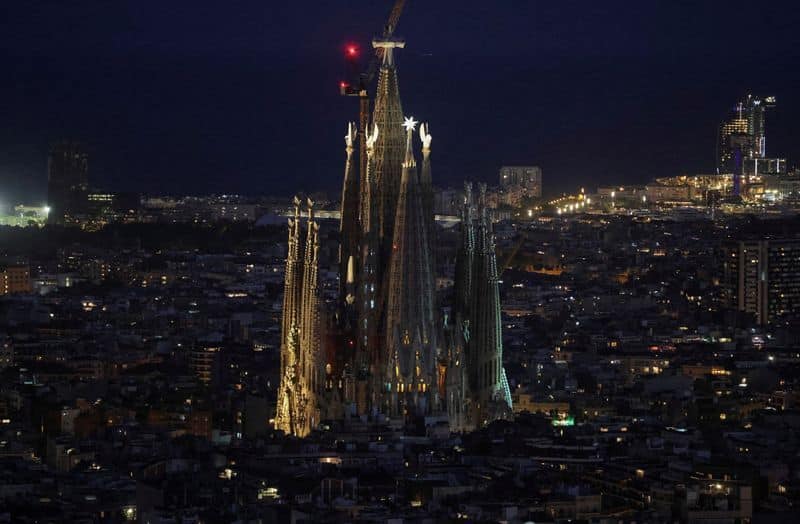
This week, however, 100 years on from Gaudí’s death, Pope Leo XIV will visit Barcelona and his most famous creation, the Sagrada Familia (Holy Family), on Wednesday to inaugurate its 172.5-metre Tower of Jesus Christ.
The structure’s completion makes the Sagrada Familia the world’s tallest church.
Gaudí’s legacy draws millions of visitors to Barcelona each year and seven of his works are UNESCO heritage sites. The main Gaudí buildings in Barcelona generate annual revenues of around 240 million euros ($276 million) combined thanks to ticketing, according to local newspaper La Vanguardia.
Pope Leo’s visit, the third by a pope, comes a year after the Vatican approved an important step towards Gaudí’s sainthood.
“The most striking thing about Pope Leo’s visit is precisely that, along with blessing the Tower of Jesus Christ, he is coming to meet Gaudí as a spiritual friend,” said Gaudí and architecture scholar Chiara Curti.
“There is a shift in perception of Gaudí’s work. Before, his works were criticized - though some appreciated them. Now all the attention is directed towards the person.”
‘MAGICAL ARCHITECTURE’
Dutch art historian and Gaudí biographer Gijs van Hensbergen said his recognition by the church was fitting for a man guided by strong religious beliefs.
“(Gaudí) plays into the 19th century romantic idea of the bohemian artist, someone who has lived devoted to a mission, regardless of what other people say,” he said, adding that Gaudí would be surprised by his current popularity.
Construction of the Sagrada Familia started in 1882 but suffered a major setback when Gaudí’s workshop was set on fire in 1936. Thanks to Gaudí’s supporters rescuing as many sketches and scale models as they could, it is now due for completion by around 2035 with three facades and 18 towers.
Last year, 4.9 million people visited the basilica, a new record, with their entry fees funding its ongoing construction.
Among those visiting last week were Czech friends Aneta Ederová, 27, and Adam Bašta, 26, who took in three Gaudí buildings during an eight-hour stopover in Barcelona by their cruise ship.
Gazing at Gaudí’s Casa Milà, Ederová said Barcelona had always been on her “bucket list” and Gaudí’s buildings were “magical”. “They draw your attention right away,” she said.
(Reporting by Joan Faus, additional reporting by Nacho Doce and Horaci Garcia, editing by Aislinn Laing)