By Joyce Lee
SEOUL, Aug 10 (Reuters) - South Korea and the United States will conduct major joint military drills from August 17 to 27, incorporating exercises to counter drones, GPS disruption and cyberattacks as they adapt to North Korea’s evolving capabilities, officials said on Monday.
The annual Ulchi Freedom Shield (UFS) exercise will test operations and support the South Korean government’s emergency readiness drills, the allies said in a joint statement.
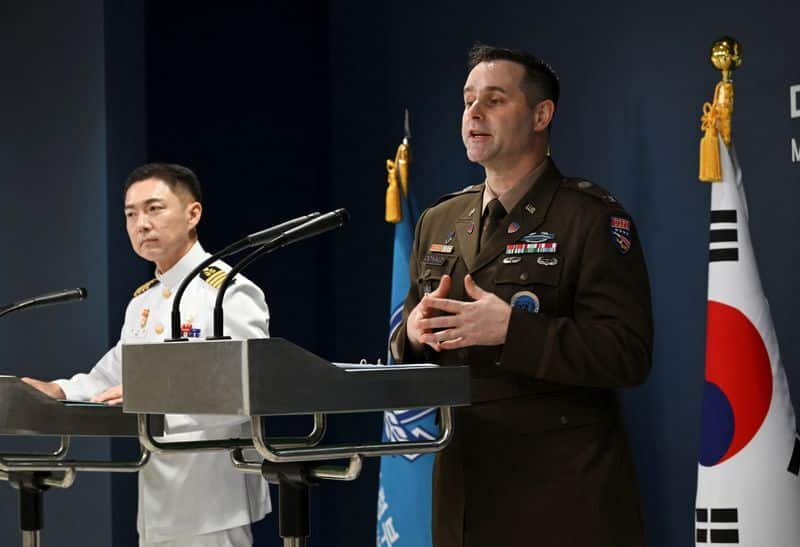
Colonel Ryan Donald, director of public affairs for the Combined Forces Command, United Nations Command and U.S. Forces Korea, said the exercise reflected the changing character of war, including the growing use of unmanned systems, electronic warfare and cyber operations.
“DPRK soldiers have deployed and fought in Ukraine, and they’ve taken those lessons they’ve learned there and brought them back to North Korea,” said Donald, using the initials of the North’s official name, the Democratic People’s Republic of Korea.
“That changes the DPRK capability, and our training accounts for that threat,” he said.
The drills were strictly focused on threats to the Korean Peninsula and the defence of South Korea, he added.
About 18,000 South Korean troops will take part, a scale similar to previous years, said Colonel Jang Doyoung of South Korea’s Joint Chiefs of Staff.
While the allies say the drills are defensive in nature, Pyongyang routinely denounces the military exercise as a provocation that heightens tensions.
North Korea, which last week fired a short-range ballistic missile towards the sea, has continued developing nuclear weapons, ballistic and cruise missiles, artillery and other conventional systems in defiance of United Nations Security Council sanctions.
The drills come as relations between the two Koreas remain strained.
North Korea has hardened its stance toward South Korea, revising its constitution this year to remove references to reunification and define its territory as bordering the South.
A separate defence clause described the North as a “responsible nuclear weapons state” and specified that the country will advance nuclear weapons development.
(Reporting by Joyce LeeEditing by Ed Davies)