By Simon Lewis, Ryan Patrick Jones and Ismail Shakil
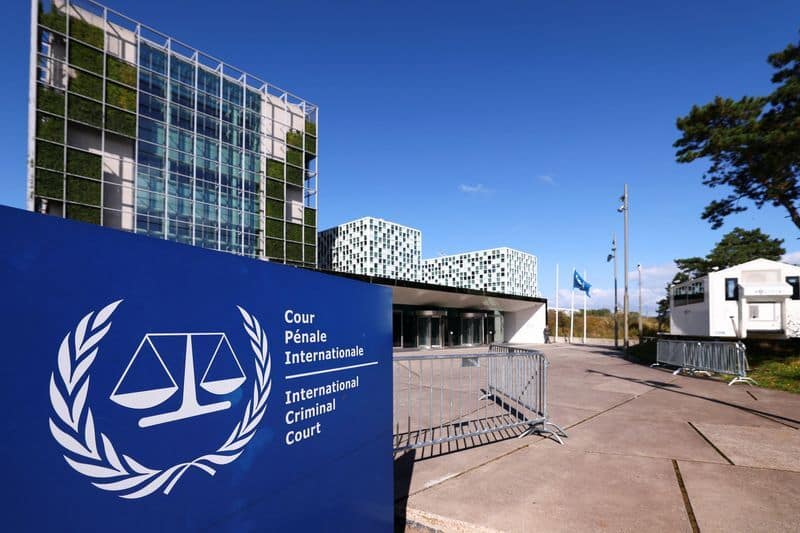
WASHINGTON, Aug 18 (Reuters) - The U. S. imposed sanctions on Tuesday on the International Criminal Court’s president and a senior trial lawyer at the court, Secretary of State Marco Rubio said.
The move is the latest escalation in the Trump administration’s campaign against The Hague-based court, which was established in 2002 by the international community to prosecute war crimes, genocide and crimes against humanity. The U.S. is not a member of the court.
Rubio said in a statement that he was imposing sanctions on Tomoko Akane, a Japanese judge who is president of the International Criminal Court, and Abdoulaye Seye, a senior trial lawyer and a Senegalese national, under a Trump executive order last year authorizing sanctions against the court.
“These individuals have directly engaged in efforts by the ICC to investigate, arrest, detain, or prosecute officials whose government has not consented to ICC jurisdiction,” Rubio said.
The ICC condemned the move, saying in a statement that the measures undermine the rule of law.
“When judicial actors are threatened for applying the law, it is the international legal order itself that is placed at risk,” the ICC said.
Seye is a senior trial attorney on the prosecution team that sought an arrest warrant for Israeli Prime Minister Benjamin Netanyahu, and has been nominated for election as an ICC judge.
Top ICC judge Akane warned in December that the U.S. sanctions will “rapidly undermine the court’s operations in all situations and cases, and jeopardize its very existence”.
The U.S. imposed targeted sanctions last year on several ICC officials, including prosecutors and judges, citing the ICC’s arrest warrants for Israeli Prime Minister Benjamin Netanyahu and former Israeli defense minister Yoav Gallant as well as a past probe into U.S. troops in Afghanistan.
The sanctions freeze any U.S. assets the individuals may have and essentially cut them off from the U.S. financial system, with which almost all internationally operating banks have close ties.
The Treasury also issued a general license on Tuesday authorizing the wind-down of transactions involving Akane and Seye through September 17.
‘DEFENDING’ NETANYAHU
Three International Criminal Court judges sued Trump and his administration in June over the sanctions, arguing that the measures were unlawful. Advocacy groups, in two separate lawsuits, have said that the U.S. campaign infringes on the constitutional rights of organizations working with the court to seek justice for atrocities around the world.
Rubio said last month that the administration would step up efforts to undermine the ICC, including a diplomatic campaign aimed at persuading other countries to quit the institution, a call that at least five countries have already heeded. Rubio argued that the court posed a threat to U.S. personnel carrying out U.S. President Donald Trump’s hardline immigration policies or strikes on boats accused of carrying drugs, as well as other U.S. service members.
Trump has said that the campaign was aimed at defending Netanyahu and others from prosecution, rather than Trump himself.
The U.S. has never been a member of the court. The ICC asserts jurisdiction only if a member state is unable or unwilling to prosecute atrocities itself.
However, the ICC statute also gives the court the power to prosecute atrocity crimes committed on the territory of member states by nationals of non-member states.
(Reporting by Ismail Shakil in Ottawa, Ryan Patrick Jones in Toronto and Simon Lewis; Additional reporting by Anthony Deutsch and Michael Martina; Editing by Michelle Nichols and Mark Porter)