By Gopal Sharma
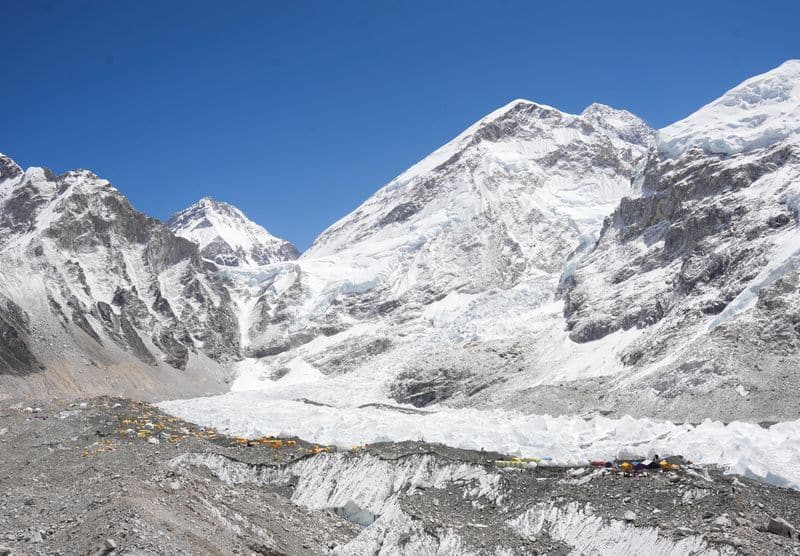
KATHMANDU, April 24 (Reuters) - Hundreds of mountaineers are stranded at the Himalayan base camp for Mount Everest as a crevasse strewn with chunks of ice, one towering block among them, delays the opening of the route to the world’s tallest peak, officials and climbers said on Friday.
The annual climbing season for the 8,849‑m (29,032‑ft) summit runs from April to May, months which offer the best weather conditions in which to reach the windswept, icy peak.
But a massive 100‑ft (30‑m) serac, or dangerous chunk of ice, blocks the path above base camp this year for seasoned Sherpa climbers charged with fixing ropes, placing ladders and carving a safe route through the treacherous Khumbu icefall to Camp II.
“It has now impacted everyone’s schedules … expeditions are all being delayed because of the impasse,” Garrett Madison of U.S.-based Madison Mountaineering told Reuters from base camp.
“It looks likely to fall imminently, however, it could take some time,” said Madison, who is leading a team of international climbers on his 16th ascent.
The crevasse holding up the task of the sherpas, or “icefall doctors”, as they are popularly called, has “no good or viable route options through it”, he added.
The route is generally opened by the third week of April, said Himal Gautam of Nepal’s Department of Tourism.
“If the serac melts or collapses now, allowing the ‘icefall doctors’ to open the route, climbers could still make their summit bids on schedule,” Gautam added.
If the stalemate continues, he said, authorities would send more Sherpa climbers to assess the risk and explore alternative routes. Officials said a team of eight “icefall doctors” is now at base camp.
Mingma Sherpa, an 11‑time Everest summiteer leading an international team at base camp, said acclimatisation rotations and the ferrying of gear to upper camps have been delayed.
Everest straddles the border between Nepal and China’s Tibet region and can be climbed from both sides, though most climbers approach from the Nepali side.
Mountain climbing is a key source of income and employment for Nepal, home to eight of the world’s 14 highest peaks. Authorities have issued 410 Everest permits so far this season, at a cost of $15,000 each.
(Reporting by Gopal Sharma; Editing by Clarence Fernandez)