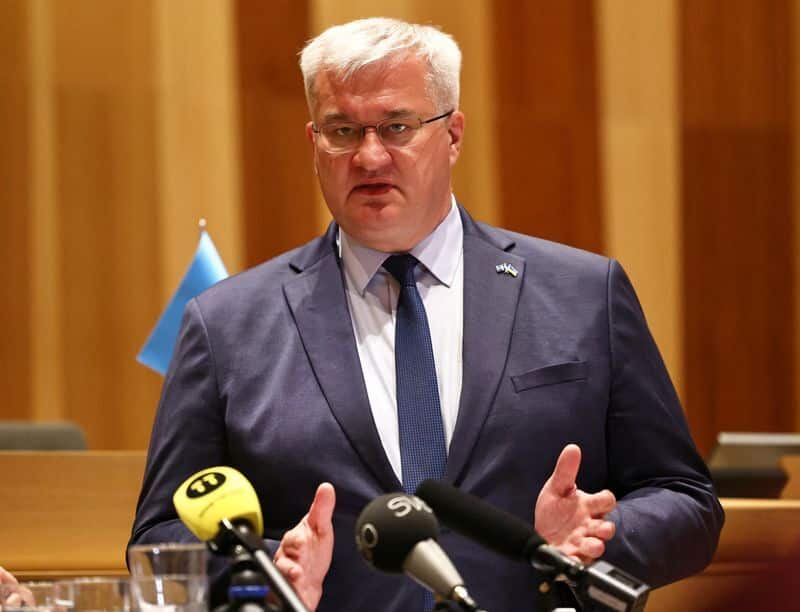
June 3 (Reuters) - Ukrainian Foreign Minister Andrii Sybiha called on Wednesday for dialogue between Ukraine and Poland to help defuse tensions after Kyiv renamed an army unit after nationalist insurgents involved in massacres of Poles in World War Two.
President Volodymyr Zelenskiy has caused indignation in Poland by signing a decree recognising a Ukrainian special forces unit’s contribution to the current war effort against Russia by naming it after the Ukrainian Insurgent Army, or UPA.
As well as fighting the Nazis and the forces of the then Soviet Union to carve out an independent Ukraine, the UPA was involved in the Volhynia massacres, a series of killings from 1943 to 1945 in which Poland says around 100,000 Poles were killed. Thousands of Ukrainians died in reprisal killings.
Since Russia’s invasion of Ukraine in February 2022, Poland has been one of Kyiv’s staunchest allies, but the historical dispute has complicated relations between the neighbours.
Polish President Karol Nawrocki said last week he wanted a state body to discuss stripping Zelenskiy of Poland’s top honour over his decree.
“The escalation of tensions between Ukraine and Poland benefits neither Ukrainians nor Poles,” Sybiha said on social media, writing also in Polish.
“We are committed to discussing all issues, including the most difficult ones, in a spirit of mutual understanding and openness,” he said, expressing gratitude to Poland for its leadership in supporting Ukraine as it fights against Russian forces.
Sybiha called for a cooling of emotions, saying both countries need to focus on countering a common enemy and strengthening European security.
“The threat from our historic enemy, Russia, once again looms over all of us — Ukrainians, Poles, and other Europeans alike. We cannot forget that fighting each other will lead us to the edge of the abyss,” he added.
He said the army unit’s name had been chosen by Ukrainian soldiers who wanted to commemorate those who also fought against “imperial Moscow”.
“I know for certain that our military had absolutely no anti-Polish intent,” Sybiha said.
Sybiha also referenced the work that has been done on the historical issue, including the exhumation and reburial of remains of Poles and meetings between historians from both countries.
“This was grounded not in political slogans, but in archival documents, records, and academic research—which paved the way for dialogue on sensitive issues and ultimately allowed us to hear one another,” he said.
(Reporting by Anna Pruchnicka; Editing by Hugh Lawson)