By Gayatri Suroyo and Stefanno Sulaiman
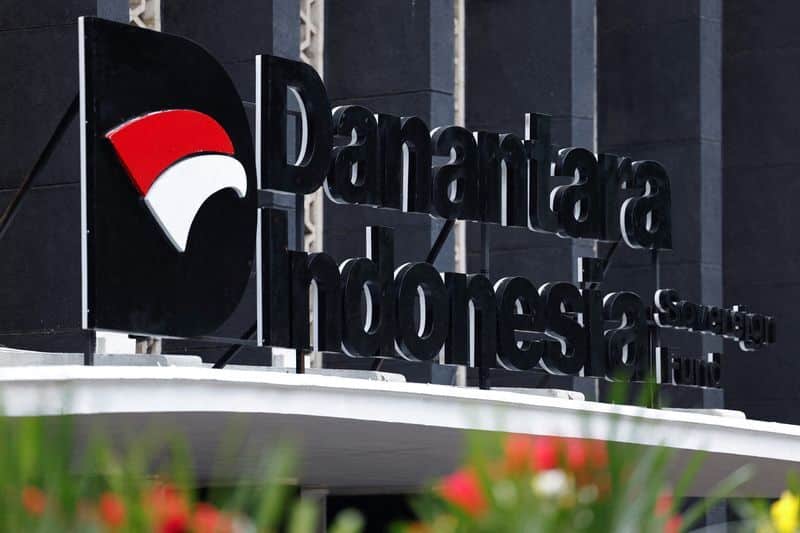
JAKARTA, June 19 (Reuters) - A rapid expansion of Indonesia’s sovereign wealth fund Danantara’s mandate is entrenching its role as a key vehicle for President Prabowo Subianto’s nationalist agenda, even as doubts grow over its execution capacity and political independence.
Prabowo rattled global markets last month by announcing Indonesia will centralise exports of strategic commodities, starting with coal, palm oil and ferroalloys. In a fiery speech to parliament, he called it a necessary state intervention to halt decades of exploitation of the resource-rich country.
It was a familiar rallying cry, part of the former general’s nationalist narrative that he has stressed since taking power in 2024.
Rather than tasking existing government departments, Prabowo handed execution to a new unit, Danantara Sumberdaya Indonesia (DSI), signalling the fund’s expanding role in Southeast Asia’s biggest economy. Danantara reports directly to the president.
“It’s increasingly clear that all its (Danantara’s) functions are decided based on politics, whether for political purposes or to meet (Prabowo’s) political promises,” Yose Rizal Damuri, executive director and economist with the Center for Strategic and International Studies (CSIS), said.
“Instead of improving state institutions, he created a new body and is giving it new roles,” Damuri said.
Within days, another presidential decree created a development investment arm inside Danantara that can draw finance from the state budget.
It is expected to focus on projects deemed nationally strategic, even if they offer low commercial returns, three people familiar with the discussions said, declining to be identified because they were not authorised to speak to media.
The comments shed light on potential areas of focus not previously reported. One of the sources said this could include a role in a revived national car project - another of Prabowo’s policy promises.
Danantara and the presidential palace did not respond to requests for comment.
During a speech to the World Economic Forum in January, Prabowo said Danantara was built with strong oversight and institutional responsibility, ensuring its governance and management met the best international standards.
He also warned officials at the fund’s first anniversary on March 11 that he had no tolerance for falsified data, sugarcoated updates or manipulated reports.
CHICKEN FARMS TO HOTELSDanantara is overseeing a wide range of projects, from investing in chicken farms and supporting the president’s troubled free school meals programme to developing hotels in Mecca for Indonesian pilgrims.
Launched in early 2025, Danantara was mandated to manage about $900 billion of state assets across 1,000 companies and use dividends to maximise investment returns.
It was pitched as Indonesia’s version of Singapore’s state investment company Temasek, run on commercial principles, independent of political considerations.
Some analysts now see its remit extending well beyond that.
Economists Krisna Gupta, Riandy Laksono and Rizki Siregar, writing in the Bulletin of Indonesian Economic Studies (BIES), said Danantara is “at once a sovereign wealth fund, a development bank and a public service provider.”
The fund has already been drawn into government policy priorities, including tariff negotiations with Washington and helping stabilise a stock market selloff.
YET TO PUBLISH FINANCIAL REPORT
Sandra Sahelangi, senior adviser at Flint Global, a corporate consultancy, said a broad-mandate fund could remain credible if it showed results and was insulated from day-to-day politics.
“The breadth (of the mandate) by itself is not unprecedented, but it does sit on the outer edge of what international investors are accustomed to underwriting in a single entity,” she said, adding investors would also expect a clear separation of commercial investments and policy tasks.
Danantara has yet to publish a financial report ahead of an end-June deadline. Fund officials say it takes time to consolidate reports at all of its units.
The lack of publicly available data makes it difficult to assess Danantara’s operational capacity, said Tabita Diela, a researcher at the Center of Economic and Law Studies (CELIOS).
CELIOS and other think tanks and advocacy groups have created a joint platform to monitor Danantara’s projects and funding amid a lack of disclosure, she said.
REGULATIONS IN FLUX?
Supporters say Indonesia needs a powerful institution to improve returns on state assets, discipline sprawling state companies and squeeze more from natural resources - goals the existing bureaucracy had failed to achieve.
Still, the export mandate illustrates the gulf between the fund’s expanding responsibility and capacity.
Regulations issued after Prabowo’s speech stipulate that DSI must handle commodity exports from next year, a plan analysts say requires major investments and infrastructure.
At the time of the announcement, DSI only had one employee - Chief Executive Luke Mahony, Danantara’s Chief Investment Officer Pandu Sjahrir told a local media roundtable.
Another Danantara official said on May 31 that DSI had started hiring staff with commodities know-how.
DSI has since assured industry associations that its role would not be as involved as initially envisaged, according to meeting minutes seen by Reuters, which cited significant capital needs and business risks.
It is unclear whether this will prompt revised regulations.
A Danantara unit raised $1.5 billion in its debut U.S. dollar bond sale last week. The fund said the oversubscribed sale reflected strong investor confidence and should bolster domestic confidence in its framework.
A banking source with knowledge of the issuance, however, said investors largely bought the bonds because they offered higher returns than Indonesian government debt while carrying similar exposure to the state, rather than as a judgment on Danantara’s operational capacity.
(Reporting by Gayatri Suroyo, Stefanno Sulaiman and Bernadette Christina in Jakarta, and Yantoultra Ngui in Singapore; Editing by Gibran Peshimam and Ed Davies)