By Hyeyoon Cho and Daewoung Kim
ANDONG, South Korea, Aug 6 (Reuters) - Hwang Hyun-guk, a 69-year-old farmer in South Korea, often gets engrossed in tending his pepper crop. These days, however, as the country grapples with its worst heatwave in years, drones flying overhead urge him to take breaks, cool down and work shorter hours.
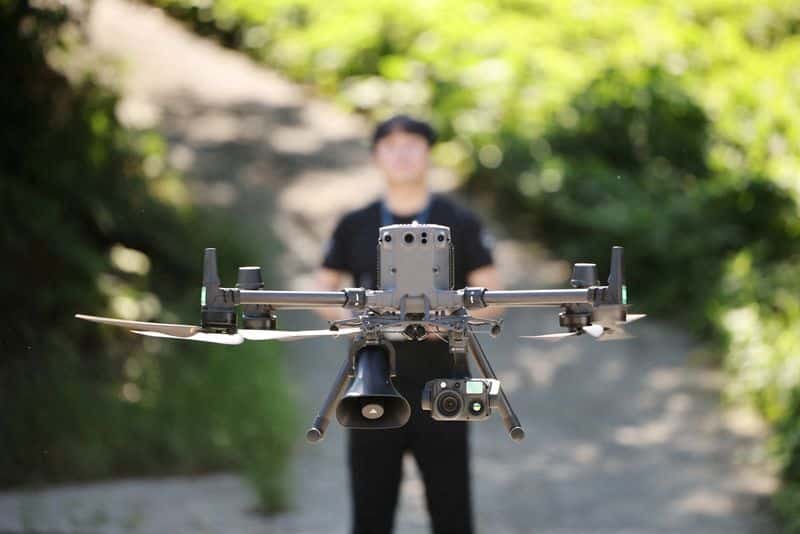
The drones, equipped with loudspeakers and thermal imaging cameras, are part of measures taken by North Gyeongsang Province to protect its farmers, many of whom are elderly, and reduce heat-related illnesses.
Temperatures in the eastern province, a key farming belt, have soared as high as 41.2 degrees Celsius (106.16 degrees Fahrenheit).
South Korean President Lee Jae Myung has called the heatwave a “national disaster” and on Thursday ordered an all-out response as deaths attributed to the heat rose to 21.
The province built the drone surveillance system in partnership with the Korea Forest Service in 2023 to monitor wildlife.
Authorities began using drones for heatwave alerts last year, after officials sought to make broader use of the technology, said Hwang Han-jae, an official in the Safety and Administration Office in the provincial government.
The official drives out twice a day to fly the drones, which can travel up to 5 kilometres (3.11 miles) and reach areas that would otherwise be difficult to access. The drones broadcast warnings such as “Do not work for long hours” and “There is a heatwave alert, so be careful.”
In rural areas, local leaders broadcast heat warnings through a loudspeaker, but many farmers cannot hear the messages when in the fields, he said.
“We can also send drones to broadcast alerts to particularly concerning spots, based on what the thermal imaging camera shows us,” said Hwang.
Government data shows the province accounts for 16.7% of South Korean farming households, the highest share nationwide.
People aged 65 and older make up 59.2% of the farming households in the province.
Other South Korean regions, such as Gwangju and South Jeolla, also use drones to broadcast heatwave warnings.
Hwang, the farmer, said this year’s heatwave was worse than previous years, prompting him to cut his morning working hours from seven to five and hire two migrant workers to help. They harvest crops under umbrellas, moving on wheeled stools.
“We spend less time in the fields this year, since it’s challenging to work outdoors under the scorching temperature,” he said. “We’ve also seen a 30% decrease in crop yields compared to last year because of the heat,” he said.
(Reporting by Hyeyoon Cho and Daewoung KimEditing by Ed Davies)