By Jonathan Saul, Renee Maltezou and Yannis Souliotis
DUBAI/ATHENS, April 22 (Reuters) - Iran said it had captured two container ships seeking to exit the Gulf via the Strait of Hormuz on Wednesday after firing on them and another vessel, its first seizures since its war with the United States and Israel began in February.
Iran’s semi-official Tasnim news agency reported the seizures, adding that its Revolutionary Guard Corps Navy had warned that any disruption to order and safety in the strait would be considered a “red line.”
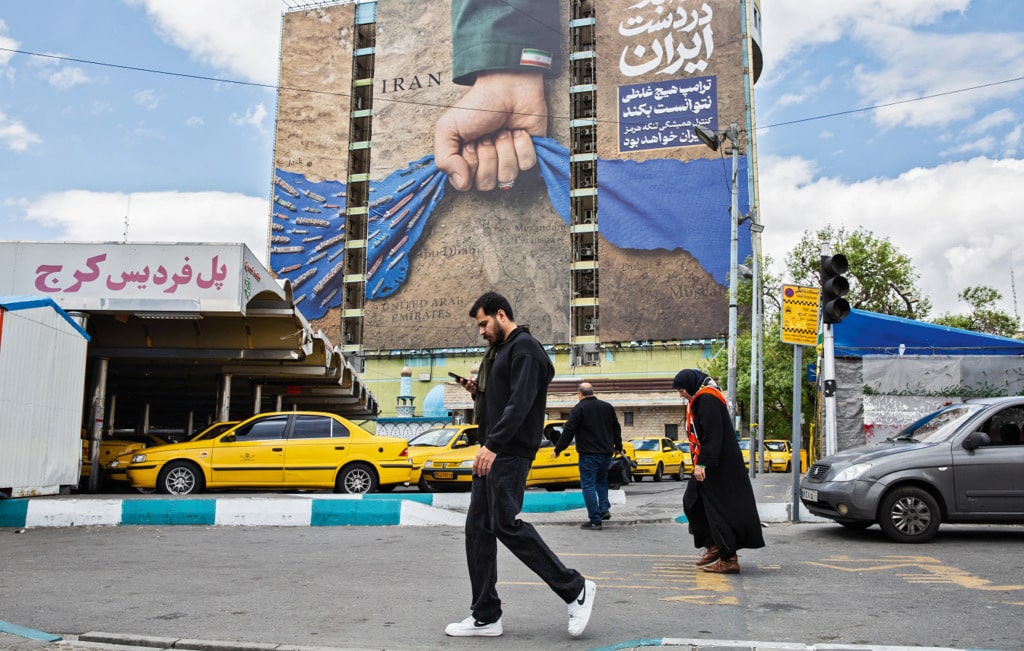
The country’s actions to bottleneck the strait, used to transit about one-fifth of the world’s daily oil and gas supply, have caused the worst disruption in energy supplies in history. The strait usually sees about 130 vessels a day enter and exit the Gulf, but that has dwindled to just a few ships passing through every day.
After several weeks, the U.S. began a blockade of Iranian ships as well. With peace talks currently on hold, the fate of shipping through the vital artery remains up in the air.
“The latest seizures make clear, even an ‘open’ Strait of Hormuz is not a safe Strait of Hormuz for seafarers, ships and cargo,” said Peter Sand, chief analyst at ocean and air freight intelligence platform Xeneta.
The seizure of one of the ships, the Panama-flagged MSC Francesca, was confirmed by Montenegro’s minister of maritime affairs, who said four Montenegrin seafarers were on board and that they and the rest of the crew were safe.
“Negotiations between the shipping company and the Iranian side are ongoing, and the relevant state authorities are in constant contact with the crew,” the minister, Filip Radulovic, said on X.
SHIPS FIRED UPON
The IRGC accused the MSC Francesca and the Liberia-flagged Epaminondas of operating without required permits and tampering with their navigation systems.
The Greek-operated Epaminondas had reported being fired upon about 20 nautical miles northwest of Oman. It said it had sustained damage to its bridge after being hit by gunfire and rocket-propelled grenades from an IRGC gunboat, according to the United Kingdom Maritime Trade Operations and maritime security sources.
Greek operator Technomar Shipping Inc confirmed the attack in a statement and said that its crew were safe. In an updated statement it confirmed that Epaminondas has since been boarded by Iranian forces.
The vessel has a crew of 21 members made up of Ukrainians and Filipinos, according to the Greek coast guard, which could not confirm the seizure.
“Technomar remains in close communication with the relevant authorities in the region,” the operator said. “Our priority remains the safety and well-being of our crew as we work with all relevant stakeholders to ensure their continued safety and urgently resolve the matter.”
Maritime security sources said that there were three people onboard the gunboat which attacked Epaminondas, adding the master of the ship said no radio contact was made prior to the attack and the vessel had received earlier permission to transit the strait.
The ship was now likely headed to Bandar Abbas, one of the sources said.
MSC Francesca was hit by gunfire about eight nautical miles west of Iran, but it was not damaged and its crew were safe, according to the UKMTO and the sources.
Operator MSC, the world’s biggest container shipping group, did not immediately respond to a Reuters request for comment.
According to three sources, the Epaminondas is also on charter to MSC.
A third, Liberia-flagged container ship, Euphoria, was fired upon in the same area but was not damaged and resumed sailing, later reaching Fujairah in the United Arab Emirates, the sources said.
The attacks occurred while the three ships, some switching their navigation systems off, attempted to exit the Strait of Hormuz in a row in the early morning hours, they added. The seizures were the first since 2024, when Iran had captured the container ship MSC Aries in Hormuz.
There was no immediate information about what, if any, cargo the ships were carrying.
OIL BOUNCES HIGHER
Oil prices rose Wednesday as the continued closure of the Strait of Hormuz weighs on global oil supply. With the strait blockaded, more oil is being used daily worldwide than being supplied, running down reserves. Benchmark Brent crude closed above $100 a barrel for the first time in more than two weeks on Wednesday.
“The Iran war and strait closing are unprecedented and there is no line of sight on a final outcome and timing, creating the potential for more headline noise and volatility,” Jonathan Chappell, senior managing director at investment bank Evercore, wrote in a note.
Tehran imposed restrictions on ships using the strait at the southern end of the Gulf following U.S. and Israeli bombing attacks on Iran on February 28, bringing traffic to a virtual standstill.
Iranian shipping remained largely unfettered, however, empowered in part by a one-month U.S. sanctions waiver issued on March 20 allowing it to export crude oil and oil products.
Washington since closed down that trade with a U.S. blockade of Iranian ships entering or exiting the Gulf.
(Reporting by Jonathan Saul in London, Yannis Souliotis and Renee Maltezou in Athens, Nayera Abdallah and Jana Choukeir in Dubai, Aleksandar Vasovic in Belgrade; Editing by Toby Chopra, Jason Neely, William Maclean, Rod Nickel and David Gaffen)