By Doyinsola Oladipo
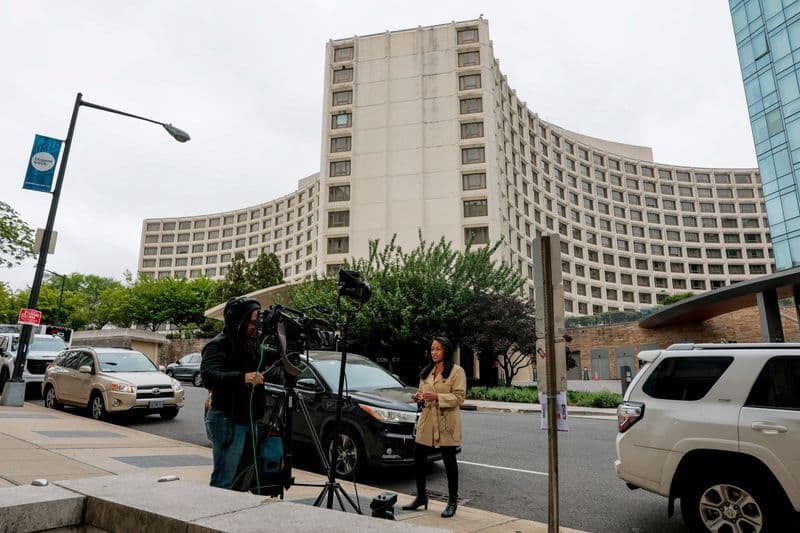
NEW YORK, May 2 (Reuters) - The suspect charged with storming a security checkpoint and firing a shotgun near the White House Correspondents’ Association dinner on Saturday mocked security measures at the Washington Hilton that allowed him to get close to President Donald Trump.
“I expected security cameras at every bend, bugged hotel rooms, armed agents every 10 feet, metal detectors out the wazoo,” the hotel guest identified by law enforcement as Cole Allen, 31, said in a manifesto ahead of the attack. “What I got,” he added, “is nothing.”
Allen’s attack heightened a decades-old problem for the hotel industry: how to tighten security while maintaining a sense of warmth and hospitality. Some new security firms are offering AI-powered monitoring solutions, but hotels have been slow to adopt anything that could spike costs and infringe on the privacy of guests.
“Security is going to continue to improve with technology in identifying strange behavior. But at the end of the day, it’s a hospitality business where customers have to feel welcome,” said Nicolas Graf, a professor of hospitality management at New York University.
Allen moved through the building before charging a checkpoint on a floor above the ballroom where Trump was dining with 2,600 journalists, government officials and others. Trump was safely evacuated and the guests were unharmed, but the breach showed the risks at such events come from inside hotels.
Hotel attackers have repeatedly exploited the same vulnerabilities: multiple access points, guests arriving at all hours, uneven screening, and blurred lines between public space and protected zones.
“Not every guest in the building is screened the same way, which is why zoning and access control become critical,” noted Morgan Stevens, senior vice president for global security operations at Crisis24.
Hotels must boost security to save lives, but also need to watch their spending. The top nine hotel, casino and resort companies by revenue generated about $102 billion in 2025, but have faced margin pressure in recent years.
After the attack, the Washington Hilton hotel said it had been operating under “stringent” Secret Service protocols. Hilton Worldwide Holdings declined to comment for this story, but the steps taken following the attack on Saturday followed a familiar pattern.
Law enforcement sealed off the hotel. Investigators retraced the suspect’s path. Security experts debated what should have been done differently.
Allen was charged with attempted assassination, discharging a firearm during a crime of violence and illegally transporting guns and ammunition across state lines when he took a train from his hometown in California. He has not yet entered a plea.
HARD TO SECURE
Hotels rarely shut down for major events but employ access controls like separate elevators or restricted floors.
It typically takes several days to a week to secure a hotel ahead of a major event, experts said. Security teams conduct site surveys, establish credential systems, and divide the property into controlled zones.
But other guests can still move through lobbies, restaurants and guest floors alongside screened attendees. That creates unavoidable security gaps, they said.
“Hotels employ a layered approach to safety and security,” said a spokesperson for the American Hotel and Lodging Association. Precautions include trained staff, surveillance systems, access control and coordination with law enforcement, the spokesperson said.
Robert McDonald, assistant professor at the University of New Haven and a retired supervisory Secret Service agent, said the agency typically works with hotel security, local police and the White House administration to develop a security plan rather than closing hotels outright.
The latest incident shook the confidence in that model. Trump said afterward that the hotel was “not a particularly secure building.” Reuters reported that U.S. law enforcement officials were reassessing security at the Washington Hilton, outside of which President Ronald Reagan was shot in 1981 by John Hinckley, leading some to call it the “Hinckley Hilton.”
After that shooting, the Hilton added a secure garage allowing presidential motorcades to arrive inside the building, and adopted wider use of magnetometers and tighter press controls, McDonald said.
Around the world, other major attacks at hotels have prompted security changes. A turning point was the 2008 assault on the Taj Mahal Palace Hotel in Mumbai, which left 31 people dead inside the property.
“The industry has improved quite significantly since” that Mumbai attack, NYU’s Graf said.
In 2017, a man aiming out the window of a 32nd-storey suite at the Mandalay Bay hotel in Las Vegas gunned down 58 people attending a nearby concert, the deadliest mass shooting in U.S. history. Hundreds more were injured.
COSTLY SECURITY UPGRADES
Hotels are starting to consider AI-powered weapons detection, but experts said making meaningful upgrades would be costly and complex.
Shortly before the December 2024 killing of UnitedHealthcare CEO Brian Thompson outside a Hilton in Midtown Manhattan, AI security firm Xtract One said it had received an inquiry from the chief security officer of a major hotel chain about its weapons-detection system. As of now, no rollout has followed.
“This is a complex problem to solve, not simply addressed by putting in a single screening device,” said Xtract One CEO Peter Evans. He noted the heavy volume of people, multiple entrances, and the variety of luggage moving through large hotels.
Interest has been stronger in some international markets, Evans said, especially in Mexico where cartel violence has frightened travelers and hurt revenues.
Anthony Varchetto, co‑founder of Blue Star Security, said hotels often allocate resources toward external threats while underestimating risks posed by registered guests.
“That’s a common oversight,” he said. “People get complacent, they understaff, and a lot of it comes down to budget.”
(Reporting by Doyinsola Oladipo in New York and Alexandra Alper in Washington; Editing by Sayantani Ghosh and David Gregorio)