By Agustin Marcarian
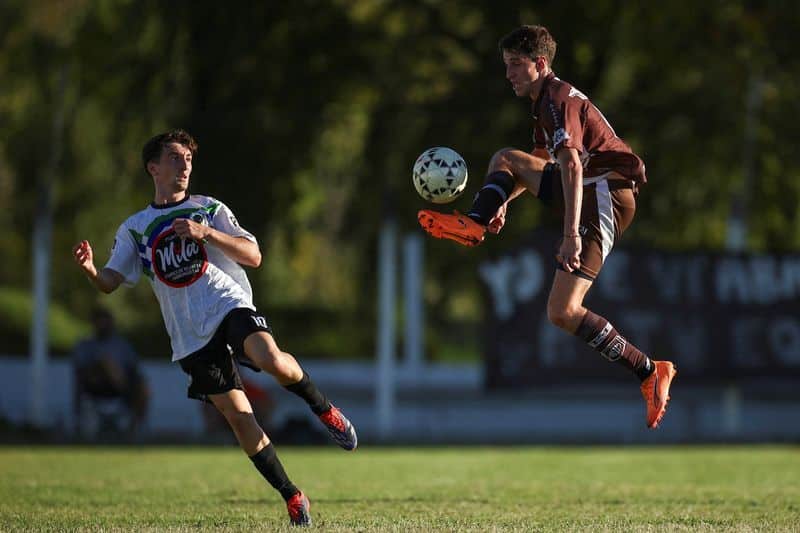
BUENOS AIRES, June 3 (Reuters) - Emiliano Migueles starts his days early, delivering water. But his true grind begins when he clocks out and hits the scrappy soccer pitches that dot the suburbs of Buenos Aires, pouring his energy into amateur football to earn extra cash.
For three-time World Cup champions Argentina, football is a feverish passion that permeates every home and every makeshift dirt field, known as a “potrero,” where youngsters play, dreaming of reaching the top leagues. Argentine legend Diego Maradona famously honed his skills at a potrero in Villa Fiorito on the outskirts of the capital.
Many matches at these potreros offer players the chance to win some cash. The amounts are tiny compared to the wages of their compatriots who play in the glittering European leagues and will soon seek to defend their 2022 World Cup win. But potrero players can sometimes earn enough to help pay the bills.
Migueles says he can earn around 500,000 pesos ($350) between his job and the football “in a good month, winning matches.”
Such matches have recently surged in popularity in impoverished neighborhoods across Argentina, as formal employment has slumped. Factories have closed and public spending has been slashed under the government of President Javier Milei, who took office in late 2023.
Migueles, 26, delivers bottled water alongside his uncle from a dilapidated truck, a precarious job with a fluctuating income. Over half of Argentinians under the age of 30 are employed in the informal economy, according to 2025 data from state statistics agency INDEC.
HIGH STAKES AND SACRIFICE
At some potrero matches, organizers assemble teams and then the players and others stake wagers. All players on the winning team receive a small payout, and then the rest of the pool is distributed proportionally among the winning bets.
At other times, teams pay an entry fee to compete in a knockout tournament with a grand prize.
Either way, the losers get nothing.
At a recent match where his team won, some 300,000 pesos ($215) was paid out. But Migueles, who didn’t place any bets, received only his 17,000 pesos ($12) pay for playing.
“I mostly don’t bet because I’m always short on cash, that’s the reality,” he said. “Betting isn’t something that appeals to me. I love the street games for everything they are, the adrenaline, everything they give you,” he said.
There are no Saturdays, Sundays, or holidays for Migueles.
Whenever there’s a match, he laces up his mud-caked boots, whether in informal games or for San Miguel, a semi-professional team in the town of General Las Heras, where he earns around 100,000 pesos ($70) per game.
The informal tournaments can run deep into the night, meaning Migueles often starts his workday running on hardly any sleep. But he wouldn’t change it.
“Football is everything to me,” said Migueles. “I gave up everything for football: work, birthdays, there’s no one I haven’t sacrificed for soccer.”
(Reporting by Agustin Marcian, Writing by Natalia Siniawski; Editing by Rosalba O’Brien)