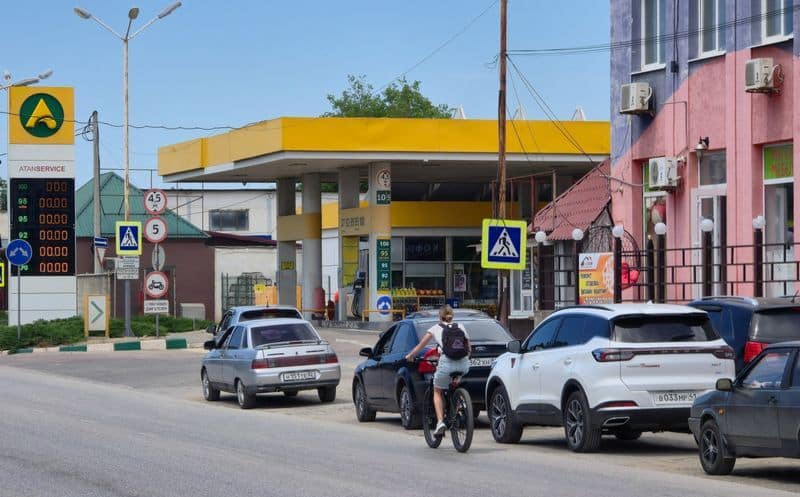
MOSCOW, June 22 (Reuters) - Russian-held Crimea, a popular destination for Russians, has suspended tourist activities and children’s summer camps until September, its governor said on Monday, owing to a fuel crisis caused by Ukrainian attacks on sea routes and supply roads.
Ukrainian drone attacks on oil refineries, including in Moscow, have also undermined the availability of gasoline and diesel in Russia, the world’s third-largest oil producer.
Fuel stations in Crimea halted all fuel sales to individuals and businesses from Sunday.
Governor Sergei Aksyonov said on Monday that the closure of children’s camps was in the interests of public security.
So far, there has been no public outrage over the fuel shortages in Russia, where protests are heavily restricted, not least because of what Moscow calls its special military operation in Ukraine.
“I don’t have enough (fuel), so we’ll drive less, use public transport, cycle or walk,” said Alexei, a resident of Sevastopol in Crimea. He did not provide his last name.
RUSSIA’S OUTPUT AND EXPORTS DOWN
The government said Deputy Prime Minister Alexander Novak, President Vladimir Putin’s lead official on oil, had met other senior officials and oil producers to address the issue.
Novak told ministries and agencies to prepare a balanced action plan aimed at maintaining the stability of the domestic fuel market, it said, while oil companies reported on measures to supply the domestic market, maintain stable prices, increase output and commission new production capacities.
Speaking to reporters about the situation in Crimea, Kremlin spokesman Dmitry Peskov said both the government and oil companies were working to resolve the fuel disruptions caused by Ukraine.
Russia’s fuel production and exports have been declining due to Ukraine’s drone attacks.
Russia lost about 25% of gasoline output last week, compared with the daily average in June 2025, with a drop to some 90,000 metric tons (765,000 barrels) per day, industry sources said.
According to LSEG data and market sources, Russia’s seaborne oil products exports fell 15% to about 3.3 million metric tons in the first half of June, compared to the first half of May, hit by unplanned refinery maintenance after repeated drone attacks.
Authorities in many regions including Lipetsk, Rostov, Tatarstan and Voronezh — all in the European part of Russia — and in far eastern Khabarovsk and East Siberia’s Irkutsk have reported supply disruptions or a lack of certain types of gasoline and diesel. They have also spoken of limits on fuel sales.
Reuters correspondents found some types of fuel, including 95-octane gasoline and diesel, were not on sale at several filling stations in Moscow.
Moscow authorities have said the filling station situation in and around the capital is normal, but the federal anti-monopoly watchdog has asked a major retailer why it hiked prices for the most popular grade of gasoline.
(Reporting by Reuters; editing by Milla Nissi-Prussak and Kevin Liffey)