By Alessandro Parodi and Leigh Thomas
AIX-EN-PROVENCE, FRANCE, July 6 (Reuters) - Leading centrist presidential hopefuls are promising corporate France they can tame the public finances without undermining growth, as each seeks to position himself as the strongest candidate to stop a far-right breakthrough in the 2027 election.
French business leaders are watching nervously to see whether centrist candidates, scrambling to win back voters from populists on the far right and hard left, will hold the line on fiscal discipline.
Opinion polls show the far-right National Rally’s eventual presidential candidate will be strong favourite to advance to the election’s second-round runoff and at least one voter survey has shown hard-left leader Jean-Luc Melenchon could be in the runoff if the political centre remains fragmented.
Marine Le Pen and her protege Jordan Bardella should know which one of them will be the far right candidate when a Paris court rules on July 7 on her appeal against an embezzlement conviction and a resulting five-year ban from running for elected office.
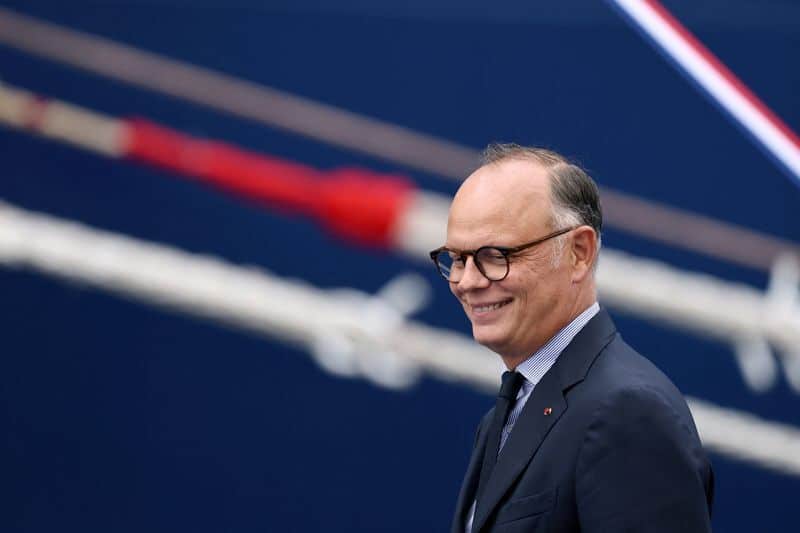
Edouard Philippe and Gabriel Attal, both former prime ministers under President Emmanuel Macron, were among declared and possible candidates who used an annual gathering of executives and investors in Aix-en-Provence last week to pitch themselves as best placed to fix the country’s finances.
Attal, 37, promised to run the government like a company and get rid of under-performing ministers, winning enthusiastic applause from the audience.
“In your company, when a finance director fails to meet their targets or overspends, there’s usually a consequence. It must be the same for those who run the government,” he said.
TAMING THE DEFICIT
France has been a serial flouter of European Union rules that cap budget deficits at 3% of gross domestic product.
Attal, who was prime minister in 2024, told Le Parisien newspaper that he would cut the budget deficit to 3% from 5.1% before 2032. The lion’s share of savings would need to come from welfare spending, he said, which accounts for two-thirds of budget costs as well as further reforms to the pension system and unemployment benefits.
Philippe, prime minister from 2017 to 2020, told Les Echos business daily he too would cut the budget deficit from 5% of GDP this year to 2% by the end of the next presidential term in 2032.
He says he would hold a referendum to write a budget discipline rule into the constitution and raise further the retirement age. The government suspended a gradual increase in the retirement age from 62 to 64 last year until after the election.
The incumbent mayor of Le Havre, Philippe, who opinion polls suggest may have the best shot at keeping a far right candidate from the presidency, promised corporate leaders in Aix-en-Provence he would help tear down internal EU barriers to business and push to unify the bloc’s fragmented capital markets.
French utility group Suez CEO Xavier Girre said his message for presidential candidates was that regulatory and fiscal stability were essential for whoever wins in order to have clear visibility for investments.
CROWDED RACE
For years, France’s corporate elite studiously avoided engaging with Le Pen, and her party has struggled to make headway in their boardrooms. But with opinion polls pointing to a possible far-right election victory next year, business leaders are showing signs of wanting to understand its economic agenda.
“Business leaders believe that far-right politicians have made progress in their economic analysis and in their understanding of the French economy,” said Alexandre Medvedowsky, who heads lobbying firm NSI.
However, neither the National Rally nor Melenchon’s France Unbowed party were invited to the three-day business gathering, as in past years. In an emailed statement, the organisers said the decision not to extend an invitation to either party was the result of a group vote.
Benoit Derigny, who heads staffing company ManpowerGroup’s French business, said that the centre-left and centre-right largely shared the same diagnosis of what ails France, including its punitive debt burden.
With a crowded political centre, candidates will have to set themselves apart in how they think government should allocate scarce resources, he told Reuters.
(Reporting by Alessandro Parodi and Leigh Thomas; Editing by Emelia Sithole-Matarise)