DAKAR, July 13 (Reuters) - Congo’s AFC/M23 rebels have used a small Ebola outbreak in territory they control to showcase their ability to govern, mounting a response largely separate from authorities in Kinshasa and supported in part by neighbouring Rwanda, according to response teams and official documents.
The response has highlighted how the rebels have extended parallel administrative structures into areas captured during a lightning advance last year. Analysts, however, say the war-torn country’s fragmented response could complicate containment efforts should the outbreak spread further.
Reuters reviewed documents from Congo’s Health Ministry and spoke to eight sources involved in the Ebola response in rebel-held areas, including one AFC/M23 official, two members of the technical coordination committee for the response and five aid workers, most of whom spoke on condition of anonymity because they feared being seen as legitimising the rebel group or jeopardising their access.
REBEL GROUP ‘ENDS’ OUTBREAK
AFC/M23 controls large parts of North and South Kivu provinces following its early 2025 advance, during which it captured Goma and Bukavu, eastern Congo’s two largest cities. The United Nations and Western governments say the group is backed by Rwanda, which Kigali denies.
The rebel-held areas recorded four Ebola cases after the outbreak was declared on May 15 - one in Goma and three near Bukavu - according to data from Congo’s Health Ministry and the World Health Organization.
Late last month, AFC/M23 declared the outbreak over in its territory after a 21-day monitoring period without new cases.
Freddy Kaniki, AFC/M23’s deputy coordinator for the response, said 400 contacts had been monitored, with 98% receiving daily follow-up. Response documents reviewed by Reuters show that 207 samples had been tested in rebel-controlled areas of North Kivu as of June 18.
This stands in contrast with the rest of Congo, where transmission has continued. The outbreak has infected 1,873 people and killed 672, according to government data released on Saturday.
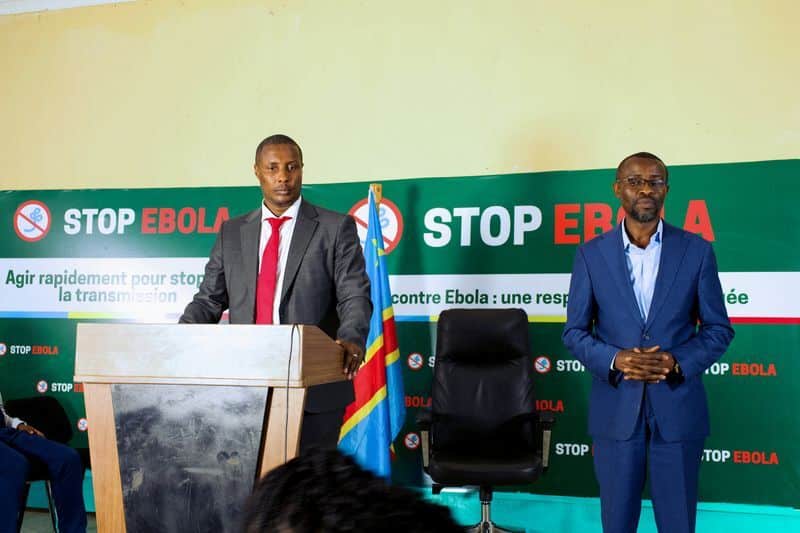
The rebels have sought to highlight their role through videos widely shared on social media, showing Kaniki and other officials visiting laboratories, inspecting response operations and meeting health workers, portraying the group as a functioning administration.
Congo’s Health Ministry and a government spokesperson did not respond to requests for comment.
WIDESPREAD INFECTIONS ALREADY PRESENT
Kaniki acknowledged that government-held areas faced a much larger challenge, with dozens of infections already present when the outbreak was declared, but argued that AFC/M23’s response had benefited from greater “discipline” and “anticipation”, particularly in isolating cases and monitoring contacts.
The rebels also imposed strict containment measures, suspending bus routes to government-held areas and isolating potential contact cases. A journalist who travelled to Ituri told Reuters he and colleagues were placed in mandatory isolation for 15 days in a town bordering Uganda after returning to AFC/M23-controlled territory.
Analysts are more cautious about how effectively the rebels have managed the outbreak.
“AFC/M23 is keen to demonstrate its capacity to function as a state and manage a public health crisis better than the Congolese government,” said Reagan Miviri of the Kinshasa-based Ebuteli research institute.
“But with only four cases recorded, it has been a limited test so far,” he said.
The rebels’ response has been coordinated through health administrations operating separately from those of the central government. These parallel authorities are responsible for coordinating health structures, response teams and disease surveillance in areas they control.
Cooperation with Kinshasa has been largely confined to data sharing and laboratory testing.
Damien Mama, the U.N.’s interim humanitarian coordinator in Congo, said aid agencies had facilitated coordination between the two sides, working through established surveillance mechanisms to ensure the reliability of reporting figures.
RWANDA FILLS THE GAP
Without support from Kinshasa, AFC/M23 turned to its main backer - neighbouring Rwanda - for medicine and supplies.
Kigali deployed six specialists to Goma, including experts in surveillance, laboratories, logistics and safe burials, a response committee member and an aid worker said.
As of June 18, the Rwanda Biomedical Center had supplied $6,891 worth of materials and medicines, while Gisenyi Hospital across the border had provided a further $85,467 worth of supplies, largely protective equipment, according to response documents.
Rwanda government spokesperson Yolande Makolo said Kigali’s focus had been on supporting regional surveillance, preparedness and response efforts, adding that infectious diseases “do not respect borders”.
The response has nonetheless been thinly resourced. Documents point to shortages of protective equipment, infection-control kits, vehicles and fuel, while the laboratory in Goma had only two extraction kits as of mid-June, limiting testing capacity.
Goma’s airport has remained closed since AFC/M23 captured the city, while the banking system in rebel-held areas has also been shut down, complicating efforts to move personnel, supplies and funds.
“If the outbreak spread into frontline areas and case numbers were to rise significantly, the response could become much more complicated,” Miviri said.
(Reporting by Clement Bonnerot in Dakar; Additional reporting by Congo newsroom; Editing by Robbie Corey-Boulet and Sharon Singleton)