By Sam Tobin
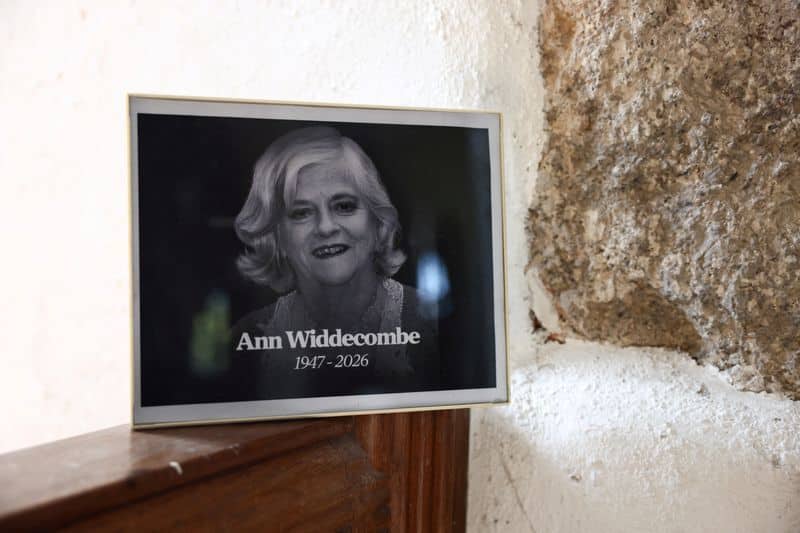
LONDON, July 14 (Reuters) - British counter-terrorism police said on Tuesday that former government minister Ann Widdecombe, who was found murdered at her home last week, was clearly targeted, adding that officers were still working to establish the motive.
“It is clear that this was a targeted attack. We are still working to understand the extent of any planning or preparation and the motivation that sits behind that attack,” Assistant Commissioner Laurence Taylor, head of Britain’s counter terrorism policing, told reporters.
Taylor declined to comment on the attacker’s motive, saying: “It is a complex investigation. It would be wrong for me to try and ascribe either an ideology (to the attacker) or what that motivation might be at this stage.”
Local police arrested a white British man late on Saturday on suspicion of her murder. Counter-terrorism officers, who took over the investigation on Monday, have since rearrested him on suspicion of the commission, preparation or instigation of acts of terrorism.
Taylor said the terrorism investigation was running in parallel to the investigation into Widdecombe’s murder.
Widdecombe, 78, who was a prominent member of Nigel Farage’s populist Reform UK, was found dead at her home in rural southwest England last Thursday with what police described as “serious injuries”. She stood down from parliament in 2010.
The case has raised further concerns about the security of politicians in the country after two serving British members of parliament have been murdered in the last decade.
Taylor was asked whether other Reform politicians had been targeted by the suspect, but did not directly answer.
“Clearly, part of our responsibility when investigating offences of this nature is to assure ourselves and therefore the public and others of any extant threat,” Taylor said.
“That will form a line of investigation to ensure that we are putting all appropriate measures in place to mitigate any threat should it become apparent. I am not saying there is or there isn’t … but of course that will be a line of inquiry.”
(Reporting by Sam Tobin; writing by Muvija M; editing by William James)