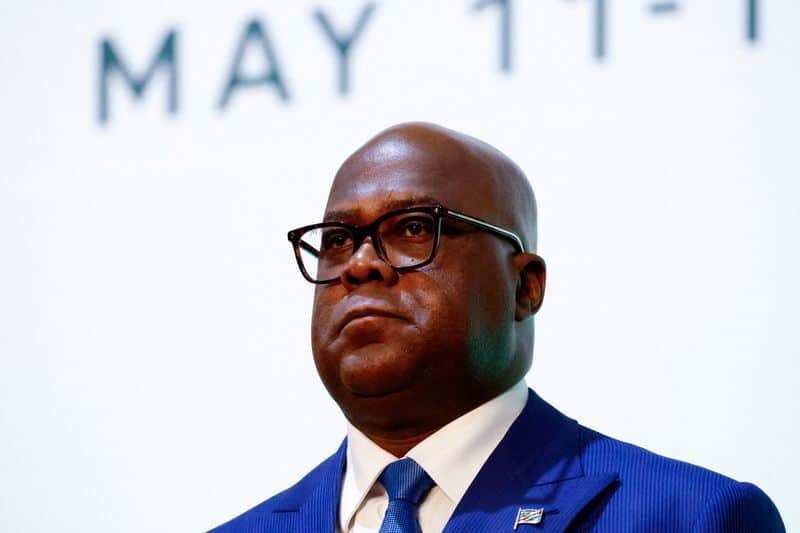
DAKAR, Aug 28 (Reuters) - Democratic Republic of Congo President Felix Tshisekedi has unveiled plans for a national dialogue aimed at easing political tensions, which have risen over a bill that critics say could pave the way for him to seek a third term.
• The dialogue will begin with consultations across Congo’s 26 provinces before culminating in national talks in the capital Kinshasa, Tshisekedi said in an address broadcast on state television late on Thursday.
• Armed groups and those acting on behalf of foreign powers would not be allowed to participate, Tshisekedi said, explicitly ruling out Rwanda-backed AFC/M23 rebels who control large swathes of eastern Congo.
• Participants will include political parties, civil society groups, religious leaders, traditional authorities, business representatives, academics, youth and women’s organisations and members of the Congolese diaspora, the president said.
• Dates and conditions of the process will be announced at a later stage, with the process lasting no more than three months.
• Political tension has risen in the mineral-rich country over the bill adopted in June that would allow constitutional changes to be submitted to a referendum.
• Tshisekedi’s supporters have openly called for constitutional reforms to allow him to run again. He said earlier this year he would accept another mandate if the Congolese people wanted it.
• Congo’s constitution limits presidents to two five-year terms. Tshisekedi was first elected in 2018 and reelected in 2023, with his current term due to end in 2028.
• The reform plans have drawn condemnation from the powerful Catholic Church and opposition groups. An opposition protest in June was violently dispersed.
• They have called for an inclusive dialogue allowing rebel groups to participate, as well as supporters of former President Joseph Kabila.
• The process will take place against the backdrop of a fragile security situation in eastern Congo and a fast-spreading Ebola outbreak.
(Reporting by Clement Bonnerot; Editing by Anait Miridzhanian and Helen Popper)