Sept 15 (Reuters) - Military drones straying into the airspace of Finland, Estonia, Latvia and Lithuania are stoking concerns that the war in Ukraine is spilling over into NATO’s northern borders with Russia.
As Ukraine attacks Russian Baltic Sea oil shipping ports, some of its drones have missed their targets and led to security warnings in neighbouring countries. In the case of Latvia, it led to a government collapse.
Following is a timeline of recent drone incidents involving Finland and the three Baltic states:
March 25 - Two stray Ukrainian military drones enter Estonia and Latvia via Russia. One hits a chimney at Estonia’s Auvere power station, near the Russian border, and another crash-lands in Latvia.
Lithuania earlier reported a Ukrainian drone crashing into a lake.
March 29 to 30 - Finland reports a suspected territorial violation by unmanned aerial vehicles in its southeast and deploys F/A-18 fighter jets. One flying object is identified as Ukrainian. Finland says Russian jamming could explain drones drifting into Finnish airspace.
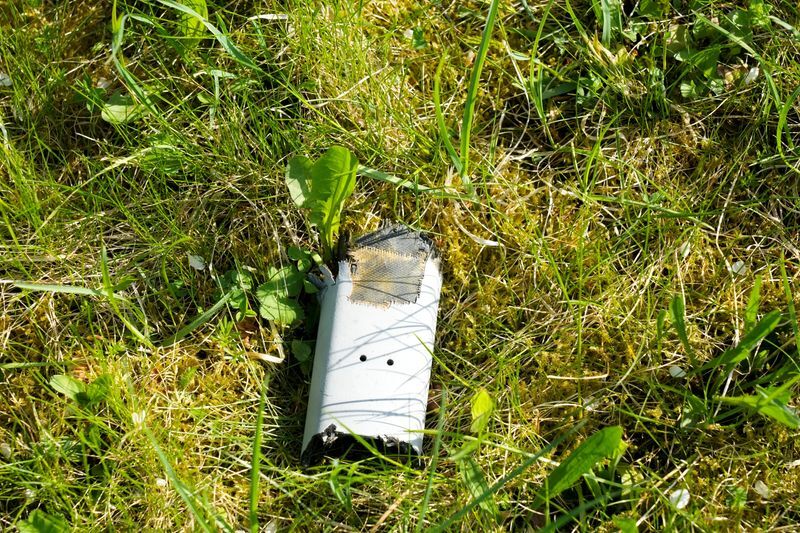
March 31 - Estonia and Latvia detect foreign drone activity near their borders with Russia, and the Finnish border guard finds a drone on its territory. Estonia discovers drone debris in Tartu County.
April 1 - Estonia’s armed forces say drones detected in the country appear to have come from Ukraine and been intended for Russia.
May 7 - Latvia and Lithuania urge NATO to strengthen air defences after two suspected stray drones cross from Russia and crash in Latvia. One explodes at an oil storage facility in the Latvian region of Rezekne, damaging four empty oil tanks.
May 10 - Andris Spruds resigns as Latvia’s defence minister after Prime Minister Evika Silina says anti-drone systems were not deployed fast enough. Ukraine says the drones were Ukrainian but had been diverted by Russian electronic warfare.
May 14 - Silina resigns as prime minister, triggering the collapse of Latvia’s coalition government.
May 15 - Finland warns 1.8 million people in the Helsinki region to stay indoors because of suspected drone activity, and suspends air traffic at Helsinki airport while scrambling fighter jets. President Alexander Stubb says there is no direct military threat.
May 17 to 18 - Explosives are found near the debris of a suspected Ukrainian military drone that crashed in Lithuania.
May 19 - A Romanian NATO fighter jet shoots down a suspected Ukrainian drone over Estonia after it enters from Russia.
Ukraine apologises to Estonia and other Baltic allies, saying Russia redirected the drone through electronic warfare.
May 20 - Lithuania issues an “air danger warning”, tells people in Vilnius to take shelter and suspends traffic at capital’s airport over a drone in its airspace.
Lithuanian parliament shelters underground, rail traffic is suspended and schools and kindergartens take children to shelters.
May 21 - Latvia says at least one drone detected in its airspace, NATO fighter jets are airborne and people in regions bordering Russia and Belarus should take shelter.
June 3 - Latvia and Estonia issue warnings overnight in border regions asking residents to seek shelter if they observe suspected drone activity. NATO jets are scrambled.
June 8 - A French NATO fighter jet downs a drone in Latvian airspace.
June 10 - Fearing drone incursions, tourists are cancelling visits to Latvian regions bordering Russia, officials say. Prime Minister Andris Kulbergs says he will spend his summer holiday in the affected area.
July 2 to 28 - Finland imposes a series of temporary airspace and maritime restrictions near the Russian border, in precautionary measures.
August 14 - A NATO fighter jet downs a drone in Latvian airspace. It is later determined to be Ukrainian. Finland temporarily imposes airspace and maritime restrictions.
September 2 - Finland investigates a drone found on its southern coast, probing a possible territorial violation.
The drone was intended for surveying and mapping and did not pose a danger to the public, the defence ministry says.
September 15 - A NATO fighter jet shoots down a drone in Lithuania believed to have entered via Belarus, the country’s national crisis management centre says.
(Reporting by Jesus Calero, Jagoda Darlak, Elviira Luoma and Anna Ringstrom; Editing by Peter Graff, Jan Harvey and Kevin Liffey)