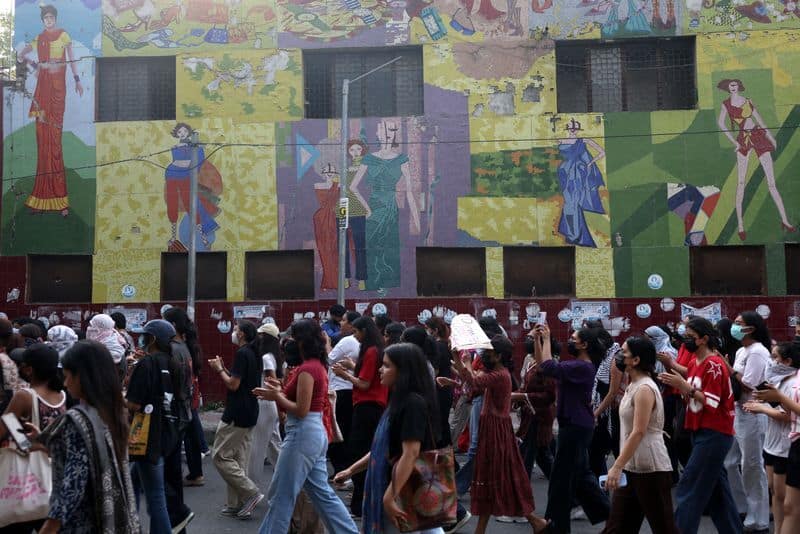
NEW DELHI, Sept 23 (Reuters) - Hundreds of students protested in Delhi on Wednesday, demanding better safety for women, after a teenager said she had been gang-raped by three men posing as police officers at a park in the national capital this week.
Police shot and caught one suspect on Tuesday and were questioning two more, who were brothers, senior police officer Vijay Kumar told reporters after the 17-year-old reported the assault.
Protesters, most of them female and several wearing face masks, held placards and shouted slogans while marching on the streets near the crime scene on Wednesday evening, demanding safety.
“Our body is our own,” some placards said, while others demanded freedom to go out at night without fear.
INDIA HAS STRUGGLED TO REDUCE SEXUAL VIOLENCE
The alleged assault occurred barely 2 km (1.2 miles) from Lady Shri Ram (LSR) College, one of the country’s top colleges for women, which suspended classes on Tuesday after the suspect was shot metres away from its campus.
“Some students were panicking after the shooting so we decided to suspend classes around noon,” a college official, who did not want to be named, told Reuters.
LSR Principal Kanika K Ahuja said classes were cancelled after college authorities came to know about the incident, adding that the “safety, security, and well-being” of students was “paramount” to the institution, local media reported.
The father of the two brothers questioned over the incident was cited in a local media report as saying they had been framed. Reuters was not immediately able to establish how the arrested suspect had responded to the charges.
Sexual violence is a major issue across India, with more than 80 rapes reported to police every day, according to data from the National Crime Records Bureau.
Many more assaults go unreported because victims are often blamed and shamed, activists say.
The gang-rape of a student in Delhi in 2012 triggered massive protests that culminated in sweeping legal reforms, including more severe punishment for those convicted and fast-track courts.
The reforms have, however, done little to improve statistics on sexual violence in the country, where analysts say deep-seated patriarchy, understaffed police forces, and judicial delays leave many perpetrators believing they can escape punishment.
(Reporting by Sakshi Dayal and Bhawika Chhabra; Editing by YP Rajesh and Philippa Fletcher)