By Corina Pons, Francisco Ubilla and Charlie Devereux
PALMA DE MALLORCA, Spain, Sept 28 (Reuters) - Pilar Lopez spent two months sleeping in her car after she was evicted this summer from the apartment in Palma de Mallorca where she had lived for 12 years.
Lopez, 65, who suffers from a serious chronic condition resulting from a spinal injury, said an investment fund bought the property from the bank with which she had a rental contract and out of the blue tried to offer her money to leave. She refused, but was unable to fight the eviction.
She now lives in temporary accommodation in a hostal.
“I can see that they have refurbished it,” Lopez said, standing outside her old flat, adding that she believed it had been repurposed as a holiday letting.
Anger over evictions in Spain reached a head after 87-year-old pensioner Maricarmen Abascal was removed last week on a stretcher from her home in Madrid of more than seven decades.
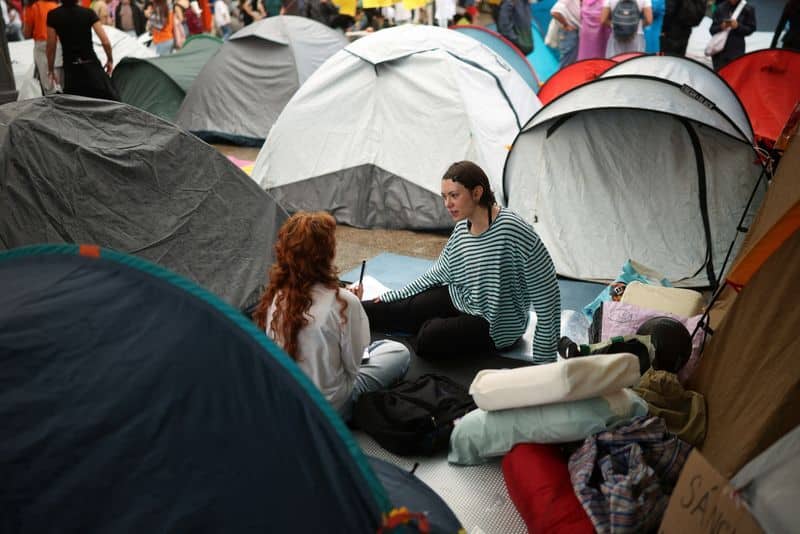
It provoked large demonstrations across Spain, with protesters pitching tents in the central Puerta del Sol square outside the Madrid regional government headquarters, and a pledge from Prime Minister Pedro Sanchez to provide a solution after his cabinet meets on Tuesday.
HOUSING SHORTAGE BRINGS SURGING RENTS
Spain, like many other European countries, is experiencing an acute housing crisis as property prices soar and rents surge faster than real wage growth due to the slow pace of home construction that can’t satisfy demand.
The country has struggled to match the rhythm of homebuilding it had before the financial crisis in 2008, and a deficit of about 750,000 homes is set to grow to more than a million by 2028, according to the Bank of Spain, almost double that of Italy.
With fewer people able to afford a home, renting has increased, putting pressure on the market, as has a surge in tourism. The average rental price of €1,176 ($1,337) is equivalent to about 98.7% of the average monthly salary in Spain, according to the Youth Council of Spain.
Spain’s problems are echoed in other cities across Europe. The far-left Left Party won Berlin’s state election this month, vowing it would make housing affordable and nationalise private housing associations.
LAW PROTECTING VULNERABLE TENANTS EXPIRED
A law passed in Spain during the pandemic to protect vulnerable tenants expired in March after its extension was rejected by opposition parties.
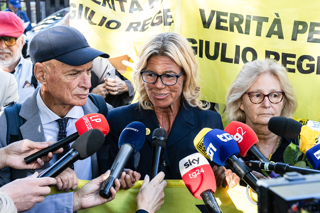
“The crumbs that Sánchez was prepared to offer us are no longer enough,” said Carme Arcarazo, spokesperson of the tenants group, Spain’s Confederation of Tenants’ Unions, which co-ordinated the protest in Madrid to demand the approval of a new “MariCarmen decree”.
Tenant advocacy groups want the automatic renewal of rental contracts, similar to the indefinite rental contracts that already exist in the Netherlands, Austria and Germany and a measure in Britain to prohibit the eviction of tenants without justification.
If a landlord can’t provide a justification for not renewing a contract, they would have to compensate the tenant with one month’s rent for every year the tenant has lived in the property if still wanting to evict.
They also seek legal measures to stop evictions, the regulation of by-the-room rental contracts and a rent freeze.
Sanchez faces a significant challenge to persuade his ideologically disparate allies in Congress to swiftly reach consensus on any decree approved by cabinet.
While leftist parties such as Sumar and Podemos for the first time have called for rent caps and automatic contract renewals and extensions, the Catalan nationalist party Junts has only said it will support measures to restrict evictions by so-called “vulture funds” and said it won’t agree to anything that crimps supply or punishes small landlords, who make up the vast majority of property owners in Spain.
Investment funds and holding companies are less prevalent than many imagine, accounting for just 8% of Spain’s property market, according to the Bank of Spain.
For Lopez, the eviction experience triggered bouts of anxiety as she described how, while living in her car, she was forced to use a shower at the beach.
“I cry a lot – and I mean a lot. Crying is how I let it all out,” she said.
($1 = 0.8796 euros)
(Reporting by Charlie Devereux; Additional reporting by Mireia Merino, Editing by Alexandra Hudson)