By Nidal al-Mughrabi and Mahmoud Issa
CAIRO/GAZA, Oct 2 (Reuters) - Bissan was born because of an airstrike.
Two weeks into the war in Gaza in October 2023, an Israeli attack ripped through her family’s home in Beit Lahiya near the Israeli border, killing a sister she never got to meet. The blast seriously injured her pregnant mother, who was forced to deliver Bissan six weeks early to save both their lives.
Weeks later, the baby was driven out to Egypt in an ambulance while still in an incubator, one of a group of 29 preterm infants evacuated from a neonatal hospital ward as Israel’s invading forces drew close.
Seven of those babies died in Egypt, but Bissan survived. While she grew in Egyptian hospitals and a care home, her mother, Sundus al-Kurd, never lost hope that they would be reunited. Back in Gaza, as the war raged on, Sundus made video calls to speak to the baby whenever she had internet access.
In March this year, with a ceasefire ostensibly in place, Bissan was returned to Gaza to be reunited with her family in a mission assisted by the UN, along with 10 other children from the same group evacuated as preterm babies.
When they were finally reunited, Bissan didn’t recognise her mother, Sundus said. The girl, now 2-1/2, would say “mama” to any woman who showed her kindness.
Reuters documented their reunion and visited with them and several of the other children in the months that followed as they built bonds with their mothers and fathers. Here are their stories.
GETTING USED TO EXPLOSIONS
Returning to Gaza as a toddler meant learning to live in a war zone, where Israeli airstrikes have continued despite the ceasefire agreed a year ago between Israel and Hamas.
When Bissan first heard the booms, she would freeze in a state of fear for several minutes, Sundus said. She still begins to panic if a balloon pops near her.
“Her life changed. Her life became sleeping and waking up to the sound of explosions, to the sound of the numerous attacks and missiles,” said her mother.
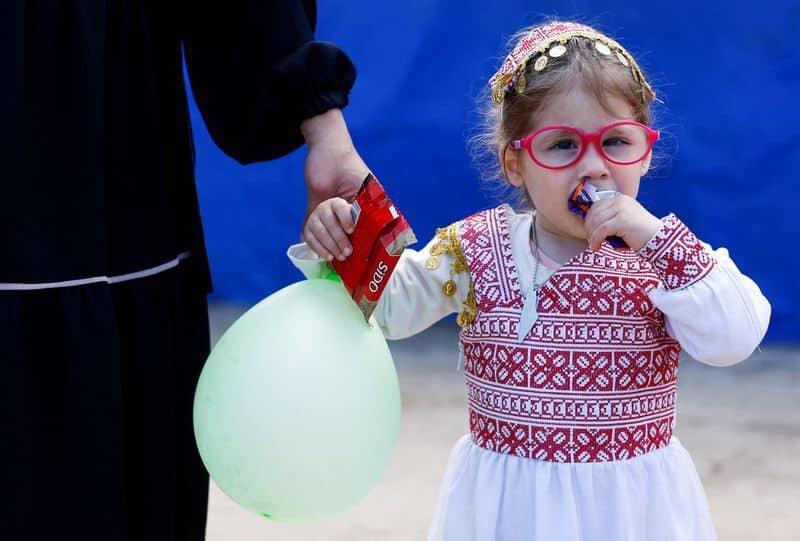
On a sunny morning soon after their reunion, her mother took her to a small zoo in central Gaza. Bissan, who wears pink-framed glasses, gazed in awe as a blue parrot latched onto her mother’s arm.
‘HE WAS SUPPOSED TO CALL ME DAD’
Of the 11 preterm babies evacuated to Egypt in November 2023 and returned to Gaza this year, not all were able to meet their mothers. For baby Ibrahim it was already too late.
His mother, Israa Badr, fell into a deep state of depression after her son, born during her eighth month of pregnancy, was evacuated to Egypt. She died the following month. Her husband Jabri Badr said doctors “told us she died of sorrow, of sadness.”
“Ever since he was in her womb, she thought about him, dreamed of holding him, playing with him, and feeling what it was like to be a mother,” he said.
Ibrahim is now reunited with his father in Gaza, but Badr said they have struggled to connect.
“He was supposed to call me dad. Today he doesn’t even say dad, or anything. I tell him to come, and he ignores me.”
Arafat Abu Mashayikh, a Gaza-based mental health expert, said that after two years apart it was natural that it would take time for parents to connect with their children.
MOTHER’S MILK, AND HER EMBRACE
Bissan, Ibrahim and the others “were deprived not only of their mother’s milk but also of her embrace and the emotional development that comes with it,” Abu Mashayikh said.
Rebuilding the bond takes time. Some days, Bissan and Sundus walk down to Gaza’s Mediterranean shore. On a recent afternoon, they held hands as they walked where the sand meets the sea. Bissan flashed a big smile as she gazed out to the horizon.
The evenings are more difficult, but still bring them closer together, Sundus said.
When explosions ring out in the middle of the night, Bissan wakes up and seeks out her mother’s care.
“Bissan has begun to understand who mama really is, who her mother really is,” Sundus said. “I am the only person present in her life. I am the one who feeds her, changes her clothes, combs her hair, and plays with her.”
(Reporting by Mahmoud Issa in Gaza and Nidal al-Mughrabi in CairoWriting by Nidal al-MughrabiEditing by Rami Ayyub and Peter Graff)