By Michael Holden
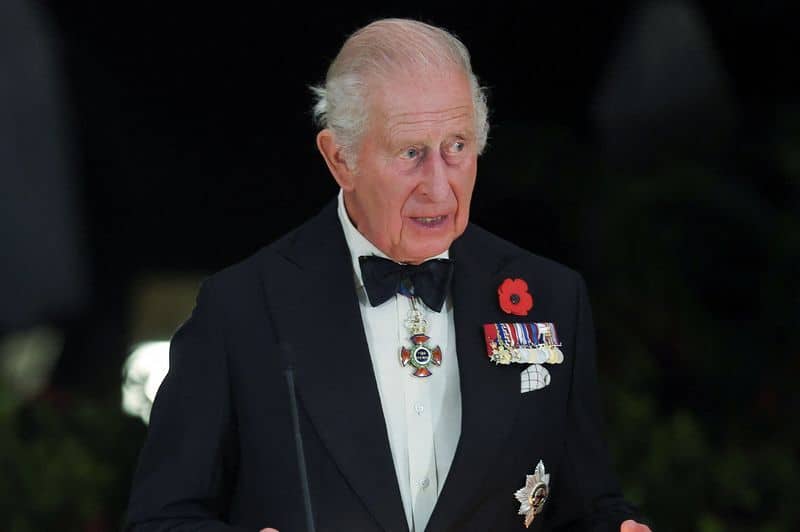
LONDON, Nov 5 (Reuters) - King Charles is “a secret weapon” being increasingly thrust by the British government into dealing with challenging political situations, a senior royal aide has said following a diplomatically challenging trip by the monarch to the Caribbean.
The trip, which also included a meeting of the Commonwealth of Nations, which Charles heads, was dominated by the issue of slavery, and specifically whether Britain and the king should apologise for the transatlantic slave trade and offer to pay reparations.
The king did neither in speeches he made, in line with British government policy, but his expression of personal sorrow about the horrors of slavery was broadly welcomed by leaders of the 56-nation Commonwealth as a positive step forward.
‘STATECRAFT BY WORD AND DEED’
In unusually frank remarks, the senior aide described the tour as complex and challenging, but said the king “had demonstrated his statecraft both by word and deed”.
“It’s a great secret weapon to send the king,” the aide told reporters on condition of anonymity, adding the monarch was “able to reach the parts that, dare I say, politicians probably couldn’t quite have reached”.
The monarch is Britain’s symbolic head of state but is constitutionally required to stay out of politics.
In recent times, as Britain’s influence over world affairs has diminished, the government has often turned to the monarch to lead its diplomatic strategies.
Amid tensions with US President Donald Trump, most recently over the Iran war, the government enlisted Charles — who became king in September 2022 on the death of his mother Queen Elizabeth — to help smooth relations. The king hosted Trump on a state visit and then paid a reciprocal state visit to the US.
“We’re just in the fifth year of the reign and I think what we’re seeing is a very clear pattern emerging of the government asking the king to head into quite politically charged situations, quite challenging situations,” the senior aide said.
Dealing with the tough part of the job was what he relished, the aide said, adding that “refreshing and reinvigorating relationships with nations where there have been some complex political issues at play, that is what he lives and breathes for”.
DIFFICULT YEAR FOR MONARCHY
The tour marks a high point in what has been another difficult year for the monarchy with the release of a biography of Charles’ first wife, Princess Diana, written by her brother, which featured criticisms of Charles’ reaction to her death.
Charles’ younger brother Andrew Mountbatten-Windsor continues to make negative headlines as he remains under police investigation - Andrew denies any wrongdoing - , while the return to Britain of the king’s younger son Prince Harry has also brought complications.
While Charles remains head of the Commonwealth and is still the head of state of 15 nations, including Canada and Australia, the aide acknowledged that situation could also change, with Barbados the latest nation to ditch the monarchy in 2021.
The aide said it was for nations and the Commonwealth to decide what to do in future.
“The (royal) family serves when it’s wanted and if not, then a new arrangement can be found,” the aide added.
Charles, who turns 78 this month, is still recovering from cancer but the aide said concerns about his age and health were best answered by the sight of Charles waving cowbells as he danced down a street in the Bahamas in 40 degrees Celsius (104 degrees Fahrenheit) heat and the humour he showed after being caught in a tropical rainstorm.
“This is literally what he was born to do. He’s very good at it, and he enjoys the reaction he gets from people,” the aide said.
(Reporting by Michael HoldenEditing by Gareth Jones)