By Angelo Amante
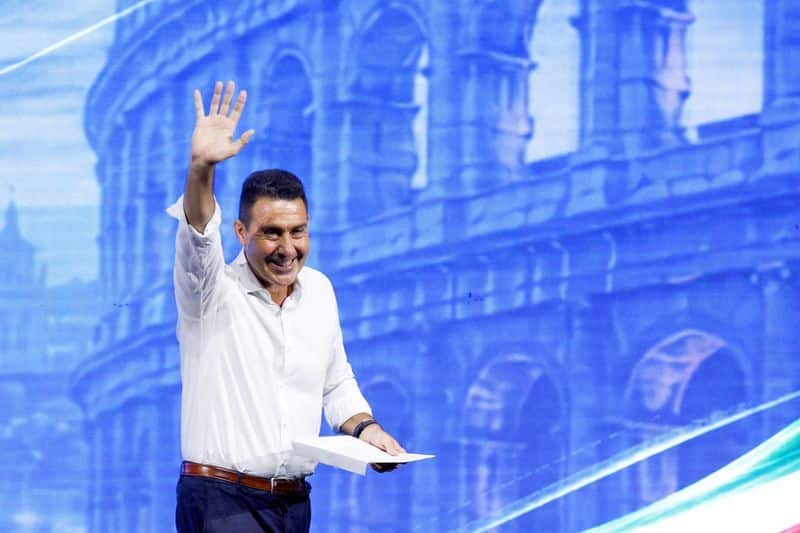
ROME, Nov 6 (Reuters) - For the first time since launching his far-right party this year, former army general Roberto Vannacci is showing signs of losing steam, with support slipping in the polls and activists abandoning him over internal disputes and policy disagreements.
Founded by breakaway lawmakers from the coalition League party, Futuro Nazionale (FN) has eaten into backing for Prime Minister Giorgia Meloni’s conservative bloc, complicating her bid to secure a second term in elections due in 2027.
As the coalition trails the centre-left in the polls, FN has emerged as the fourth-most popular party, following months of rapid growth on a platform centred on deporting foreigners and opposing LGBTQ rights. Its votes could prove crucial to Meloni’s hopes of retaining power, though she has so far ruled out any alliance.
However, after peaking at around 9% over the summer, support for FN has eased, with pollsters SWG and Ipsos putting it between 5.8% and 7.9%, and all recent surveys pointing to a downward trend.
Analysts say the party is struggling to broaden its appeal beyond security and culture-war issues. “Vannacci talks about security and immigration, but needs a broader political agenda to cement support,” Antonio Noto, a pollster at state broadcaster RAI, said.
The slowdown comes amid signs of headwinds elsewhere for the populist right. Britain’s Reform UK has recently lost ground in the polls, as its counterparts across Europe digest the implications of the Democrats’ triumph in the US midterms.
LOCAL DISCONTENT
Vannacci rose to prominence in 2023 with a book calling for a return to what he described as traditional values, saying they were under threat from “woke” cancel culture. A year later, he was elected to the European Parliament with the League.
Noto said part of FN’s initial support came from people who previously did not vote — a volatile group that is drifting away as the novelty factor of the new party fades.
“Another segment came from the centre-right coalition, with high expectations, but has now returned to the fold,” he said.
The committees set up across Italy to build support for Vannacci have become a source of tension in recent weeks. Some activists have quit, accusing the party of sidelining grassroots supporters who helped build the movement.
“The decline in the polls is due to people who decided to leave because of the way they were treated,” Thomas Orsetti, a former activist from the northern Veneto region, said.
‘I THOUGHT HE WOULDN’T GO THAT FAR’
Some former backers said they joined the new movement hoping it would address local issues such as healthcare, but became disillusioned.
“What I care about are hospitals, schools, public housing,” said Massimo Perrone from Latina, near Rome, who left the party in September and dismissed Vannacci’s flagship plan to deport foreigners to their countries of origin as unworkable.
Vannacci has criticised a 2025 law recognising femicide as a specific criminal offence, and suggested placing disabled students in separate classes — triggering widespread condemnation, even within his party.
“I thought he wouldn’t go that far with his repeated attacks on gay people and the proposal to separate disabled students. That pushed me to look elsewhere,” said Marcello Orru, a one-time FN member from the Sardinian city of Sassari.
FN lawmaker Rossano Sasso rejected suggestions of internal tensions, saying membership had continued to grow and negative polls were part of an attempt to undermine the party.
CLASH BETWEEN TWO BLOCS
Vannacci has said he would be open to a deal with the ruling bloc — which recent polls show is narrowing the gap with the centre-left — provided it embraces his policies.
A former Italian military attache in Moscow, Vannacci has proposed restoring gas ties with Russia and halting further military aid to Ukraine, positions unlikely to find favour with Meloni, who has firmly backed the EU’s line of supporting Kyiv.
Fabrizio Masia, head of polling firm EMG, said Vannacci could regain momentum if he expanded the agenda beyond his core themes, though a major breakthrough would be difficult in an election likely to be dominated by the two main blocs.
“We are inevitably heading towards a contest between two alliances. The message to voters will increasingly be: choose one,” Masia said.
(Reporting by Angelo Amante; Editing by Andrew Heavens)