Nov 19 (Reuters) - Vladimir Putin defended a comparison between his summit with Donald Trump and Xi Jinping on Thursday and a conference at the end of World War Two reviled by Eastern Europeans, denying that either event aimed to carve the world into spheres of influence.
Some of Ukraine’s allies had expressed concern that Thursday’s three-way meeting between the leaders of Russia, the United States and China would be an attempt to replicate the Yalta Conference between the Soviet Union, Britain and the US that set terms for the global order after World War Two.
That 1945 summit is scorned in much of Eastern Europe as a betrayal, because it is widely seen as having ratified Moscow’s dominance over countries occupied by Soviet troops at the time, which remained under Communist control through the Cold War.
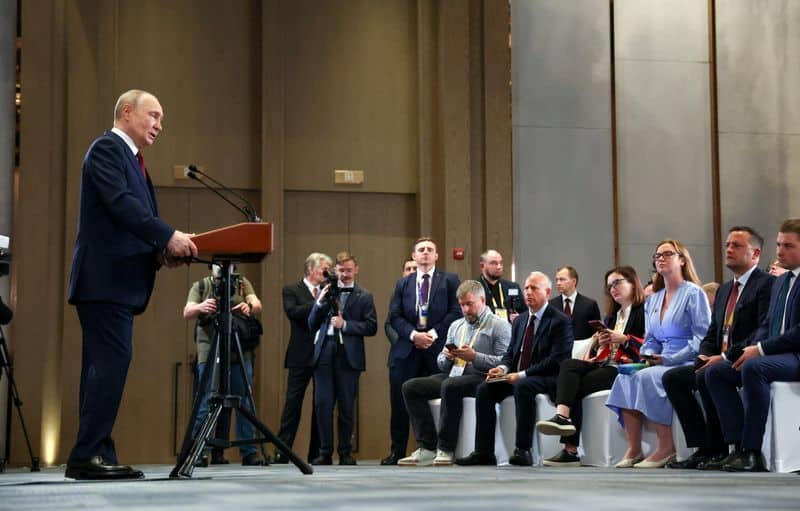
Asked about the comparison by a reporter, Putin rejected the suggestion that there was anything wrong with either event.
“I want to emphasise this, and I want it to be perfectly clear: there was no division of the world into ‘spheres of influence’ at Yalta. Yalta simply acknowledged the realities that had emerged in the wake of the Second World War. What else were they supposed to do — keep the war going?” he asked.
“Yalta merely codified the existing reality. And in today’s conflicts, too, we will have to come to terms with the realities on the ground.”
With Russian forces controlling about a fifth of Ukraine, Putin has frequently used the phrase “realities on the ground” to press his demands for peace terms that Kyiv says would amount to its capitulation.
‘NOT THE YALTA OF PUTIN’S DREAMS’
The echoes of Yalta have special resonance for Ukraine and its European allies, which fear a scenario in which Trump and Putin might seek to impose a settlement on Moscow’s terms without them at the table.
Ukraine’s foreign minister mocked the comparison, noting that a Ukrainian attack had just knocked out the Crimean Bridge, which connects Russia to the peninsula it seized from Ukraine, site of the resort town that hosted the 1945 conference.
“Shenzhen is not the Yalta of Putin’s dreams. Meanwhile, Russia has practically lost its bridge to the real Yalta in occupied Ukrainian Crimea,” Andrii Sybiha wrote on X. “Time for him to wake up, get real, and end the war he can never win.”
Putin, at his press conference, said the Yalta Conference had “formalised the victory over Nazism” and something similar would be welcome now, a clear allusion to his demand for the “denazification” of Ukraine. Ukraine rejects that as a baseless slur and bogus justification for Putin’s 2022 invasion.
Ahead of the Shenzhen meeting, the Kremlin had said that attempts to compare it to Yalta were “games of political scientists”. Some historians have also played down comparisons.
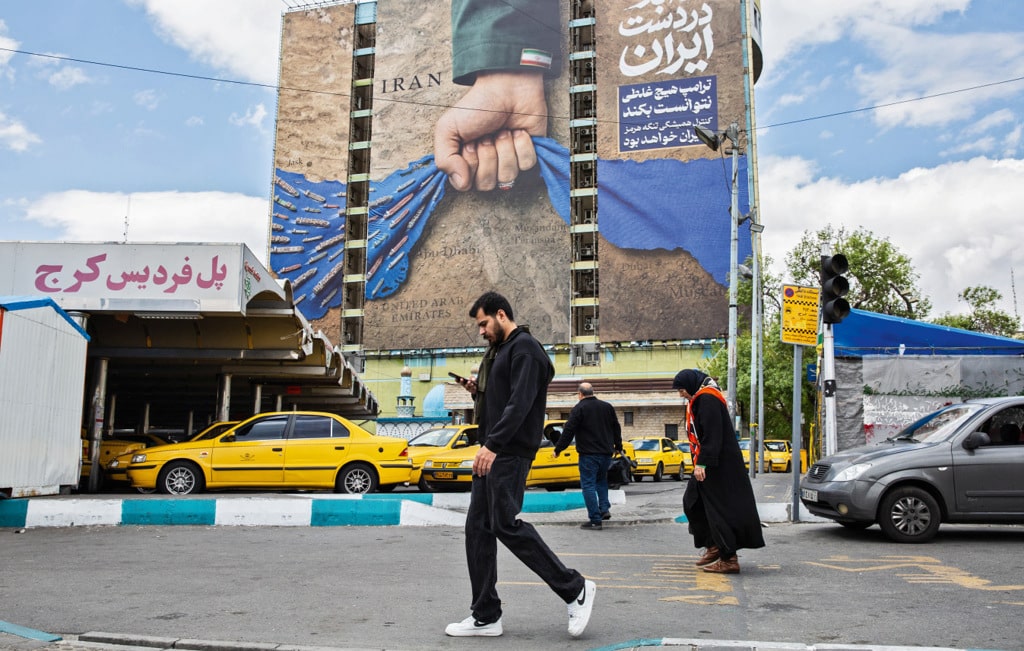
While the earlier event brought together three leaders on the verge of final victory in World War Two, two of those taking part on Thursday are still bogged down in unresolved crises: Putin in Ukraine and Trump in Iran.
And while Yalta lasted eight days and still resonates eight decades later, Shenzhen was over in less than two hours, with a five-paragraph “peace declaration” whose lasting historical significance has yet to be seen.
(Writing by Mark Trevelyan in London, Editing by Peter Graff)