By Markus Wacket and Matthias Williams
BERLIN, May 15 (Reuters) - Chancellor Friedrich Merz, in contrite mood as his popularity among voters sags, said on Friday he had to improve his ability to communicate, insisting for example he had never meant to call the German people “lazy”.
Merz has languished in the polls since coming to power a year ago, trying to gee up growth in Europe’s largest economy and fend off the rise of the far-right Alternative for Germany (AfD) in an increasingly fragmented political landscape.
“I have been increasingly preoccupied with the question of why I am apparently failing to adequately reach and convince the people of this country that the path we are trying to take in government… is the right one, one that also creates an emotional connection and gets the public on board,” Merz said.
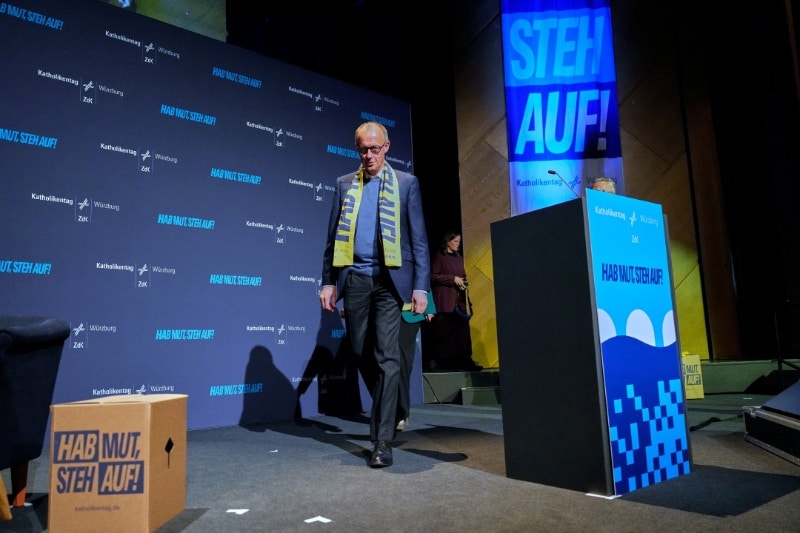
“I know that I need to improve my communication so that this message is better understood,” he told a Catholic convention in the city of Wuerzburg.
Only 16% of voters are satisfied with Merz, the lowest rating for any chancellor, according to a DeutschlandTREND survey this month.
Merz annoyed Germans, who work some of the shortest hours in the European Union, by saying that habits such as four-day working weeks or taking overly long sick leave were harming the country’s competitiveness.
“No one in my party has ever said that people in Germany are lazy, not even me, no, no, no,” he said.
“No, I’ve pointed out that, for example, a country like Switzerland has 200 more working hours per year than Germany, and Switzerland is demonstrably better off than we are.”
Merz has recently sought to dispel suggestions that his conservatives’ coalition with the centre-left Social Democrats (SPD) might collapse amid tussles over tax, health and welfare.
“Perhaps we’re currently arguing too much and achieving too few results,” he said on Friday.
Opinion polls currently put Merz’s conservatives up to five points behind the AfD, while the SPD is struggling for third place with the Greens after faring badly in two state elections this year.
(Reporting by Markus Wacket and Matthias WilliamsEditing by Gareth Jones)