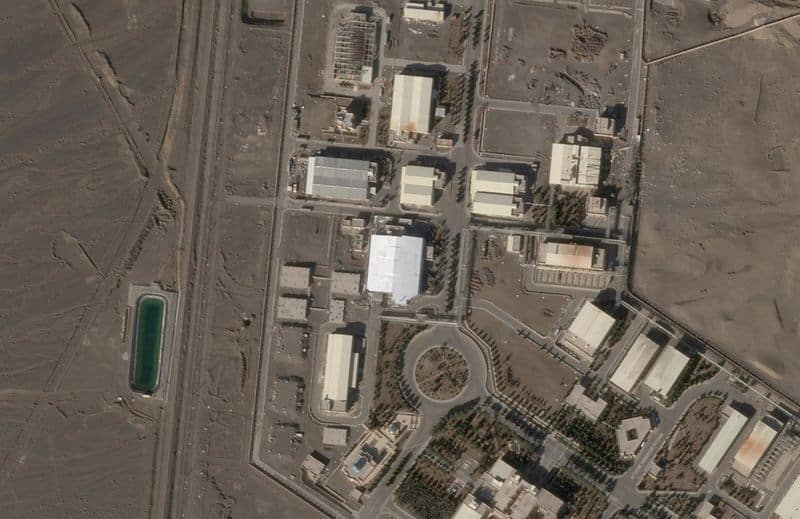
VIENNA, June 4 (Reuters) - The U.N. nuclear watchdog sent a report to member states on Thursday with no major changes to its assessment of Iran’s nuclear programme, despite three months of U.S.-Israeli war with the stated aim of preventing Iran from building an atomic bomb.
In its first report into Iran’s nuclear programme since the day before the United States and Israel launched air strikes on Iran at the end of February, the IAEA repeated calls for Tehran to explain the fate of stockpiles of enriched uranium. The uranium has been unaccounted for since an earlier U.S.-Israeli bombing campaign a year ago targeted Iran’s main nuclear sites.
U.S. President Donald Trump and Israeli Prime Minister Benjamin Netanyahu repeatedly cited destroying Iran’s nuclear programme as one of their main aims in launching fresh strikes at the end of February.
Iran’s enriched uranium stockpile has been a major sticking point in negotiations between the United States and Iran to end the war, with Trump insisting Iran give it up. Efforts have lately focused on a preliminary deal that would leave nuclear issues for later.
The confidential report on Iran was one of two issued on Thursday and seen by Reuters ahead of next week’s quarterly meeting of the International Atomic Energy Agency’s 35-nation Board of Governors. They showed very little change from the previous reports in late February just before the latest war.
“The (IAEA) Director General has emphasized to Iran that it is indispensable and urgent to implement effectively the NPT (Non-Proliferation Treaty) Safeguards Agreement … and that its implementation cannot be suspended by Iran under any circumstances,” the report seen by Reuters said.
The IAEA has been unable to return to nuclear sites Israel and the United States bombed last June. Iran has yet to inform the IAEA of the fate of its stocks of low- and highly enriched uranium (LEU and HEU), including uranium enriched to up to 60% purity, a short step from the roughly 90% of weapons grade.
“The Agency’s lack of access to verify the previously declared HEU and LEU, for nearly a year – which is long overdue according to standard safeguards practice – is a matter of proliferation concern and of compliance with the NPT Safeguards Agreement,” the report said.
Losing oversight for that long leads to losing track of it, which the agency refers to as losing “continuity of knowledge”.
“The Agency’s loss of continuity of knowledge over all previously declared nuclear material at affected facilities in Iran needs to be addressed with the utmost urgency,” it said, referring to sites affected, or hit, in the U.S. and Israeli military strikes in June.
(Reporting by Francois Murphy; Editing by Alex Richardson and Peter Graff)