By Ahmed Aboulenein and Michael Erman
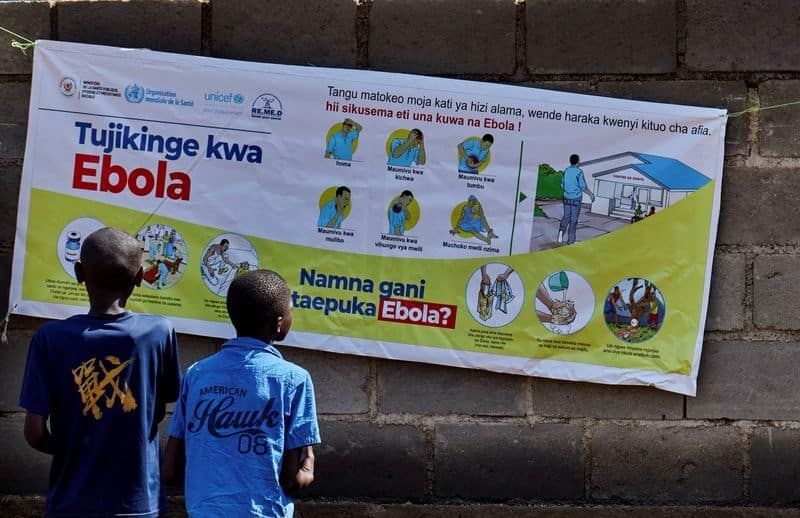
WASHINGTON, June 5 (Reuters) - The United States said on Friday it would provide an additional $38 million for Ebola response efforts, as the CDC warned that without strong public health interventions the outbreak in the Democratic Republic of Congo could match or surpass the 2014-2016 West Africa crisis.
The additional funds bring the total committed by the U.S. to more than $200 million in direct funding, the State Department said in a statement.
The department, which did not detail how the money would be spent, said it was working closely with the U.S. Centers for Disease Control and Prevention, as well as the DRC and Uganda to “mount a rapid and comprehensive response” to the outbreak.
The CDC published three official scientific reports on the outbreak on Friday, in part to marshal resources across the international community, said Dr. Satish Pillai, the incident manager for the agency’s Ebola response.
The documents are the first such reports to be published since the World Health Organization declared an emergency of international concern on May 17 over the Bundibugyo strain of Ebola, for which there is no approved vaccine or treatment.
The outbreak in the DRC has resulted in 452 confirmed cases of Ebola and 82 deaths, according to the DRC health ministry, which said on Friday that 71 new cases were confirmed in a 24-hour period and warned of rapid community transmission.
OUTBREAK COULD RIVAL 2014 WEST AFRICA CRISIS
CDC model scenarios show that without strong public health interventions, the outbreak of the Bundibugyo strain of Ebola in the DRC could become as large as, or even larger than, the 2014-2016 West Africa outbreak, the agency said.
In modeled scenarios where the isolation of patients is limited the outbreak could become one of the largest ever documented, said Jason Asher, director of the CDC’s Center for Forecasting and Outbreak Analytics.
The CDC has about 30 people in its DRC country office and about 100 in Uganda. It has also deployed additional experts in recent weeks.
Secretary of State Marco Rubio vowed last week not to allow any cases of Ebola to enter the United States.
The U.S. will quarantine citizens exposed to the virus but not showing symptoms in a facility it is building in Kenya, and will not bring them home if they develop symptoms, instead sending them to a third country.
The CDC imposed temporary travel bans last month on people who have been in the DRC, Uganda, or South Sudan, including green card holders, who are typically exempt from such bans. It is also screening Americans traveling from those countries at three U.S. airports.
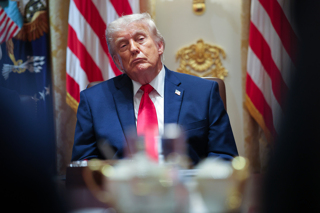
The strategy marks a sharp break from past practice as President Donald Trump’s administration seeks to keep all cases out of U.S. territory.
There are 13 U.S. treatment centers in a government-funded hospital network for severe infectious diseases ready to handle Ebola patients.
Public health experts have called on the government to bring any sick Americans home for treatment, and local protests at the Kenya site have led to at least two deaths. A Kenyan court has ordered a halt to the construction.
(Reporting by Ahmed Aboulenein in Washington and Michael Erman in New York; Additional reporting by David Ljunggren in Ottawa and Bhargav Acharya in Toronto; Editing by Nia Williams and Rosalba O’Brien)