GDYNIA, July 27 (Reuters) - The centre of the modernist Baltic port city of Gdynia, built almost from scratch during the two decades between World War One and World War Two, was added to UNESCO’s World Heritage List on Monday as the city celebrates its centenary year.
Nestled north of the historic city of Gdansk, birthplace of Poland’s Solidarity labour union movement, and the seaside resort of Sopot, Gdynia was long regarded locally as poor relation to those places, yet the UNESCO award adds it to a 1,273-strong list ranging from Australia’s Great Barrier Reef to
the Acropolis in Athens.
The UNESCO award is a landmark or area with legal protection for having special cultural or natural value to humanity.
Gdynia is one of the clearest symbols of the ambitions of interwar Poland after it regained independence in 1918 following 123 years of partition between Russia, Prussia and Austria-Hungary.
FISHING VILLAGE BECOMES GATEWAY TO THE WORLD
“This is an honour for a city that did not look back, but instead boldly looked to the future — a city built of dreams, courage, and a belief that Poland is capable of creating extraordinary things,” Culture Minister Marta Cienkowska wrote on social media platform X.
Gdynia also reflects the challenges facing the new state, which emerged with only a narrow stretch of Baltic coastline and no major seaport of its own.
To secure access to the sea, Poland chose the fishing village of Gdynia, home to just 1,200 residents in 1920, as the site of a new gateway to the world. By 1939, the population had increased 100 times as people from across the country flocked to the city in search of opportunity and a fresh start.
Architecture historians often compare Gdynia to other cities shaped by interwar modernism, such as Tel Aviv’s “White City”, which is also a UNESCO World Heritage site, and the functionalist districts built in cities including Rotterdam and Brno in the 1920s and 1930s.
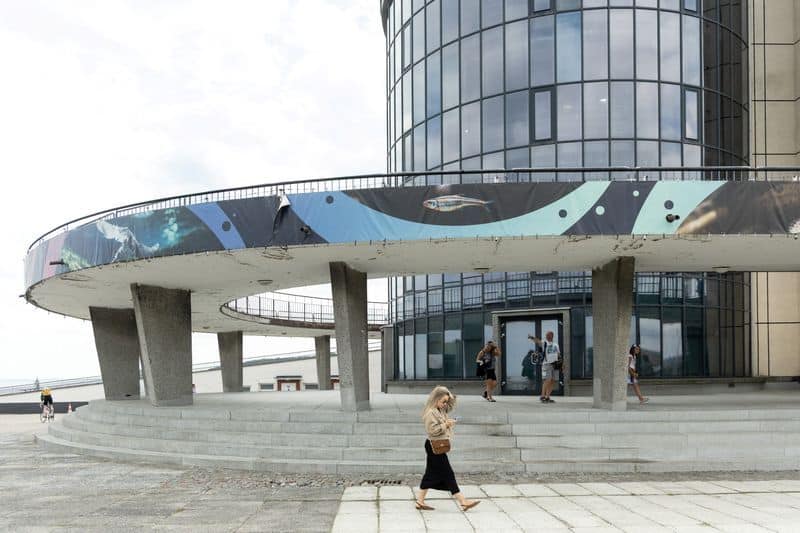
Unlike those urban centres, however, Gdynia was constructed almost entirely from scratch around a new seaport, giving it an unusually coherent architectural character and making it one of Europe’s most complete examples of a modernist city built in a single generation.
Its centre is characterised by streamlined buildings with flat roofs, rounded corners, long horizontal windows and balconies resembling ocean liners, reflecting the city’s maritime identity and the era’s faith in technology and progress.
UNESCO’s World Heritage Committee is composed of representatives of 21 countries. Other sites recently added to its Heritage list include the D-Day Landings beaches in Normandy.
(Reporting by Anna Lubowicka, Kuba Stezycki, Thomas Holdstock and Anna Wlodarczak-Semczuk; Editing by David Holmes)