By Kyu-seok Shim, Brenda Goh and Trevor Hunnicutt
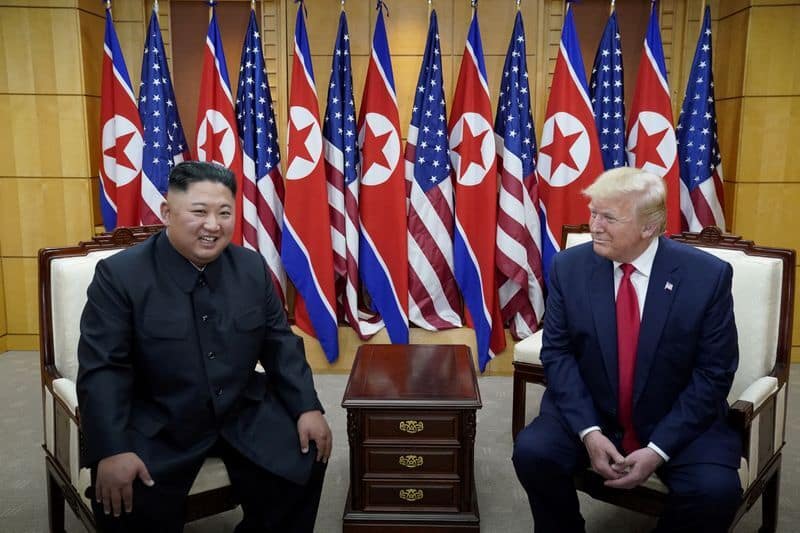
SEOUL/WASHINGTON, Aug 21 (Reuters) - U.S. President Donald Trump says he wants to meet North Korean leader Kim Jong Un later this year. But his overtures have drawn a frosty response from Pyongyang, suggesting it will set tough conditions to hold such a meeting even if the two men have an “excellent” relationship.
Earlier this week, Trump abruptly scaled back joint U.S. military exercises with South Korea, saying they were “hostile” to North Korea. On Wednesday, he said he expects to meet Kim later this year.
Trump is eager to restart talks with North Korea and secure a win on the international stage, according to a person briefed on discussions between U.S. and South Korean officials.
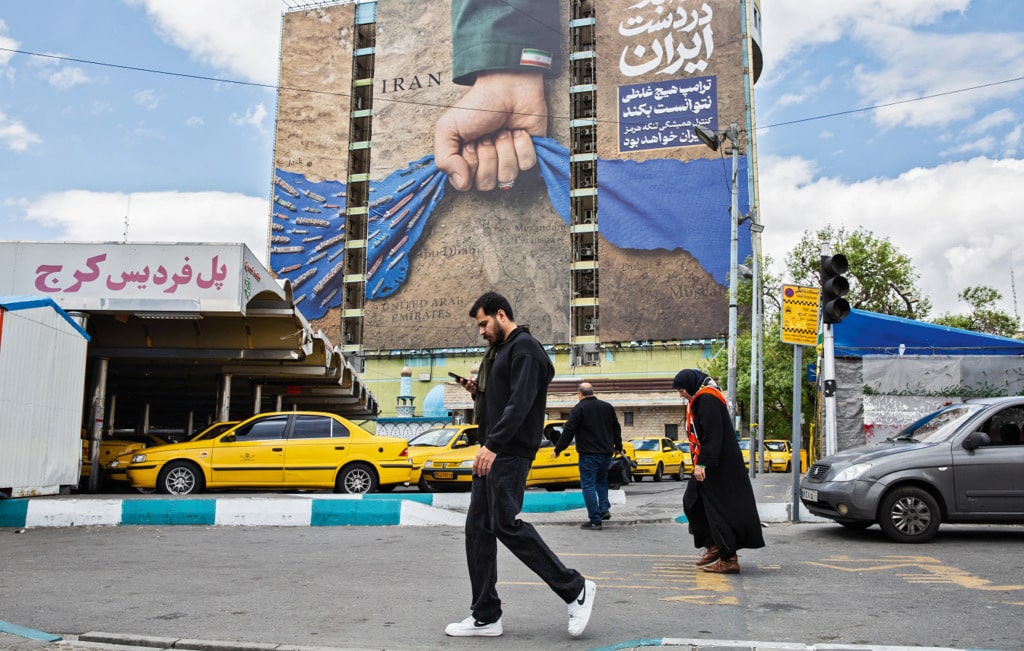
There is no immediate prospect of an end to the nearly six-month war on Iran, and Trump’s reaching out to North Korea comes despite Pyongyang sending troops and equipment, including missiles, to support Russia in its war on Ukraine.
South Korea has been privately receptive to Trump’s strategy, although officials in Seoul still have doubts about reducing joint military exercises with the United States, the source said.
Trump may travel to the Asia-Pacific Economic Cooperation summit in Shenzhen later this year, creating an opportunity for a meeting in the region if North Korea proves receptive to renewed engagement, according to the source.
“The United States remains open to dialogue with North Korea without preconditions,” said a U.S. State Department spokesperson. “The president and Kim Jong Un will meet again at the appropriate time.”
The White House declined to comment. South Korea’s presidential office did not respond to a request for comment, but its foreign ministry referred to an earlier statement expressing hope that Trump’s comments lead to meaningful dialogue with Pyongyang.
North Korea’s response so far, however, while praising Kim and Trump’s “excellent personal relationship,” makes clear that it views their personal rapport as separate from any engagement with the U.S., said Lim Eul-chul, a professor at Kyungnam University’s Institute for Far Eastern Studies.
“Personal ties will never be allowed to compromise national security interests or efforts to strengthen military capabilities,” Lim said.
“In other words, Pyongyang is signalling that personal diplomacy has limits and will not override strategic priorities.”
Kim Yo Jong, Kim’s influential sister, has dismissed the scale-back of the Ulchi Freedom Shield exercise, saying its continuation remained aggressive and that the U.S. policy towards North Korea was still hostile. She also denied that Trump and Kim had had any contact, although she described the personal relationship between the leaders as “excellent.”
On Thursday, North Korea launched about 10 ballistic missiles off its east coast, according to South Korea’s military, in what analysts said may have been a protest against the ongoing U.S.-South Korea exercises.
“If the U.S. side attempts to promote the measures they have taken this time as some kind of ‘goodwill gesture,’ they will not get the answer they desire,” Kim Yo Jong said in her statement, according to state news agency KCNA.
PYONGYANG’S CONDITIONS
North Korea has made clear what conditions would make a meeting compelling, and these are very high bars for the U.S. to meet, said Jenny Town, senior fellow at the Washington-based Stimson Center.
These conditions would include major changes to U.S. policy towards North Korea to remove elements Pyongyang considers hostile, acceptance of its nuclear status or at least a declaration that denuclearisation is no longer Washington’s goal, she said.
“How willing Trump is to meet those conditions in order to secure the meeting in the time frame he has now set is an open question,” she said.
The State Department spokesperson said the U.S. “remains committed to the complete denuclearisation of North Korea”.
Trump held an unprecedented series of summits with Kim in 2018 and 2019, but the diplomatic efforts broke down over U.S. demands that North Korea give up its nuclear weapons.
Trump has since referred to North Korea repeatedly as a “nuclear power,” although his administration has continued to call for the country’s denuclearisation and does not formally recognise it as a nuclear-weapon state.
Kim also has less incentive to agree to a meeting than he had back in Trump’s first term, when he sought sanctions relief. North Korea has since drawn closer to China and Russia, with whom growing trade has helped drive its economy.
“North Korea has options and is cultivating relations with states that require no sacrifices but are only win-win propositions,” Town added.
“There is little incentive for him to rush back into negotiations where there is an expectation for him to concede anything, much less something he considers crucial to the country’s defences.”
STILL OPEN TO TALKS
North Korea’s response, however, looks calibrated to leave open the possibility of diplomacy, said Hong Min, senior research fellow at the Korea Institute for National Unification, referring to Kim Yo Jong’s statement.
“The core objective appears to be encouraging a more accommodating U.S. posture,” said Hong, noting that Pyongyang likely omitted mentions of Iran to avoid irritating Trump.
“Kim Yo Jong’s statement appears less a rejection of dialogue than an effort to manage Trump’s perceptions, shape his understanding of North Korea and lay the groundwork for possible future U.S.-North Korea talks,” he said.
The statement was also particularly critical of Japan, whose military buildup and security ties with the United States and South Korea have become a growing focus of Pyongyang’s ire.
Pyongyang is suggesting a U.S.-North Korea framework that marginalises South Korea and treats Japan primarily as a military adversary, Hong added.
“U.S.-North Korea relations may be entering a phase of mutual probing and signalling,” he said.
(Reporting by Kyu-seok Shim and Brenda Goh in Seoul, Trevor Hunnicutt in Washington; Additional reporting by Simon Lewis;Editing by Ed Davies and Raju Gopalakrishnan)