NEW YORK, September 1 (Reuters) - For more than a century, in cases involving defendants ranging from a 19th-century Chicago bank clerk charged with theft to a Central American dictator accused of drug trafficking, U.S. judges have rejected arguments that alleged violations of international law or treaty obligations should result in dismissal of criminal indictments.
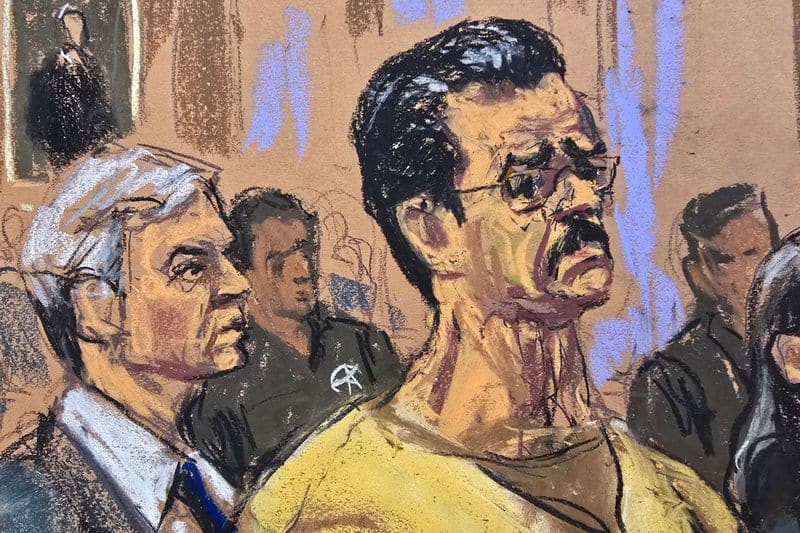
Ousted Venezuelan President Nicolas Maduro is now poised to test those precedents when he files motions on Wednesday arguing his criminal drug trafficking case should be tossed.
Maduro, 63, has pleaded not guilty. His lawyer, Barry Pollack, has said Maduro is immune from prosecution as the head of a sovereign state and raised questions about the U.S. military’s capture of the longtime socialist adversary of Washington during a January 3 raid on oil-rich Venezuela.
He faces an uphill battle persuading Manhattan-based U.S. District Judge Alvin Hellerstein, even though international law generally shields sitting heads of state from prosecution in other countries’ courts.
While U.S. criminal cases involving heads of foreign states or people forcibly captured abroad are extremely rare, previous cases that bear similarities to Maduro’s are not favorable to him, six U.S.-based experts in international law and criminal defense told Reuters.
Hellerstein’s decision would hinge on whether Maduro was indeed head of state. U.S. courts tend to defer to the president and his cabinet in disputes over who is recognized as a foreign country’s leader, and the U.S. has not recognized Maduro as Venezuela’s president since 2019.
“In the few cases in which this has come up - and they have been few and far between - the courts have essentially taken the executive branch’s decision to bring charges as itself a determination of non-immunity,” said Chimène Keitner, a law professor at the University of California, Davis, and former State Department lawyer.
Judges have also consistently held criminal defendants can be prosecuted even if they may have been unlawfully brought to the United States.
Pollack did not respond to requests for comment. A spokesperson for the Manhattan U.S. Attorney’s office declined to comment.
MADURO TO ARGUE FOR SOVEREIGN IMMUNITY
The principle that sitting heads of state are immune from prosecution abroad is seen as fundamental to diplomacy. Maduro is likely to argue his prosecution violates this tenet.
Prosecutors are expected to counter that Washington has not recognized Maduro since 2019, when he was inaugurated after a 2018 election the U.S. said was rigged. The U.S. also called his 2024 re-election fraudulent. Maduro says both votes were fair.
Legal precedent favors prosecutors, experts said. They point to former Panamanian dictator Manuel Noriega’s unsuccessful attempt to assert head-of-state immunity after the U.S. military captured him and brought him to Miami on drug trafficking charges. In 1990, a federal judge rejected Noriega’s argument because he never officially held the title of president.
One factor Hellerstein may weigh is whether Venezuela, now run by Maduro’s former vice president, Delcy Rodriguez, supports his immunity claim. In upholding Noriega’s conviction, an appeals court noted Panama never sought immunity for him.
Earlier this year, Rodriguez’s government described Maduro as Venezuela’s rightful president and demanded his return, but officials have since gone silent on the matter and ramped up cooperation with the Trump administration. Some murals of Maduro in Caracas have been painted over.
“You can imagine how difficult and politically sensitive this is for the current authorities in Venezuela,” said Nizar El Fakih, a Venezuelan lawyer and senior fellow at the Atlantic Council’s Strategic Litigation Project.
Venezuela’s information ministry did not respond to a request for comment.
‘MALE CAPTUS, BENE DETENTUS’
Maduro could also argue his case should be dismissed because his capture ran counter to the U.S.-Venezuela extradition treaty, in which the countries agreed to make formal requests of each other to hand over fugitives.
Nonetheless, U.S. courts have long held that the manner of a defendant’s capture cannot block prosecution. The doctrine dates to the case of a Chicago bank clerk, who stole from his employer in 1883, then fled to Peru where he was captured by a private detective. The U.S. Supreme Court in 1886 rejected his argument that the conviction was improper because his seizure wasn’t governed by the U.S.-Peru extradition treaty.
The Justice Department’s Office of Legal Counsel cited that precedent in a December 23, 2025, memo to Trump’s National Security Council, arguing the forcible nature of a raid to capture Maduro would not imperil his prosecution. The memo referenced the Latin doctrine “male captus, bene detentus” — “wrongfully captured, properly detained.”
The Supreme Court upheld that doctrine in 1992, denying a Mexican doctor’s request to dismiss drug cartel-related charges after he was kidnapped and brought to the U.S. by Mexican nationals recruited and paid by the U.S. Drug Enforcement Administration.
Gary Lincenberg, a partner at Bird Marella and former Justice Department lawyer who was involved in a related case, said such workarounds could alienate other nations even if they do not jeopardize criminal cases in the U.S.
“It sure seems to defeat the purpose of having an extradition treaty that one country is simply saying we can get around that,” Lincenberg said.
(Reporting by Luc Cohen in New York; Additional reporting by Caracas newsroom; Editing by Noeleen Walder and Daniel Wallis)