By Gopal Sharma and Sudarshan Varadhan
KATHMANDU/SINGAPORE, Sept 1 (Reuters) - Deadly floods that wiped out a tenth of Nepal’s electricity generation capacity last week have cast doubt on the country’s ambitious hydropower expansion plans, forcing the long-time power exporter to turn to India to keep the lights on.
Hydropower supplies almost all of Nepal’s electricity and has become a fast-growing source of export revenue. Companies including Adani Group, NHPC and GMR have pledged to help finance a more than threefold expansion in capacity over a decade to supply India’s coal-heavy grid.
But after floods ravaged Bagmati province, Nepal’s main hydropower-producing region, last week, the country halted power exports and will buy electricity from India to cover domestic shortages in the coming months, Nepal energy ministry spokesperson Mohan Kumar Shakya said.
“A post-disaster need assessment will be carried out. That report will show how long it will take to get this back. It will take time,” Shakya told Reuters, adding that 431 megawatts, or 10% of Nepal’s generation capacity, had been affected.
Environmental experts say the risks are compounded by hydropower plants built or planned in vulnerable riverbeds and flood-prone valleys, as well as by accelerating climate change driven by global fossil fuel use.
“Nepal’s mountains have been sending warnings for a decade: thinning glaciers, retreating snowlines and hydropower plants we kept building anyway,” said Anjal Prakash, author of the Intergovernmental Panel on Climate Change report on climate change and cities.
But the lack of coal- or gas-fired generation capacity and limited wind and solar potential have left the landlocked country between China and India heavily reliant on hydropower to meet rising electricity demand.
Hydropower exports have also become an important source of revenue, rising an average of 75% over the past decade and accounting for nearly a tenth of Nepal’s annual exports in the year ended July, according to a Reuters analysis of data from the Nepal Electricity Authority and the department of customs.
“If they don’t develop the rivers, even though those catchments are fragile, what realistic choice do they have at scale?” said Victor Vanya, CEO and co-founder of electricity data analytics firm EMA Solutions.
CLIMATE CHANGE AND THE HIMALAYAS
The floods in Nepal are the latest in a series of extreme weather events around the world this year. Heatwaves have scorched parts of Western Europe, Australia and South America, while wildfires have spread across Spain, France and Chile.
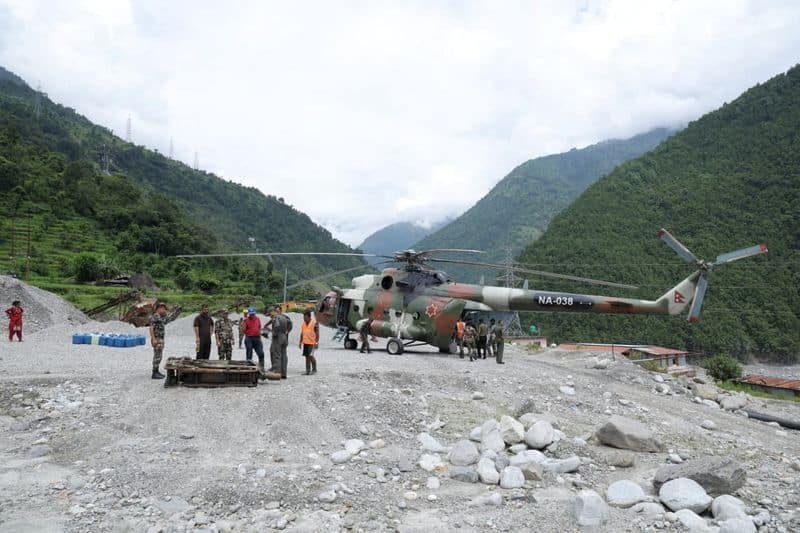
In two districts of Bagmati province, nearly 900 people are missing in power plants after floods hit 11 projects in operation or under construction, the energy ministry said.
“Investors typically look at past precedents to assess risk, but historical hydrology is becoming a poor guide because of climate change,” Vanya said.
The scale of the flooding was beyond the reach of conventional warning systems and underscored the need to rethink how infrastructure is planned in the Himalayas, said Farooq Azam, senior cryosphere specialist at the International Centre for Integrated Mountain Development.
“There is a need to assess how changing environmental and mountain conditions could affect infrastructure over its lifetime,” Azam said.
Simon Stiell, executive secretary of the United Nations Framework Convention on Climate Change, said “humanity burning colossal amounts of coal, oil and gas is making tragedies like this one … much more likely.”
“Every villager who watched that valley disappear paid for emissions decisions made thousands of kilometres away,” Prakash said.
(Reporting by Gopal Sharma in Kathmandu and Sudarshan Varadhan in Singapore. Editing by Mark Potter)