By Parisa Hafezi and Bo Erickson
DUBAI/WASHINGTON, Sept 2 (Reuters) - Fears of renewed escalation gripped the Middle East on Wednesday after the United States and Iran exchanged their biggest barrage since July, with Washington striking Iran’s southern coast and Tehran firing at U.S. bases across the region.
With the U.S. threatening further strikes, Iran accused Washington of hitting a wedding party, killing four people and wounding dozens. Its health minister later said 18 people in total had been killed and 108 injured in the latest wave of U.S. strikes.
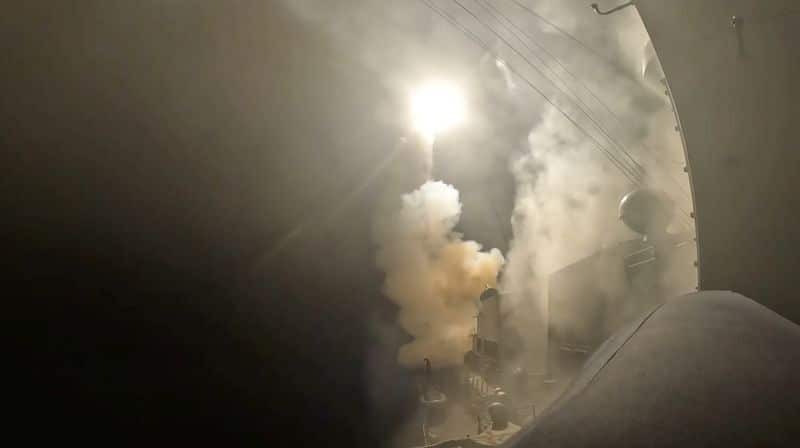
The U.S. military said it struck air defences, radar systems, maritime assets, mine-laying capabilities and communications sites on Tuesday. Iran reported hits on multiple targets near the Strait of Hormuz.
The flare-up threatens to deepen a conflict that has dragged on since the U.S. launched strikes on Iran in February, disrupting global energy supplies and drawing opposition from a majority of Americans ahead of November’s congressional elections.
“Last night was like the end of the world,” Mahmoud, 38, a municipal worker in Sirik County along the strait, told Reuters by telephone, describing attacks on the area that includes the city where the wedding was reported to have been hit.
President Donald Trump said the U.S. hit Iran “very hard” and that Iran only responded with a “love tap.”
“It was a very heavy attack last night, and we’re prepared to do another one any time we want,” Trump told reporters at the White House.
Iran struck what it said were U.S. assets in Bahrain, Jordan, Kuwait and Iraq, and said its aim was now to drive U.S. forces from the vast network of military bases they have maintained for decades across the Middle East.
“American evil in the region will be met with heavier, more widespread, and devastating responses, and any country that cooperates with the aggressive American army must accept its dangerous consequences,” Iran’s military command said.
Iran said it killed U.S. forces in Jordan and at a base in northern Iraq, but U.S. officials told Reuters there had not been any casualties, according to initial assessments.
In Kuwait, Iran said it had carried out a missile and drone attack on the U.S. Ali Al Salem air base and on a residential complex used by a U.S. commander. Kuwait’s fire service said it put out a blaze at a residential complex hit by a drone.
Qatar, home of the largest U.S. air base in the Gulf, said it held Iran responsible for attacks and their repercussions. Bahrain, which houses the regional headquarters of the U.S. Navy, said Iranian drones were intercepted and destroyed.
Iran also said two tankers had been struck by mines while being steered through the Strait of Hormuz by U.S. personnel.
Washington says that despite Iranian attacks it is guiding ships through the strait. Energy Secretary Chris Wright said more than 17 million barrels of oil exited on Monday.
Iran blacklisted 11 more ships, bringing the total number of such vessels to 56, a government website showed, meaning it would consider them subject to fines, confiscation or detention if they try to sail through the Strait of Hormuz without Tehran’s permission.
Trump repeated his assertion that the strait, which handled 20% of global oil and liquefied natural gas shipments before the war, was open to shipping.
IRAN SAYS WEDDING STRUCK
Iranians were fearful that the new strikes signalled war could restart at full scale.
“It’s very difficult to live like this. We don’t know when America will strike,” Mahpari, 28, a woman in the southern port city of Bandar Abbas, told Reuters by phone.
Iran said four people including a 4-year-old were killed while celebrating a wedding at a home in Sirik. Iranian media said as many as 68 people were wounded there, and released images of injured children in hospital.
Reuters was unable to independently verify the incident.
U.S. Navy Captain Tim Hawkins, a spokesperson for Central Command, said: “We are aware of reports, which originated from Iranian state media. The U.S. military never targets civilians, unlike the IRGC,” referring to Iran’s Revolutionary Guards.
Video shot by Iran’s West Asia News Agency at the purported site showed rubble strewn across rooms and a courtyard. A pair of strappy women’s dress sandals lay abandoned on a blood-soaked carpet.
“I am just glad the casualties weren’t even worse,” said Ali Molahi, identified as the father of the bride.
CONFLICT DRAINING BOTH SIDES
The exchange of fire was the worst since July, when Trump abruptly halted two weeks of intense bombing of Iran after warnings from his military brass that they were using up munitions and running out of meaningful targets.
Trump has yet to achieve the aims he set when launching “Operation Epic Fury” in February — to end Iran’s nuclear programme, deprive it of the ability to strike its neighbours and create conditions for Iranians to topple their rulers.
But the U.S. has seriously degraded Iran’s conventional military forces and taken a toll on Iran’s already weakening economy, U.S. officials say.
Sources have told Reuters Trump aides are trying to keep the war quiet for now to avert a defeat in the midterm elections in November. Polls show Americans oppose the war by more than a two-to-one margin.
(Reporting by Parisa Hafezi, Jana Choukeir, Daniel Moshahai and Nayera Abdallah in Dubai; Bo Erickson in Washington; and Menna AlaaElDin in Cairo; Writing by Stephen Coates, Peter Graff, Gareth Jones and Daniel Trotta; Editing by Saad Sayeed, Sharon Singleton, Alexandra Hudson and Sanjeev Miglani)