By Kyu-seok Shim
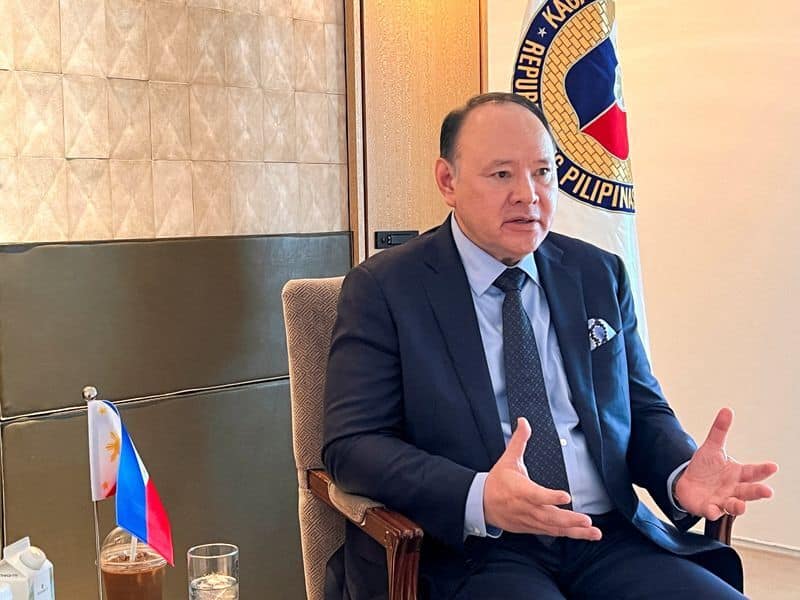
SEOUL, Sept 7 (Reuters) - China could see recent cuts to U.S.-South Korean military exercises as an opportunity to reassert itself in the Indo-Pacific, Philippine Defense Secretary Gilberto Teodoro said on Monday, though he said Washington had assured Manila that its commitments to the Philippines remained unchanged.
Speaking to Reuters on the sidelines of the Seoul Defense Dialogue, Teodoro said there had been no reduction in U.S.-Philippine military activities and that bilateral and multilateral cooperation involving Manila continued to expand.
U.S. President Donald Trump’s decision last month to scale back military exercises with South Korea has prompted debate among security analysts over the credibility of U.S. deterrence in Asia and whether rivals such as China could perceive a weakening of U.S. resolve.
“It is a possibility, of course. China is very quick to exploit gaps,” Teodoro said when asked whether Beijing could seize on the move.
“If we’re talking about the Indo-Pacific as a whole, then it may signal some opportunity for China to reassert itself,” he said.
Teodoro said, however, that Manila had received “definite assurances” from Washington and that there was “no indication” that the changes in South Korea would affect commitments under the U.S.-Philippines Mutual Defense Treaty.
Manila has deepened defence cooperation with the United States under President Ferdinand Marcos Jr., including expanded joint exercises and greater access for U.S. forces to Philippine military facilities, as tensions with China have intensified in the South China Sea.
Teodoro said Manila was also broadening security ties with other partners. The Philippines recently concluded agreements with Canada and New Zealand, signed a visiting forces agreement with France, and was negotiating a similar pact with Britain, he said.
The defence chief also accused China of relying increasingly on influence operations alongside military and maritime pressure.
“Definitely it takes advantage of democratic space in order to co-opt people and to use a free media to expand its distortive narratives,” he said.
Teodoro said the Philippines was pursuing stronger espionage and foreign influence legislation to counter such activities.
Asked about Marcos’ recent remarks that progress was being made toward possible joint oil and gas exploration talks with China, Teodoro struck a cautious note, saying it would be “doubtful” that any economic cooperation could be insulated from longstanding sovereignty disputes in the South China Sea.
Responding to Teodoro’s remarks, China’s Foreign Ministry spokesperson Mao Ning said on Monday that China “has always been committed to maintaining peace and stability in the Asia-Pacific region, refraining from great-power confrontation, and hopes that relevant countries can also play a positive role in regional peace and stability.”
SUBMARINES STILL UNDER REVIEW
Teodoro was in Seoul for talks aimed at expanding defence cooperation with South Korea, one of the Philippines’ largest arms suppliers.
South Korea has supplied the Philippines with FA-50 light combat aircraft, frigates and other military equipment as Manila modernises its armed forces.
He said the Philippines was interested in deeper industrial cooperation and emerging defence technologies from South Korea, but indicated that a long-discussed submarine acquisition programme remained some way off.
“The submarine program is still under review,” he said, citing questions over mission requirements and the substantial infrastructure needed to support such a capability. “I would say it will be still a way off.”
Teodoro said concerns about China’s actions were encouraging closer security cooperation among countries across the region and could ultimately lead to a more interconnected Indo-Pacific security network.
“I believe so because the motivating factor there is China,” he said.
(Reporting by Kyu-seok Shim in Seoul, with additional reporting by Karen Lema in Manila and Ju-min Park in BeijingEditing by Ed Davies and Michael Perry)