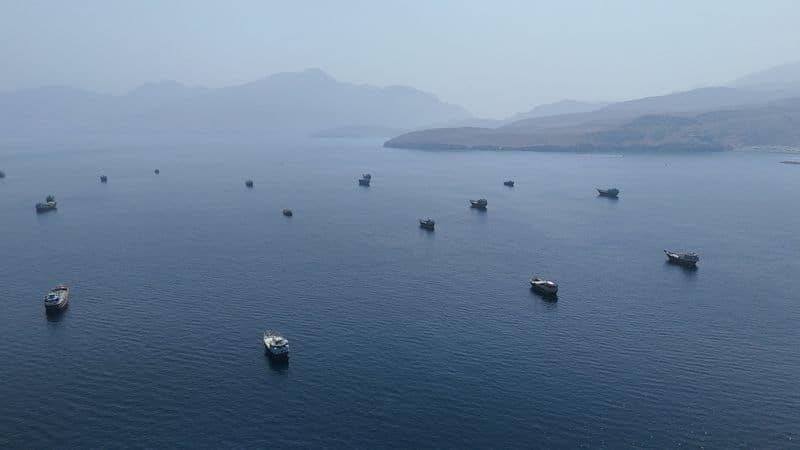
SINGAPORE, Sept 8 (Reuters) - Shipping traffic through the Strait of Hormuz slowed at the start of this week, after Iran threatened on Monday to retaliate for any new U.S. attacks.
The number of commodity vessels sailing through the Strait of Hormuz totalled seven on Monday, compared with eight on the previous day, Kpler data showed on Tuesday.
Iran had warned that energy infrastructure across the Gulf, including U.S. oil and gas interests, was vulnerable.
Goldman Sachs also raised its Brent and West Texas Intermediate crude oil price forecasts for December 2026 and 2027, as it expects shipping disruptions in the Middle East to persist into next year.
Traffic increased through the Bab el-Mandeb strait, however, another major waterway for commodity vessels.
A total of 29 commodity vessels passed through Bab el-Mandeb on Monday, up from 17 on the previous day, Kpler data showed.
Some vessels may be sailing through the two straits with their transponders off, which is not considered in the counts.
(Reporting by Jeslyn Lerh; Editing by Christopher Cushing and Tom Hogue)