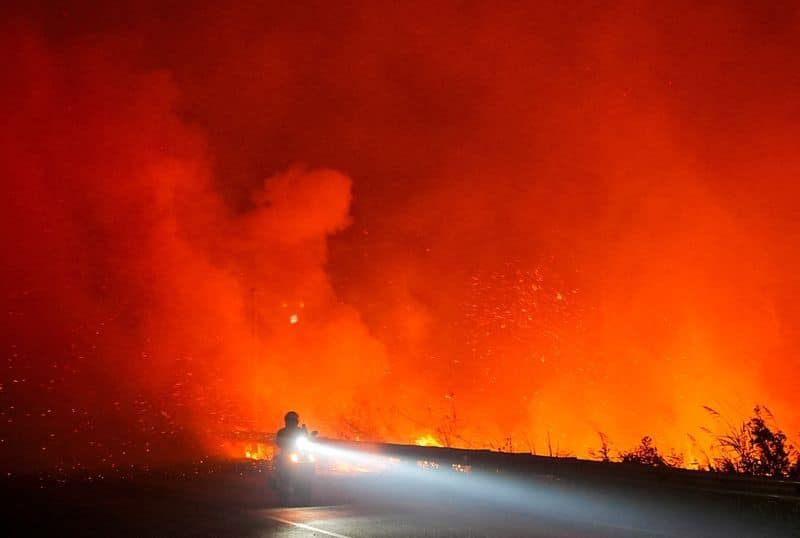
JAKARTA, Sept 17 (Reuters) - Indonesian President Prabowo Subianto has called for stricter regulations and sanctions against those who use slash and burn methods to clear land, as the country struggles to contain wildfires that have been raging for weeks.
Indonesia is battling its most intense wildfires in 11 years, with “super El Niño” weather conditions parching the country’s forests and fields. The islands of Borneo and Sumatra have been the worst hit, with the hazardous haze causing a spike in respiratory illnesses.
Transboundary pollution has also caused unhealthy air conditions in neighbouring Singapore and Malaysia.
Prabowo, in a meeting with his cabinet, said there will be zero tolerance for people or corporations found responsible for starting wildfires.
“I have asked the State Secretary and the Minister of Law to look into this further, specifically regarding legal sanctions,” he said.
“And perhaps we should ask the House of Representatives to stiffen the laws, classifying this as ‘ecological terrorism’. This is a very serious matter,” he added, according to a palace statement issued late on Wednesday.
He also instructed regional governments to immediately abolish exemptions that allow smallholders to clear small plots of land using fire.
Prabowo also called for the police to launch criminal investigations against corporations found to be violating fire safeguards.
Indonesia has deployed more than 50 aircraft to conduct water bombing and cloud seeding operations to help battle the fires.
Japan also joined Indonesia’s water bombing operations on Wednesday. Japan sent over three CH-47 Chinook helicopters last week but poor flight conditions delayed their participation.
From January to July this year, fires raged across 202,000 hectares (almost 500,000 acres) of land, government data showed. Environmental group YKAN has estimated that fire damaged another 600,000 hectares (1.4 million acres) in August.
Forestry Minister Raja Juli Antoni warned that the wildfires could last until early November with the rainy season expected to arrive later than previously estimated.
(Reporting by Fransiska Nangoy, Stefanno Sulaiman; Editing by David Stanway )