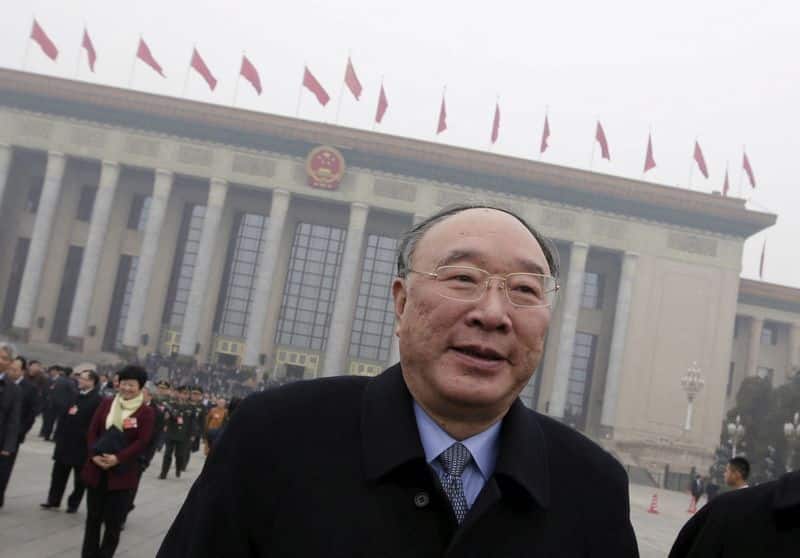
BEIJING, Oct 13 (Reuters) - Huang Qifan, a former mayor of the Chinese city of Chongqing who survived the purge of his former boss Bo Xilai, has been placed under investigation over alleged corruption, the anti-graft watchdog said in a statement on Tuesday.
Huang was under investigation for suspected law and discipline violations – a euphemism for corruption – the watchdog said.
Huang could not be reached for comment, and it was unclear whether he had been allowed to retain a lawyer.
Huang, 74, is one of China’s most prominent economic technocrats, known for his role in driving the southwestern metropolis’s industrial expansion and for emerging politically unscathed from the 2012 purge of the city’s former Communist Party chief, Bo Xilai.
HUANG DISAVOWED FORMER MENTOR
Bo was sentenced to life in prison in 2013 for corruption and abuse of power following a scandal in which his wife, Gu Kailai, was convicted of murdering British businessman Neil Heywood.
Huang was Bo’s key right-hand man and once described their relationship as being like “fish and water”.
In China, the downfall of a senior politician can often spell the same fate for their closest allies, but Huang remained in office and continued to oversee Chongqing’s economy, helped by his swift disavowal of his former mentor.
Huang, still Chongqing mayor, said in 2013 after Bo had been ousted that his former boss’s legacy had been “banished”, and the “vanity projects” he championed which “tired the people and drained money” would never be allowed to happen again.
After Huang stepped down from the mayor position in December 2016, his career has evolved into that of a high-profile adviser and commentator on finance, property, industrial policy and technology.
Often dubbed a “financial mayor” by Chinese media, Huang developed a reputation for his command of banking, property, fiscal policy and industrial development.
He has repeatedly warned against excessive property speculation and leverage, and has argued that capital-market liberalisation should be accompanied by stronger legal enforcement, investor protection and more developed channels for equity financing.
After leaving the Chongqing mayoralty, Huang served as vice chairman of the Financial and Economic Affairs Committee of the 12th National People’s Congress, China’s parliament. He has since moved into advisory, academic and think-tank work.
He is currently an academic adviser to the China Finance 40 Forum and executive vice chairman of the academic committee of the China Institute for Innovation and Development Strategy.
(Reporting by Beijing Newsroom; Editing by Andrew Heavens and Alex Richardson)