By Doina Chiacu and Alexandra Alper
WASHINGTON, Nov 18 (Reuters) - The top US intelligence official said on Wednesday the series of disruptions to critical systems over the past week was not a coordinated or state-sponsored attack, as President Donald Trump’s administration faces mounting criticism over its response.
Technology-related outages have hit every weekday between Thursday and Tuesday, including a nationwide halt to air travel, a Microsoft outage that hit email services and a temporary disruption to the US National Security Agency’s network.
The flurry of incidents has raised skepticism among some in the public and in Congress that it was merely a coincidence, as the administration and some cybersecurity experts have said.
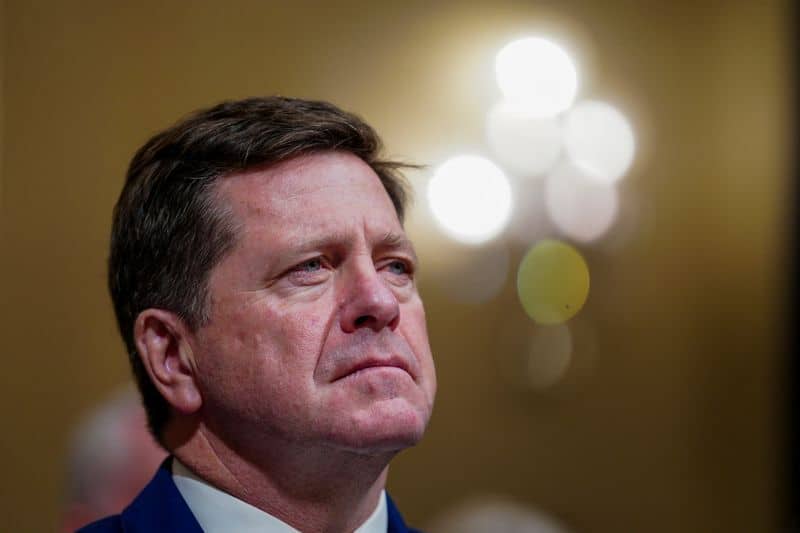
“I understand the timing of these incidents can raise questions, and it should. The American people should ask us these questions,” Director of National Intelligence Jay Clayton told a House of Representatives Homeland Security Committee hearing on worldwide threats. “But based on what we know today, after a great deal of diligence, these are separate service outages associated with maintenance and technical changes. They are not a coordinated or state-sponsored attack.”
Clayton added that threats from Iran, with which the US is at war, have substantially increased, though he did not link those to the spate of domestic outages.
The administration has struggled at times to give a unified message addressing the growing worries, and some of the Republican president’s allies in Washington have demanded more answers about what went wrong.
Though Trump described the situation on Tuesday as “fine,” some experts worry that AI tools are feeding a surge of cyberactivity, with cybersecurity companies regularly turning up examples of hackers using AI to launch scores of intrusions at once.
Trump again sought to calm the nation in a Fox News interview in Shenzhen, China, where he is attending the APEC summit of Pacific Rim countries.
“Tell them to relax. Everything’s good. These are individual events,” Trump said, referring to the American people when interviewer Jacqui Heinrich raised the issue of concerns back home.
QUESTIONS AROUND FLIGHT GROUNDING
At the House hearing, Democratic US Representative Bennie Thompson said it was irresponsible for Homeland Security Secretary Markwayne Mullin to board a private jet to attend a college football game last weekend amid the transportation disruptions.
“The so-called leadership of the Trump administration consists of refusing to take responsibility, shifting blame to the others, and putting your own interests above the country,” Thompson said.
Mullin defended the administration’s handling of the ground stop as “a success” given that thousands of planes landed safely before flights resumed, and said that changing his plans could have led some to worry that he doubted it was safe to fly.
Trump has said he takes no responsibility for the ground stop, which was the longest halt to air travel since the al Qaeda attacks on the United States on September 11, 2001. Officials have said the installation of a router in Arkansas triggered it.
Sherri Graves, a retired speech pathologist from Tennessee, said she viewed the grounding and technology outage with suspicion.
“There’s something going on,” Graves said. “I’m not sure they know what’s going on, the federal government, or if they’re sharing it.”
SYSTEM UPGRADES
Several House lawmakers asked pointedly how the string of outages could be unrelated.
Republican US Representative Nick LaLota said: “Five (incidents) in one week while we’re fighting Iran, while China’s getting aggressive, Russia and Ukraine. Does your gut say, ‘Just a coincidence.’?”
Clayton replied “it does,” in part because agencies and companies are undertaking a “substantial increase” in system upgrades.
Though the upgrades, or patches, are meant in part to address AI-related vulnerabilities, they can also cause disruptions. “When patching at scale, some can cause problems,” said Anne Neuberger, general partner at Andreessen Horowitz.
Also in recent days, some JPMorgan Chase banking activities were disrupted, a United Airlines technology failure delayed about 150 flights and an Apple outage affected customer services including iCloud and Apple Pay.
(Additional reporting by Dan Fastenberg in New York and AJ Vicens in Detroit; Writing by Jonathan Spicer; Editing by Scott Malone, Will Dunham and Lincoln Feast.)