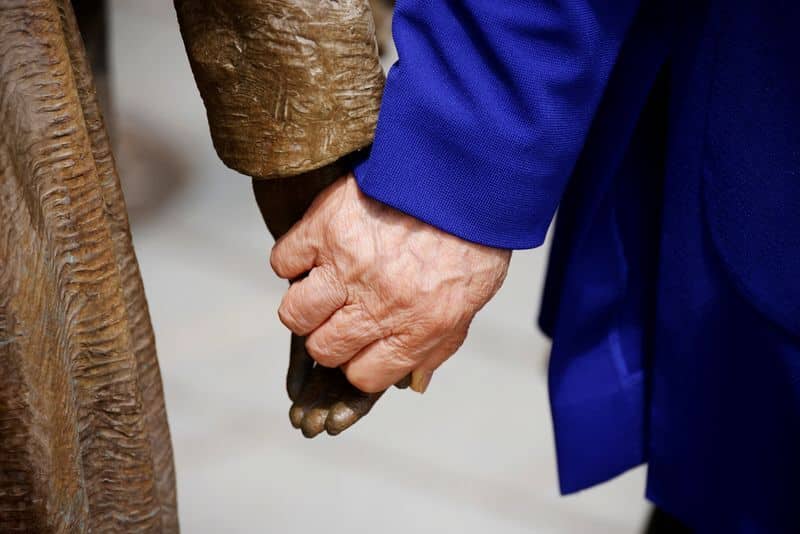
April 29 (Reuters) - A local council in New Zealand has rejected a proposal to erect a statue honouring women forced into sexual slavery by Japanese troops in World War Two after Japan’s ambassador warned it could affect diplomatic ties.
Auckland Council’s Devonport-Takapuna Local Board voted 4-2 on Tuesday against an application by the Korean Garden Trust to install the bronze statue of a young girl at Barry’s Point reserve in the city’s North Shore.
The proposed statue commemorates the estimated 200,000 mostly Asian women who were enslaved by Japan’s army, euphemistically known as “comfort women”.
“Auckland Council staff recommended that the Devonport-Takapuna Local Board decline a proposal for a statue for Barry’s Point Reserve in Takapuna based on the results of the public consultation and feedback received, which demonstrated a lack of community support for the proposal,” Kim O’Neill, head of land and property advisory at Auckland Council, said in a statement.
Public consultation on the application took place in January, with nearly 700 submissions received from individuals and organisations. The council said 57% of individuals and 15 of the 20 organisations opposed the proposal.
Opponents raised concerns about community tension, political interpretations of the statue and its relevance to New Zealand, while supporters said it was an opportunity to promote reflection, acknowledge historical harm and strengthen education, the council said.
In a submission by the Embassy of Japan, Japanese Ambassador Makoto Osawa said he “strongly” opposed the statue.
“I am concerned that it will cause division and conflict within New Zealand’s wonderful multi-ethnic and multicultural society and between Japanese and Korean communities,” the submission said.
“The installation of the statue could have a significant impact not only on the relations between peoples, private sectors and local governments in both countries, but also on the diplomatic relations between Japan and New Zealand,” he said.
The statue, gifted to New Zealand by the Korean Council for Justice and Remembrance, mirrors one activists first erected in front of the Japanese embassy in Seoul, South Korea, in 2011 calling for an official apology and reparations.
It depicts a young girl seated next to an empty chair. The empty chair symbolises the comfort women who have passed away, according to Project Sonyeo, a website that documents the installation of such statues around the world.
(Reporting by Christine Chen in Sydney and Lucy Craymer in Wellington; Editing by Sharon Singleton)