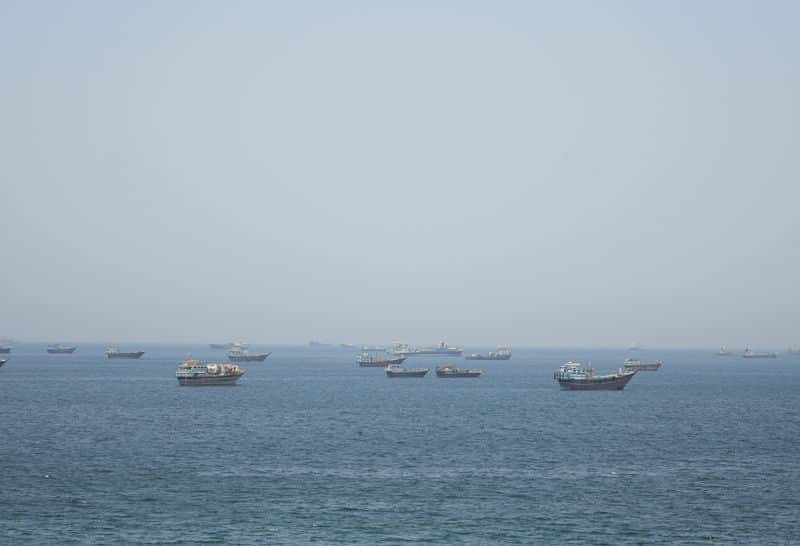
DUBAI, May 12 (Reuters) - Iran has expanded its definition of the Strait of Hormuz into a “vast operational area” far wider than before the Iran war, according to a senior officer in the Islamic Revolutionary Guard Corps (IRGC) Navy.
The strait is no longer viewed as a narrow stretch around a handful of islands but instead has been greatly enlarged in scope and military significance, said Mohammad Akbarzadeh, deputy political director of the IRGC Navy, the state-affiliated Fars news agency reported on Tuesday.
“In the past, the Strait of Hormuz was defined as a limited area around islands such as Hormuz and Hengam, but today this view has changed,” Akbarzadeh said.
Iranian authorities did not reply to a Reuters request for immediate comment.
About a fifth of the world’s oil and liquefied natural gas supply normally passes through the strait, which is the gateway to the Gulf and main export route for countries such as Saudi Arabia, Iraq and Qatar.
Akbarzadeh said the strait is now defined as a strategic zone stretching from the city of Jask in the east to Siri Island in the west, describing it as “a vast operational area”.
The reported expansion is the second announced by Iran since the start of its conflict with the U.S. and Israel.
On May 4, the IRGC Navy published a map showing a new zone of control extending along significant a stretch of the UAE’s Gulf of Oman coastline.
That stretched from Iran’s Mount Mobarak and the UAE’s emirate of Fujairah in the east to Iran’s Qeshm Island and the UAE emirate of Umm al Quwain in the west.
Tuesday’s announcement appears to represent a widening of that area.
Fars and Tasnim, another Iranian news agency, reported on Tuesday that the strait’s width, which they said was previously estimated at 20 to 30 miles, had now increased to between 200 and 300 miles.
The expanded zone forms a “complete crescent”, Tasnim said.
(Reporting by Dubai newsroom; editing by William Maclean and Jason Neely)