By Duncan Miriri, Vincent Mumo Nzilani and Elias Biryabarema
NAIROBI/KAMPALA, June 11 (Reuters) - Finance ministers across East Africa presented their 2026/27 budgets on Thursday as investors focused on how governments will shield their economies from shocks linked to the Iran war while keeping debt in check.
Kenya’s finance minister cautioned that global geopolitical events could curb its ability to cut the fiscal deficit, while his Ugandan counterpart projected a double-digit growth rate due to the projected start of oil production.
The region is seen as highly vulnerable to the trade turmoil arising from the conflict given its reliance on fuel and fertiliser imports - concerns which prompted the African Development Bank to cut the region’s growth forecast for this year by half a percentage point.
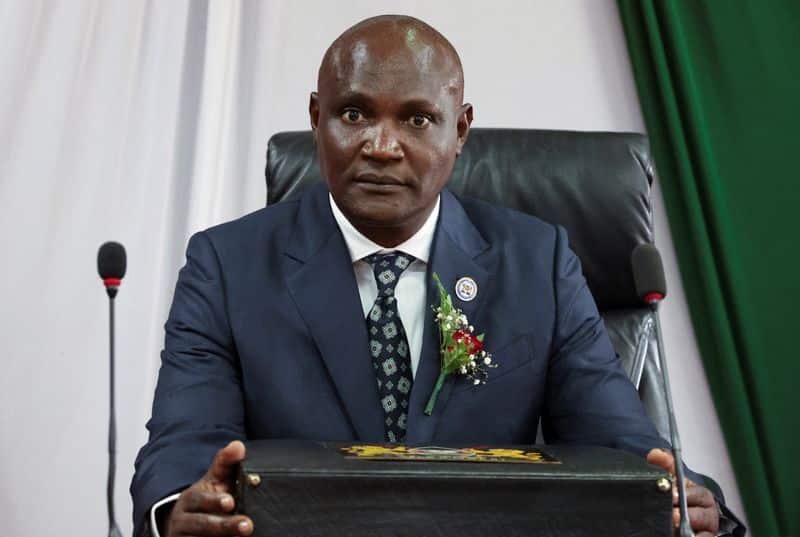
“The outlook for 2026 has been revised downwards to 5% from the earlier projection of 5.3% reflecting the adverse impact of the ongoing conflict in the Middle East on domestic economic activities,” John Mbadi, Kenya’s finance minister, said.
DEFICIT TO BE GRADUALLY REDUCED
He set a budget deficit of 5.5% for this fiscal year, to be reduced gradually to 3% by the 2028/29 year, but added that the target faced significant downsides.
“Domestically, climate-related shocks could disrupt agricultural production and infrastructure, while externally, geopolitical tensions, commodity price volatility, weaker global growth, and tighter financial conditions continue to adversely affect inflation, exports and capital flows,” he said.
Kenya, which is the biggest economy in the region, has been rocked by deadly protests against high fuel prices.
The government has underperformed its budget targets in recent years and investors will look for concrete evidence of a credible fiscal path, like spending cuts or realistic revenue-raising measures, said Andrew Matheny, senior economist at Goldman Sachs.
UGANDA EXPECTS OIL PRODUCTION BOOST TO GROWTH
In neighbouring Uganda, Finance Minister Henry Musasizi raised the total budget by 3.5%, and said the country was set to resume double-digit growth in the fiscal year starting next month for the first time since the 1990s.
“With commercial oil production commencing later this
calendar year, growth is projected to accelerate to 10.2%,” Musasizi said.
“A larger economy will create more jobs, raise household incomes, expand opportunities for business, and generate the resources required to invest in quality education, healthcare, infrastructure, security and other public services,” he said.
In Tanzania, Finance Minister Mussa Omar said the government will focus on boosting domestic revenue collection, due to a drop in financing from wealthier foreign nations and rising pressure from debt.
“This situation necessitates the need to accelerate
our efforts toward self-reliance,” he said.
FASTER RATE OF GROWTH
The government had earlier said it expected the economy to grow at a faster rate of 6.3% this year, from 5.9% last year, adding that the Iran war could present opportunities.
“There is an opportunity to provide the services for transhipment of ships that have not been able to deliver freight containers to the ports in the Middle East,” Planning Minister Kitila Mkumbo told parliament ahead of the budget.
“This war gives us an opportunity for our country to attract investors who now see the Gulf region as no longer safe for their investment,” he added, citing areas like gas production.
(Reporting by Duncan Miriri, Elias Biryabarema, George Obulutsa, Vincent Mumo, Alex Winning and Nuzulack Dausen; Editing by Andrew Heavens and David Holmes)