By Emily Green
MEXICO CITY, June 12 (Reuters) - FIFA President Gianni Infantino has failed to deliver on promises to secure full access for the Iranian soccer federation to attend the team’s three games in the United States, Iran’s World Cup team supervisor told Reuters.
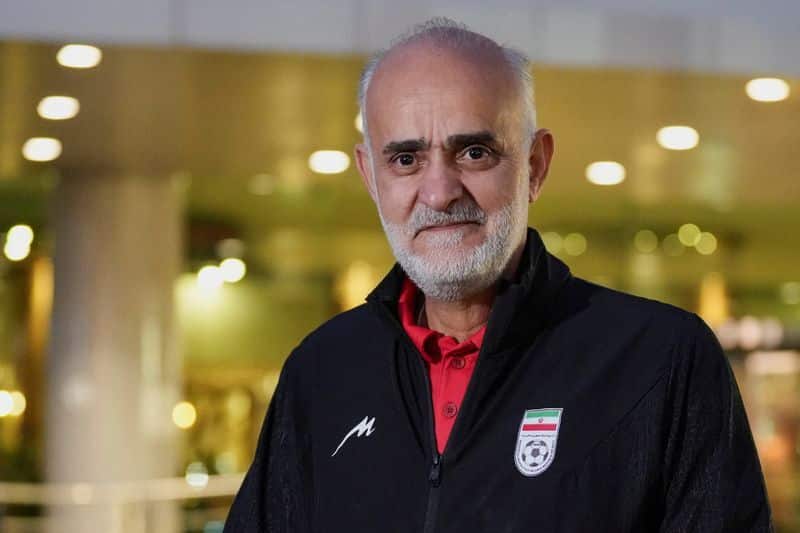
Mahdi Mohammad Nabi, who also served as Iran’s supervisor in charge of squad operations at the 2018 and 2022 World Cups in Russia and Qatar, is among 15 Iranian soccer federation members denied a visa to travel to the U.S. for the World Cup games.
He spoke to Reuters on Thursday evening, a day after Infantino gave a free-wheeling press conference in Mexico City in which he celebrated Iran’s participation in the tournament as proof of his organisation’s success in navigating complex political issues.
“We hope Mr Infantino will indeed implement the words and promises he made to the Iran national team,” Nabi told Reuters on Thursday.
“The FIFA regulations and protocols must be properly followed by both member federations and hosts.”
FIFA did not immediately respond to a request for comment.
The U.S. State Department said the visas had been rejected because it “will not allow the Iranian team to abuse this system to sneak terrorists into the U.S. under false pretenses”.
QUESTIONS RAISED
The difficulties facing the Iranian team, who also moved their training base at the last minute to Tijuana from Arizona due to the visa issues, have raised serious questions about the organisation of the 2026 World Cup – the largest ever – that is being jointly hosted by Mexico, the U.S. and Canada.
The U.S. has also denied visas to Iranian and African journalists covering the World Cup, implemented bond measures for countries flagged for high rates of visa overstays, and implemented travel bans against nationals from four countries that qualified for the World Cup.
The U.S. this week denied entry to Somalian FIFA referee Omar Abdulkadir Artan, despite him having a valid visa to enter the U.S., for alleged links to “terror organisations”.
But Iran is the only World Cup team that has seen large numbers of its federation denied entry into the U.S
The denials unfold against a backdrop of escalating strikes between the warring countries, which have threatened to reignite a full-scale war that was paused in April when the two sides agreed to a fragile ceasefire.
This is the first World Cup since its inception in 1930 in which a host nation is set to receive a country it is at war with.
Nabi spoke outside the Marriott Hotel in Tijuana where the Iranian team has been staying in preparation for the World Cup.
The players were granted U.S. visas 10 days before their first match outside Los Angeles, which is scheduled for Monday against New Zealand.
‘LACK OF CO-ORDINATION’
Nabi said he had never before experienced “such lack of coordination” at a World Cup.
The entire visa saga, he said, “has disrupted our players’ ability to adapt” and put the team at a disadvantage compared to the other competitors.
Asked about the U.S. State Department’s allegation that Iran’s soccer federation is trying to “sneak terrorists” into the U.S., Nabi declined to answer. “We are here to talk about sports; we did not come to engage in any political activities.”
On Wednesday, Infantino defended concerns over visa issues and FIFA’s role, saying soccer’s world governing body could not dictate immigration decisions to World Cup host nations.
“We don’t control everything. Maybe it’s good to just chill, relax.”
STARK CONTRAST
Still, the U.S. visa restrictions stand in stark contrast to other World Cup tournaments. For example, Russia loosened its strict visa requirements for the 2018 World Cup, implementing a visa-free system for fans with tickets to the tournament.
Iran player Saeid Ezzatollahi told Reuters the team accepted that the players cannot have their families attend the tournament to watch and support them because of visa restrictions. But he said FIFA had promised the federation that the staff would get visas.
“We need all of our staff and especially our main guys that can help us through this tournament,” he told Reuters on Thursday.
Ezzatollahi said the war in Iran has taken a heavy toll on the players, even as they try to concentrate only on training for the soccer games.
“We’re taking this opportunity and have to step up to fight for what we call love. And this love for us is football.”
(Reporting by Emily Green; Editing by Stephen Eisenhammer and Ed Osmond)