By Alexander Cornwell, Tala Ramadan and Jana Choukeir
TEL AVIV/DUBAI June 24 (Reuters) - Israel’s defence minister said on Wednesday Israeli troops will not withdraw from southern Lebanon, highlighting a hurdle to Iran-U.S. peace talks, as the top U.S. diplomat tours the Middle East to win over allies sceptical about a proposed deal.
The United States and Iran signed an initial accord last week to end a war that has upended the Middle East and pressured global economies since the closure of the Strait of Hormuz, a transit point for a fifth of global oil and liquefied natural gas supplies.
Conflicting accounts have emerged over elements of the deal, which has prompted criticism of U.S. President Donald Trump at home and in the Middle East. Financial incentives for Iran, control of the Strait of Hormuz and Israel’s parallel war in Lebanon have all been disputed, highlighting the fragility of the accord.
Israeli officials, including Prime Minister Benjamin Netanyahu and Defence Minister Israel Katz, have repeatedly said they will not pull troops out of southern Lebanon, where they say they have created a security zone to protect residents of northern Israel.
“The IDF is prepared … and we are not retreating. We announced that in any case we are not withdrawing, and as of this moment — and this is a political achievement — there is no American demand for Israel to withdraw from Lebanon,” Katz said in an onstage interview at a conference in Tel Aviv.
He made his comments as Lebanon and Israel discuss a U.S.-backed proposal at talks in Washington for Israeli forces to pull out of some of the territory it invaded in the war and hand it to Lebanese-army control.
Israel has been battling Hezbollah in Lebanon since early March, after the militant group attacked Israel in support of Iran, and Tehran has made a cessation of hostilities there a central tenet of its demands in any peace deal with the U.S.
“For us, a ceasefire in Lebanon is as important as a ceasefire in Iran, and further, an end to the war in Lebanon is as important as an end to the war in Iran,” Iran’s parliament speaker Mohammad Baqer Qalibaf said on Wednesday in Baku during a meeting of the Parliamentary Union of the Organisation of Islamic Cooperation member states.
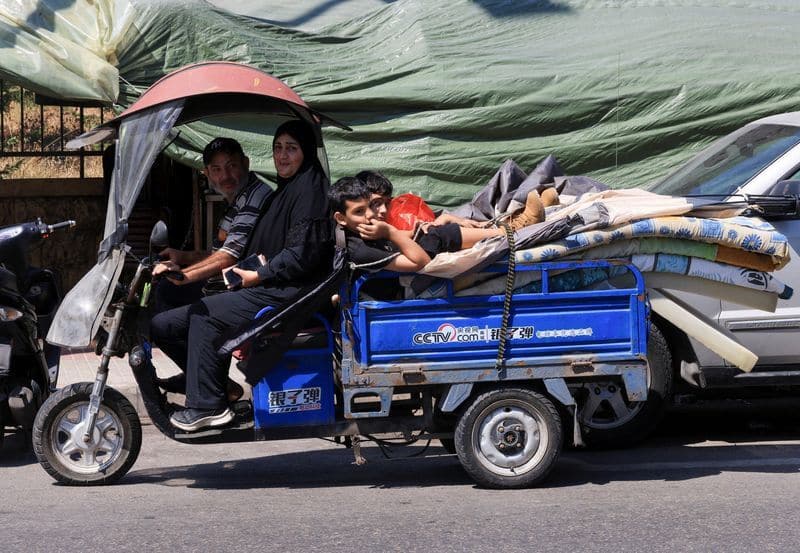
An Israeli drone strike on a car in southern Lebanon killed at least two people on Wednesday, Lebanese security and medical sources told Reuters.
The Israeli military told Reuters it was checking the reports. Earlier, it said its air force had struck two armed Hezbollah fighters near a zone controlled by Israeli troops in southern Lebanon. It was not immediately clear if the incidents were the same.
RUBIO SEEKS TO CONVINCE REGIONAL ALLIES
The proposed peace deal has been met with scepticism in the Middle East, where many states came under attack from Iran during the war and view the accord as too generous to Tehran, including a $300 billion fund and the waiver of some sanctions.
U.S. Secretary of State Marco Rubio, on a tour of the region to try to allay concerns, held a working lunch on Wednesday with United Arab Emirates President Sheikh Mohammed bin Zayed Al Nahyan and other senior figures.
Rubio is also visiting Kuwait and Bahrain. Both nations host strategic U.S. military bases, and both were hit by an onslaught of Iranian missiles, resulting in civilian deaths and a heavy economic toll.
Trump said on Tuesday that unfrozen funds would be used to buy medical supplies and food from the U.S., supporting American farmers. Iran disputed this.
Conflicting reports have also emerged on agreed provisions relating to Iran’s nuclear program. Trump said preventing Tehran from building a nuclear weapon was the central reason for starting the war on February 28. Iran has said it has no plans to do so.
Iran pushed back again on Wednesday after Trump said it had agreed to nuclear inspections into “infinity” as part of the initial accord.
Iranian Deputy Foreign Minister Kazem Gharibabadi reiterated on X that no meeting was held in Switzerland with International Atomic Energy Agency chief Rafael Grossi, despite Grossi’s request, and said there were currently no plans to grant access to nuclear facilities that had been attacked or to nuclear materials.
He said such issues would be considered only within the framework of a final agreement and after the other side took practical steps to lift all sanctions.
DISCUSSIONS ON FUTURE MANAGEMENT OF STRAIT
Shipping has begun flowing through the Strait of Hormuz, leading to a fall in oil prices, although the longer-term operation and management of the waterway remains under discussion between Iran, Oman and other Gulf states.
Qatari Prime Minister Sheikh Mohammed bin Abdulrahman al-Thani visited Muscat on Wednesday for talks with Oman on initiating negotiations on the waterway, a diplomat briefed on the talks told Reuters.
Gulf states are expected to push for no transit fees, but Iran could propose environmental, navigation and security fees, the diplomat said.
Trump, who is under political pressure from some hardliners in the Republican Party who also see the deal as soft on Iran, said on Wednesday the U.S. had been told by Iran there would be no tolls.
“Iran has informed the U.S. that, despite troublemaking Fake News reporting to the contrary, there are ‘NO TOLLS, NO INSURANCE COSTS, & NO OTHER CHARGES OF ANY KIND BEING SOUGHT OR RECEIVED BY IRAN ON SHIPS TRAVELING THE STRAIT OF HORMUZ,’” Trump wrote in a social media post.
(Reporting by Lina Obeid, Alexander Cornwell, Jana Choukeir, Tala Ramadan; writing by Sharon Singleton; editing by Philippa Fletcher)