By Jana Winter
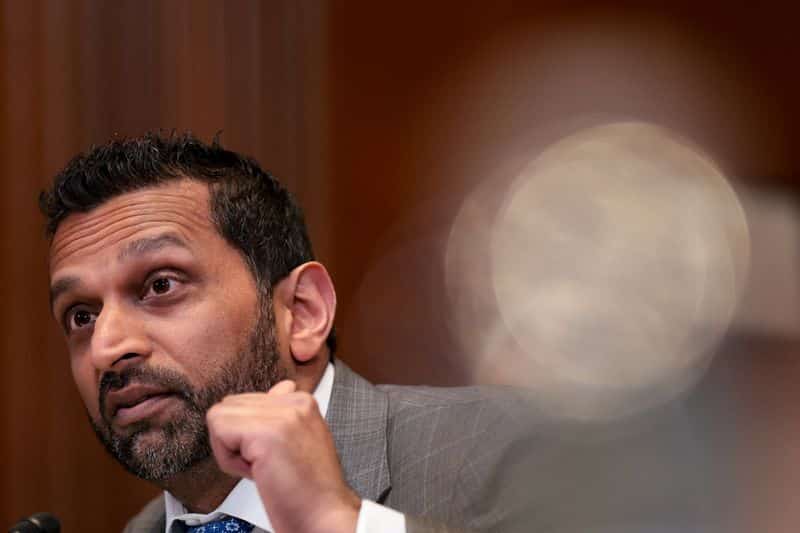
Aug 5 (Reuters) - FBI Director Kash Patel says he has forged new law enforcement partnerships with China and Russia, two longtime U.S. rivals, over the past year in hopes of gaining allies in combating transnational crime including fentanyl, cyber fraud and child sexual exploitation.
The partnerships have involved personnel exchanges in which Chinese law enforcement officials have visited the United States and FBI agents have traveled to China to work on cases together and share intelligence. Separately, FBI and Chinese officers have carried out joint raids and arrests under the arrangement.
Patel returned from a trip to Beijing in late July, and a similar trip to Russia has been tentatively planned for October, according to FBI officials.
In exclusive interviews with Reuters, Patel described the FBI’s initiatives with what he called “non-traditional partners” as selective and limited to specific types of transnational crimes such as global child pornography networks and cyber scam centers that prey on Americans.
The partnerships, known internally as “working groups,” represent a major break with the past and have raised concerns within the broader counterintelligence community about the risks posed by sharing sensitive domestic security information with authoritarian regimes working to undermine the United States economically and militarily around the world.
In May, the FBI, China’s Ministry of Public Security and Dubai police worked together in “Operation Sand Dollar,” a major raid on a cyber scam center in Dubai that led to 300 arrests, $300 million seized and thousands of trafficked workers freed, the FBI said. In at least one case, a suspect inside China who was accused of “serious violent crimes” was repatriated to the United States, according to Chinese state media.
U.S. officials have long portrayed Russia and China as exporters of crime instead of potential allies in combating it, not to mention sources of espionage aimed at American interests worldwide.
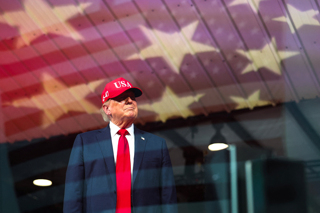
Patel, appointed by President Donald Trump, said such risks can be managed.
“They are both new and dynamic relationships, and we are extremely mindful of their adversarial approach on many matters,” Patel said. “They are not going to stop, but if we can go and have wins for America, then we must engage.”
FBI, CHINA EXCHANGE POLICE OFFICIALS
The current relationship began with Trump’s visit to China in May 2025 and was followed by two trips by Patel to China. Patel said the cooperation has expanded across four working groups: cyber fraud, violent crimes against children, counternarcotics and a fugitive task force.
As part of the partnership, Patel has brought officials from China’s Ministry of Public Security, or MPS, to multiple FBI facilities in the United States to share intelligence and investigative information.
“Every month, they send their working-level MPS officers here, and the following month we go there,” Patel said. “They are speaking with us daily, which has also never happened before.”
Asked about joint law enforcement operations, a spokesperson for the Chinese Embassy in Washington said, “We have always believed that dialogue and negotiation are the right way forward, and that military means offer no solution.”
Patel said information exchanges are narrow in scope and limited to the four types of transnational crime where intelligence sharing is reciprocal. Patel said these new FBI partners would not replace longtime U.S. allies such as the “Five Eyes” intelligence partnership with Canada, Australia, Britain and New Zealand.
“Five Eyes will always be our most important intelligence relationship. No one is trying to replace that,” Patel said. “Unlike military and traditional intelligence agencies, we have a unique lane to drive this dynamic change with law enforcement, which is an apolitical mission.”
During his trip to Asia last month, Patel met with Chinese Minister of Public Security Wang Xiaohong and Vice Minister Xu Datong to deepen what Chinese state media described as “practical cooperation” on a range of criminal activities.
‘OUR ENEMIES, PERIOD’
The cooperation between U.S. law enforcement and leading global adversaries is a major break from the past, and reflects Trump’s personal approach to diplomacy with Chinese President Xi Jinping and Russian President Vladimir Putin.
“China and Russia are our enemies, period,” said Jeff Crocker, a former FBI supervisory agent who retired in 2024. “They are actively trying to harm our country physically, economically and militarily.”
Crocker said there are enormous risks related to giving Chinese officials access to the American intelligence community, diplomatic personnel and U.S. government facilities and contractors. Chinese and Russian agents would use any access to U.S. facilities as an opportunity to infiltrate them, Crocker said.
“So this is great cover for them,” Crocker said.
Patel said counterintelligence operations and countermeasures are deployed for any foreign visitor to FBI facilities. Three former FBI employees told Reuters this usually involves electronic and physical surveillance, particularly for people from countries considered the most dangerous U.S. adversaries.
“We know exactly who is coming here, and we vet them,” Patel said.
The Kremlin and the Russian Embassy in Washington did not immediately respond to requests for comment.
BEHIND-THE-SCENES COLLABORATION
Patel said there have been months of behind-the-scenes law enforcement collaboration with Russia targeting violent criminal networks.
“This stuff doesn’t happen overnight,” Patel said. “We’ve been at this for 15 months.”
An internal memo viewed by Reuters credited the FBI’s cooperation with China’s Ministry of Public Security in multiple operations against Chinese pharmaceutical companies this year.
The memo said this led to the arrests of nine people, the shutdown of two chemical production facilities and three associated websites, and the seizure of fentanyl precursor chemicals “likely otherwise destined for the United States.” The memo did not specify where these arrests and seizures occurred.
Vanda Felbab-Brown, a senior fellow in foreign policy at the Brookings Institution think tank in Washington, said fentanyl overdoses have been declining rapidly in the United States since the winter of 2022, likely due to cooperation with China and other factors such as the wide availability of the life-saving drug Naloxone.
“It could be that the people who were already vulnerable had already died,” Felbab-Brown said.
“I think that the cooperation is useful, should be fostered, and that it contributed to some extent,” Felbab-Brown said, referring to the decline in U.S. overdoses. “But how much is really hard to know, and there are a lot of complexities to it.”
A CHILD ABUSE RING
Chinese law enforcement worked with the FBI’s field office in Omaha, Nebraska, to take down a multinational child sexual abuse materials network in June, an operation that included the arrests of 16 suspects, according to the FBI memo.
The expanding cooperation comes after years of deep suspicion between the United States, which has accused China of turning a blind eye to its production of the precursor chemicals required to manufacture fentanyl, and Chinese authorities, who ended cooperation due to political disagreements such as former U.S. House of Representatives Speaker Nancy Pelosi’s 2022 visit to Taiwan.
U.S. Secretary of State Marco Rubio offered a cautious assessment of Chinese cooperation. During a visit to the Philippines last month, Rubio called cooperation with China on fentanyl precursors “a work in progress.”
“I think we’ve made some progress on that front, but not entirely where we need to be,” Rubio told reporters.
Patel said the playbook that is used to work with China and Russia could be applied to other non-traditional intelligence-sharing partnerships tailored to each country.
“The fact that we did it with China,” Patel said, “when everyone said, ‘Don’t do it,’ and, ‘You can’t do it,’ shows what we can do with almost anyone.”
(Reporting by Jana Winter in New York; Additional reporting from Simon Lewis, Laura Gottesdiener and Kristina Cooke; Editing by Michael Learmonth and Will Dunham)