By Sarah Morland and Daniel Becerril
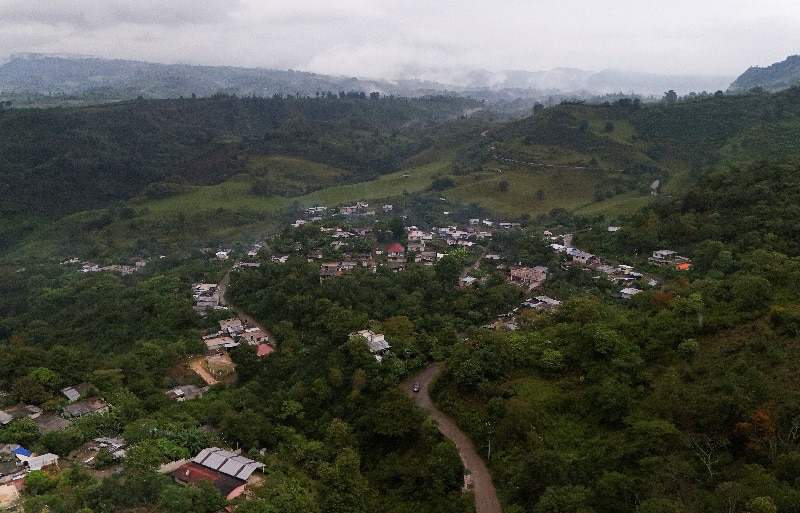
TLAOLA, Mexico, Sept 12 (Reuters) - Nestled in the lush green mountains of Central Mexico, next to a sparsely traveled gravel road, few people had reason to wander close enough to hear the loud, mechanical whirring of a clandestine cryptocurrency farm.
What led police to the ramshackle building, suspected of mining virtual coins to launder illicit funds, was not only the noise but the vast amount of electricity needed to power and cool hundreds of specialized computing units, at levels far surpassing the needs of the small communities scattered around the Sierra Norte region of Puebla state.
Crypto mining — which uses powerful computers to generate virtual assets such as bitcoin — represents a new frontier in Mexico’s fight against organized criminal groups, which have extended their reach beyond drug trafficking and extortion into the murkier realm of financial crime.
In Puebla, authorities discovered 300 graphics processing units (GPUs), 80 medium-voltage terminals and eight satellite antennae — all geared to compete against millions of other machines to solve puzzles and create valuable new crypto coins.
While a relatively modest operation by international commercial standards, it is the fourth such crypto farm uncovered in the area since early last year.
“Drug cartels appear to have reached a new level of sophistication,” said David Saucedo, a Mexico-based security analyst, adding that setting up such an operation would have required technical expertise and backing from a well-financed group, such as one of Mexico’s most powerful cartels.
Mexico’s federal attorney’s office declined to comment, citing an active investigation.
ELECTRICITY THEFT FUELS OPERATIONS
Globally, illicit cryptocurrency transactions more than doubled in 2025, with addresses linked to criminal activity receiving an estimated $154 billion, up from $59 billion a year earlier, according to blockchain analytics firm Chainalysis, which analyzed transaction volumes sent to illicit wallet addresses.
Chainalysis attributed much of the increase to a surge in transactions linked to sanctions evasion, including payments involving sanctioned governments.
As more people and institutions worldwide adopt virtual currency, most within the confines of the law, Latin American cartels are among those increasingly using crypto transfers and mining operations to launder money, said Caio Motta, the firm’s Latin American specialist.
“These locations will have very cheap electricity, or be in an area under the influence of organized crime so they’re able to steal electricity and establish a large infrastructure to mine cryptocurrency,” Motta said.
Electricity is the biggest cost for mining crypto, as energy prices have increased and the process of minting a single unit of virtual currency has become more resource-intensive.
The University of Cambridge’s Bitcoin Electricity Consumption Index estimates the cost of minting one bitcoin — the most widely used cryptocurrency — at nearly $45,000. This would still bring a substantial profit when sold at current prices of around $78,000.
“If they were stealing the electricity, the main costs of the operation would be, well — nothing,” said Samuel Leon, an expert in energy theft at Mexico’s Iberoamericana University, referring to the Puebla operation.
Mexican authorities said they are investigating whether the crypto farm was stealing electricity from a nearby hydroelectric dam.
HIDDEN IN REMOTE MOUNTAIN TERRAIN
The bushy forests and scattered communities of the Sierra Norte, where the Puebla crypto farm was found, made for an ideal hiding spot.
Two people living in neighboring communities, who requested anonymity for fear of reprisals, told Reuters that the whirring noise could be heard one kilometer (0.6 mile) away. The crypto farm was located approximately twice that distance from the nearest village.
Three other similar crypto farms were found last year in the vicinity of the nearby hydroelectric dam in northern Puebla. Local authorities said they are collaborating with nearby states to investigate the possibility of more hidden operations.
Similar raids have taken place in Brazil, the U.S. and Southeast Asia, including a major bitcoin mining operation in Thailand that spanned five provinces.
According to Motta of Chainalysis, rising global cryptocurrency use will likely push crypto-related crime to new records in the years ahead, as virtual currencies become more accessible even as investigators improve their ability to trace online transactions.
“Law enforcement agencies are becoming far more equipped to fight organized crime using cryptocurrency,” he said.
(Reporting by Sarah Morland and Daniel Becerril in Tlaola, Mexico; Editing by Emily Green and Matthew Lewis)