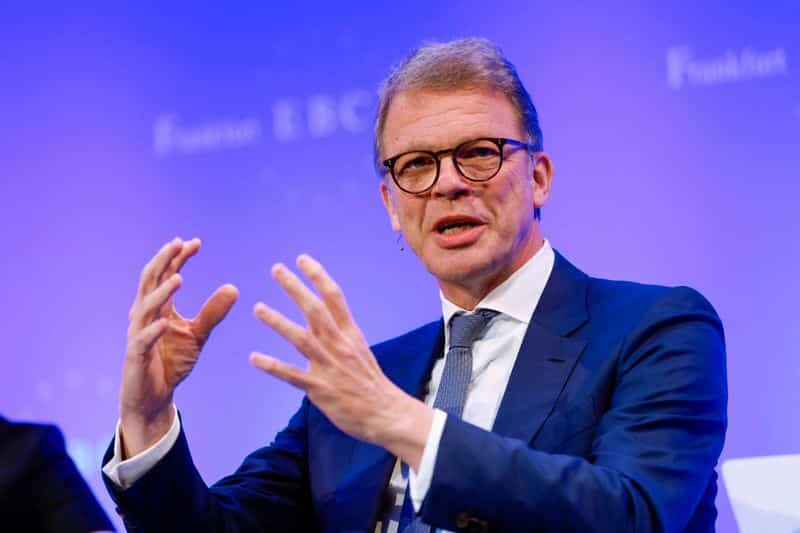
BERLIN, Oct 11 (Reuters) - The head of Germany’s largest bank warned that foreign investors may be driven away following victories in state elections last month by parties on the political extremes.
The AfD, which wants to restrict immigration and send asylum seekers home, scored some of its biggest-ever wins in eastern Germany last month. At the same time, the Left Party scored its biggest win in the election for the city government of Berlin, pledging to expropriate holdings of property companies.
“This poses a significant risk to Germany, and it should not be played down,” Christian Sewing, chief executive of Deutsche Bank, told the Bild daily in an interview, referring to the rise of political extremes.
“You can’t expect a foreign investor to immediately draw a distinction between a state government and Germany as a whole,” he said. “It’s seen as Germany as a whole and I think that from an investor’s point of view, that’s understandable.”
In the state of Saxony-Anhalt, the AfD, which is classified by security services as extremist in some regions, only narrowly fell short of an absolute majority in the state parliament, and it followed up two weeks later by taking first place in Mecklenburg-Western Pomerania.
The AfD has been accused by economists of fostering a climate that will drive away badly needed skilled workers and foreign investors.
The Left Party, meanwhile, vowed to tackle Berlin’s soaring housing costs by expropriating the holdings of residential property companies.
“And whether it’s Saxony-Anhalt with the AfD or what’s happening here in Berlin, it’s anything but conducive to economic growth. And it’s anything but investment-friendly,” Sewing said.
He urged the government of Chancellor Friedrich Merz to carry on with reforms to revive the economy.
“That is the only response we have to the far-right and far-left extremists in this country,” he said.
(Reporting by James Mackenzie;Editing by Elaine Hardcastle)