By Joseph Ax, Brad Heath and Jason Lange
WASHINGTON, Nov 4 (Reuters) - Democrats seized control of both the Senate and House on Tuesday, scoring sweeping victories in Republican strongholds for the first time in generations as tens of millions of voters delivered a scathing rebuke to President Donald Trump.
Voters in conservative bastions who had propelled the president to his second term in office just two years ago swung dramatically toward Democrats, fueled by deep frustration over the unpopular war with Iran, anxiety over the high cost of living and anger at Trump’s stewardship of the country.
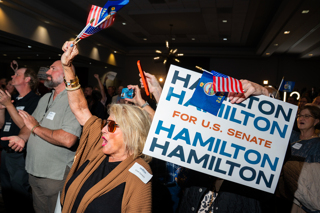
Kansas elected its first Democratic senator since the Great Depression nearly a century ago. In South Carolina, a state that Trump carried by nearly 18 points in 2024, Democrats turned aside his hand-picked Senate candidate.
And in Texas, the biggest Republican state, Democrats ended a decades-long losing streak in seismic fashion, winning a Senate seat and ousting three-term Governor Greg Abbott.
The results will usher in a new era of divided government in Washington, following two years in which the Republican-controlled Congress rarely exercised its power to rein in Trump.
Once seated in January, Democrats are expected to use their power to investigate Trump’s administration, family and allies and demand concessions on major legislation. The Democratic Senate can block Trump’s nominees, including any US Supreme Court justices should a vacancy arise.
“There is now a generational remake of the Senate map that is going to change America,” said Chuck Schumer, the party’s Senate minority leader. “Americans voted for change, and now Democrats must deliver.”
Trump, who is barred by the US Constitution from seeking a third term, has exercised an iron grip on his party for most of the last decade. But the new balance of power in Washington may accelerate his lame-duck status, as attention turns toward the 2028 presidential race and potential successors begin competing for political influence in a post-Trump world.
Despite worries from Democrats that Trump might seek to overturn the election results, as he did in 2020, the president accepted the outcome, congratulating Democrats in an interview with Fox News. He also said he would work with Democrats on issues such as immigration, though he threatened to veto any “insane” bills they passed.
DEMOCRATIC WAVE
Democrats focused their campaign on corruption and affordability, blaming Trump’s tariff policy and the war with Iran for driving up costs while highlighting the billions of dollars the Trump family has made since he returned to the White House.
Republicans, led by Trump, attacked Democrats over culture war issues such as transgender rights while portraying their opponents as radical and extreme. But in poll after poll, voters made it clear they were far more concerned with pocketbook issues.
The Democratic wave flooded huge swaths of the country. Republicans lost ground in all but a handful of the approximately 1,700 counties where most votes had been counted on Tuesday night, according to tallies compiled by Reuters and USA Today.
Democrats made gains in the richest counties and the poorest; in counties where more people have college degrees and where fewer do. Democrats’ advances were particularly sharp in heavily Latino counties, including the border counties of Texas that shifted toward Trump in 2024 and the agricultural towns of the Kansas prairie.
In Seward County, Kansas, home to one of America’s biggest beef processing plants and where about half of eligible voters are Hispanic, Democrat Adam Hamilton led incumbent Republican Senator Roger Marshall by 13 points, two years after Trump won the county by 39 points.
Democrats ran the table in the House races thought to be especially competitive, winning all 20 of the contests decided so far. Meanwhile, an unprecedented Republican gambit to redraw several House districts to make them more favorable largely failed, with Democrats hanging on to most of the targeted seats.
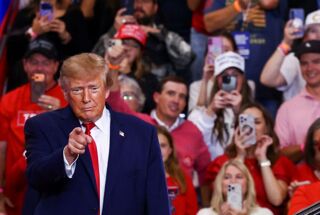
Midterm elections are typically seen as a referendum on the sitting president, and Trump did little to disabuse voters of that notion. In the campaign’s final weeks, he held dozens of rallies, telling supporters repeatedly to “pretend I’m on the ballot.”
He also intervened in several races to ensure his preferred candidates reached the ballot, despite concerns from some Republicans that his choices carried significant liabilities.
In Texas, Trump backed Ken Paxton, the scandal-ridden state attorney general, over the incumbent, Senator John Cornyn. In South Carolina, the president anointed Darline Graham, a political neophyte, after her brother, Senator Lindsey Graham, died suddenly earlier this year. Both candidates lost.
But even candidates who sought to distance themselves from Trump were unable to escape voters’ wrath. In Maine, Republican incumbent Susan Collins had her 30-year Senate career end on Tuesday, despite emphasizing her willingness to break with the president during the campaign.
Competitive Senate races in Mississippi, Michigan and Alaska had yet to be called early on Wednesday.
On Tuesday night, as it grew clear Republicans were in danger of losing their congressional majorities, Trump wrote on social media, “I wasn’t on the Ballot and if I was, we would have won IN A LANDSLIDE! Thank you for your attention to this matter.”
VOTERS REBUKE TRUMP
According to exit polls conducted by SSRS on behalf of a consortium of US media outlets including major television networks and the Associated Press, half of voters nationwide said they saw the 2026 midterm elections as an opportunity to rebuke the president, and three-quarters said they are “angry” or “dissatisfied” with the way the country is headed.
In addition, 70% of voters surveyed said they want Congress to provide more checks and balances on the president.
“In sweeping and decisive victories, the American people have rebuked the depravity, corruption and incompetence of the man named President Donald J. Trump,” incumbent Democratic Senator Jon Ossoff of Georgia told supporters at a victory party.
The night included several historic firsts for both parties. In Georgia, Democrat Keisha Lance Bottoms became the first Black woman elected governor of any US state, while Byron Donalds won Florida’s gubernatorial race to become the first Black Republican governor in the US. Democrat Gina Hinojosa will become the first Latina governor in Texas, while Democrat Xavier Becerra will be California’s first Latino governor.
(Reporting by Joseph Ax, Jason Lange and Brad Heath in Washington and Nathan Layne in Detroit; Additional reporting by Nolan D. McCaskill, Dan Rosenzweig-Ziff, Dan Catchpole, Richard Cowan, Daphne Psaledakis, Leah Douglas, Courtney Rozen and Jarrett Renshaw; Writing by Joseph Ax and Jonathan Allen; Editing by Paul Thomasch and Howard Goller)