By Simon Robinson
MINDELO, Cape Verde, June 6 (Reuters) - Cape Verde sways to the sound of morna, a homegrown folk music laced with melancholy, longing and soul. Morna’s most famous song, “Sodade,” remembers the tens of thousands of emigrés who have left these 10 islands sprinkled off the coast of West Africa for work and opportunities abroad.
“If you write me, I’ll write you,” the song’s lyrics go. “If you forget me, I’ll forget you.”
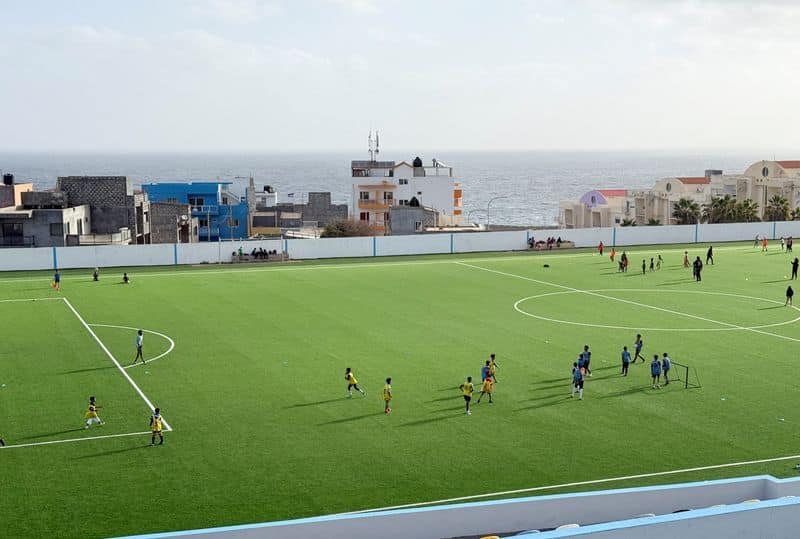
In the next few weeks, Cape Verdeans hope their sense of nostalgia will turn to celebration. Their eyes are on the national soccer team, which is packed full of stars whose parents or even grandparents left Cape Verde years ago but who still consider the islands home.
The Blue Sharks, as the team is known, is one of the surprise qualifiers for the 2026 World Cup. With fewer than 600,000 inhabitants, Cape Verde is the third smallest country by population to ever reach the world’s biggest sporting event (after Iceland in 2018 and Curacao, also in 2026).
Cape Verde’s national team combines local talent with a raft of foreign-born players, including centre-back Roberto Lopes, who was born in Ireland to an Irish mother and Cape Verdean father, and Logan Costa, who was born in France to Cape Verdean parents and plays for Villarreal in Spain.
The combination of local and international talent has proven magically effective. Cape Verde won seven of their 10 games in World Cup qualifiers, losing just once and scoring a huge upset win at home against African heavyweights Cameroon.
The World Cup will be another level. Ranked 69th in the world, the Blue Sharks will face tournament favourites Spain, two-time World Cup winners Uruguay and Saudi Arabia (a relative minnow but still ranked higher at 61st) in the group stage.
But locals have faith.
“I’m very proud,” said Anton Delgado, 25, after spending a recent Sunday afternoon with friends in a bar in Mindelo, a city on the island of São Vicente. “It’s a marvel. I’ve been waiting years for this. We have real hope that we can win a game or even two.”
RHODE ISLAND LINKS
That sense of hope is widely shared across Cape Verde. The tiny nation’s restaurants, bars and cafes are normally packed with singers and bands playing morna for tourists and locals alike. Now they are gearing up for the World Cup.
At the Café Royal, a hotel and restaurant in Mindelo, staff are planning for big crowds. The Royal features a large mural of morna superstar Cesária Évora, who, even 15 years after her death, remains the most famous Cape Verdean in the world. But it is the country’s football stars that everyone wants to talk about now.
Noaela Delgardo, 22, who works behind the bar at the Royal, said the World Cup is a rare opportunity for other Cape Verdeans to shine and for the country to gain “more visibility in the world.”
Despite the growth of tourism, it is hard not to feel the archipelago’s isolation and distance from bigger centres. There are flights from Europe, but the only direct flight to the United States lands in Providence, Rhode Island - a legacy of 19th-century whaling ties between the two places and the large Cape Verdean community that lives in Providence today.
The World Cup is a chance to close that distance, said pensioner Jorge Goncales, 69, sitting with friends one morning in a tree-filled Mindelo square. “The whole world comes to us. Now we go out to the world.”
Head coach Pedro Leitão Brito — who was named Africa’s Coach of the Year last year and is better known by his nickname, Bubista — also sees a chance to put Cape Verde on the map.
“We want to make an impact on the tournament for our people,” he told CNN a few weeks ago. “We want to show everyone watching that, yes, we’re a small country, but we can play against the big teams. We know it’s hard but we want to show that nothing is impossible.”
(Reporting by Simon Robinson in Mindelo, Editing by Rosalba O’Brien)