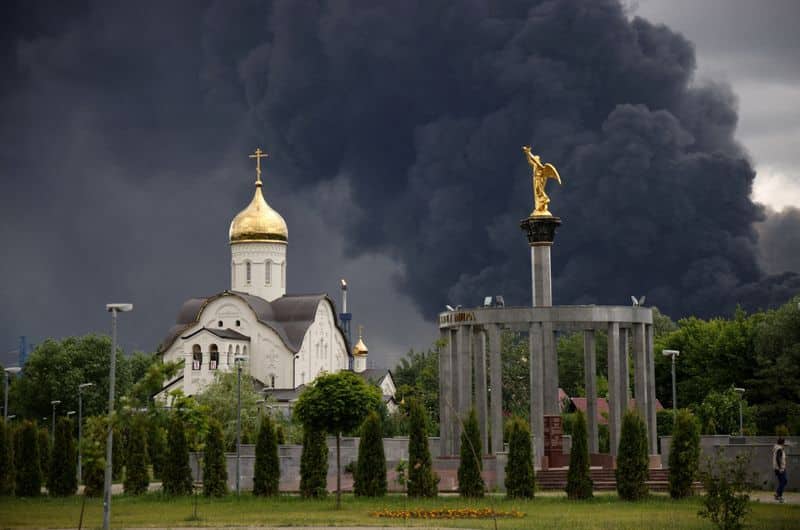
June 18 (Reuters) - A second drone attack this week on Gazpromneft’s Moscow refinery has damaged processing units and sparked multiple fires across the site, industry sources said.
Moscow Mayor Sergei Sobyanin said on Thursday in a Telegram post that the region had been targeted in a large-scale drone raid and that several drones fell on the Moscow refinery, which previously came under attack on June 16, forcing a shutdown.
Sources said Thursday’s attack damaged the Euro+ combined oil refining unit, commissioned in 2020 as part of the plant’s modernisation programme.
The unit includes a crude distillation section with nominal capacity of around 140,000 barrels per day - 47% of the refinery’s capacity - a catalytic reformer and a diesel hydrotreating unit.
In addition to Euro+, some secondary units, inter-unit pipelines and auxiliary equipment were damaged. Storage tanks containing oil products were also hit and caught fire.
Gazpromneft, which owns the refinery, did not immediately reply to a request for comment.
PLANT ALREADY UNDERTAKING REPAIRS AFTER EARLIER ATTACK
In the June 16 attack, one of the Moscow refinery’s two primary crude distillation units, CDU-6 - with normal capacity around 160,000 bpd, or 53% of the plant’s capacity - was damaged and caught fire.
Sources said the plant had planned to restart the Euro+ unit midweek and process oil at around half capacity during repairs to CDU-6.
The refinery is in the southeastern part of Moscow and helps to supply fuel to Russia’s capital.
The sources said the refinery processed 11.6 million metric tons of crude oil in 2024, or some 230,000 bpd, producing 2.9 million tons of gasoline, 3.2 million tons of diesel and 1.3 million tons of bitumen.
(Reporting by Reuters; Editing by Jan Harvey)